Today, B2B companies face the challenge of choosing the right advertising channels to reach their target audience effectively. Two popular options that often come head-to-head are social ads and display ads. But which one should you use, and when? Let's break it down and explore how these advertising methods can work for your B2B strategy.
Understanding the Basics
Social ads appear on social media platforms like LinkedIn, TikTok, and Facebook, while display ads show up on various websites across the internet. Both have their strengths, but their effectiveness can vary depending on your goals and target audience.
The Power of Social Ads in B2B
Social ads shine when it comes to targeting specific professional demographics. Here's why they might be your go-to choice:
- Precision Targeting: Social platforms offer granular targeting options based on job titles, industries, and company sizes
- Engagement Opportunities: These ads allow for direct interaction with your audience, fostering relationships and brand loyalty
- Content Versatility: From carousel ads to video content, social platforms support various formats to showcase your B2B offerings
Shopify’s Social Success
According to SocialPilot, Shopify aimed to enhance its brand visibility and attract more users to its platform, particularly focusing on small and medium-sized businesses looking to establish an online presence.
Their Approach:
- Influencer Collaboration: Shopify partnered with various influencers and e-commerce experts to create authentic content showcasing the platform's capabilities. This included videos, social media posts, and blogs highlighting real-life success stories of businesses using Shopify
- Targeted Social Media Campaigns: The campaigns were primarily conducted on platforms like Instagram and Facebook, where potential customers were already active. They utilized targeted ads to reach specific demographics based on interests, behaviors, and business needs
- User-Generated Content: Encouraged users to share their own stories and experiences with Shopify, which helped build community engagement and trust
The Result:
- Boosted brand awareness with over 1,000 new purchases of website apps.
- By July 2023, reported a revenue increase to $3.202 billion.
- Fostered a sense of community among users, enhancing customer loyalty and visibility.
When Display Ads Take the Lead
When it comes to B2B marketing, display advertising on the Open Internet offers a powerful and often underutilized advantage: scale, flexibility, and precision that extends far beyond the confines of walled social ecosystems.
- Expanded Reach: Unlike social platforms that operate as walled gardens—limiting targeting to their user data and native inventory—the Open Internet comprises a significantly larger and more diverse ecosystem including over 1.5 million websites, mobile apps, and connected TV devices
- Granular Targeting: With display, advertisers can layer 1st-party, 2nd-party, and 3rd-party data, contextual targeting, behavioral segments, account-based targeting (ABM), and even firmographic filters like company size, industry, and job role. While walled gardens operate with their own data and any of their data partners directly, programmatic platforms allow for a marketplace of audiences and placements from many different vendors to target even the most niche users
- Full-Funnel Efforts: When we think of “display” we often picture banner ads, but the programmatic ecosystem has grown to include rich media placements, native content ads, online video, digital audio, and much more. With placement and ad variety, programmatic media can reach many decision-makers, researchers, and influencers in B2B buying journeys with content across specialized and contextually relevant sites well outside the boundaries of social platforms
Programmatic Success Story
According to StackAdapt's Case Study, SentinelOne, a cybersecurity platform, partnered with their team to reach IT decision-makers and drive conversions through form fills on their website
Their Approach:
- ABM Targeting: Deployed custom ABM audiences targeting specific IT decision-makers, layering on firmographic data, such as seniority, company size, and job function
- Page Context AI: Leveraged machine learning and AI to reach audiences based on content they engage with, creating a personalized ad experience
- Creative Variety: Partnered with the StackAdapt to design multiple ads in different formats—like hotspot, animations, and carousel ads—to show SentinelOne’s product offerings
The Result:
- +105% avg. time on site
- +130% CTR lift
- +668% conversions in a year
Crafting Your Winning Strategy
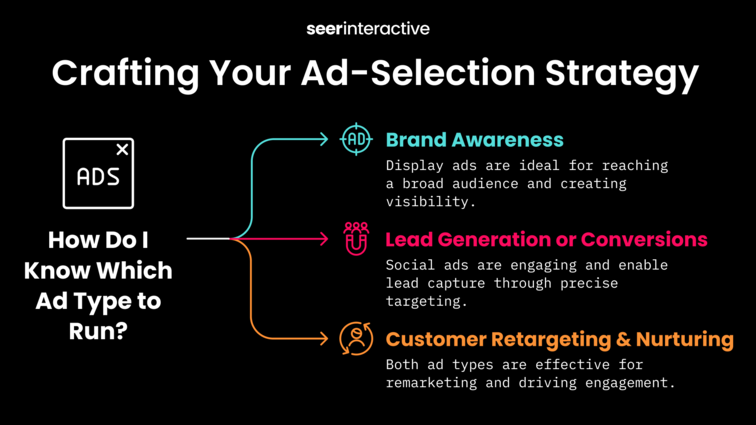
How Do I Know Which Ad Type to Run?
Ultimately, determining which ad type to run depends on your campaign goals, target audience, and the stage of the customer journey you're focusing on. At the highest level, here are our recommendations:
Brand Awareness Ads:
- Best Choice: Display Ads
- Why: Display ads are ideal for reaching a broad audience across websites and apps. They are particularly effective at creating visibility at the top of the funnel, and can be used to cast a wide net and introduce your brand to new prospects within a very qualified audience.
Lead Generation or Conversion Ads:
- Best Choice: Paid Social Ads
- Why: Social ads are more engaging and enable you to capture leads through features like lead gen forms or retargeting ads. Social platforms offer precise targeting options (like job titles and company sizes) to drive actions from key decision-makers.
Customer Retargeting & Nurturing Ads:
- Best Choice: Both
- Why: While display ads are great for remarketing across the web to users who have shown interest but didn’t convert, social ads retarget users who have interacted with your social content or visited your website. With a focus on direct response (form fills or purchases), social ads can drive higher engagement by leveraging platform-specific features like lead generation forms, in-feed ads, and personalized messaging to encourage immediate action.
Okay, But Can I Run Social Ads and Display Ads Together?
Absolutely, and you should! Full-funnel, cross-channel strategies are highly effective in reaching B2B audiences at different stages of the buyer’s journey. Display ads help build brand awareness and keep your company top-of-mind, while social ads drive deeper engagement, lead generation, and conversions. By running both together, you can create a cohesive strategy that nurtures prospects from initial awareness to final decision-making, maximizing your reach and impact.
Think of social and display ads as a tag team—display ads introduce your brand, while social ads help bring the conversation home. Together, they make sure you’re reaching the right people at the right moments. Social excels at identity-based targeting and community engagement, while display excels at extending reach, diversifying contextual touchpoints, and filling the gaps in audience coverage that social may miss.
Our recommendations?
- Know your audience’s habits and preferences
- Define your objectives—awareness, engagement, or conversion
- Harness the strengths of each channel
- Combine both to build a robust, full-funnel strategy
Navigating B2B advertising requires a strategic approach that considers your audience’s behavior, your marketing goals, and the unique strengths of each channel. Social ads and display ads are not mutually exclusive; in fact, their combined power can deliver a truly integrated full-funnel experience that supports every stage of the buyer’s journey.
Want to learn more about paid media ad types? Check out our other blog posts:

- The Basics of YouTube Ads: How to Get Started
- LinkedIn Document Ads: The Ultimate Guide for Paid Social Marketers
- Ultimate Guide to Mastering Performance Max & Maximizing Your Google Ads Strategy
Ready to get started up-leveling your paid media strategy? Let's chat!



.png)