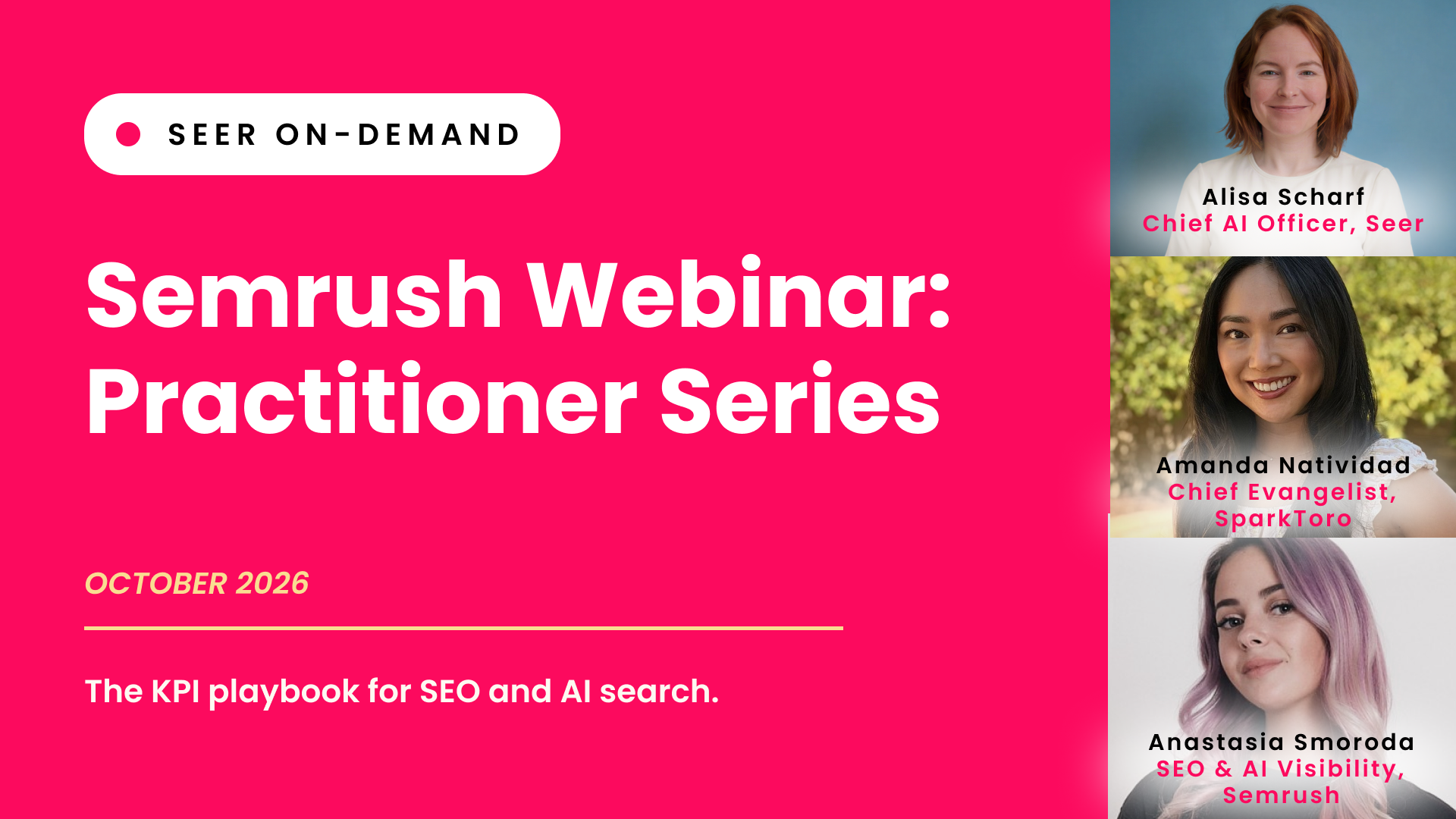
Alisa's Key Takeaways
1. Treat AI Search as an Awareness Channel
Alisa's perspective: AI referral traffic remains tiny even though millions of people use LLMs. That's why Alisa recommends treating AI search as awareness, not a performance channel. For now GEO is incapable of delivering significant ROI, because brands can't invest enough to influence the models.
What your brand can do: Set your AI search KPIs to match those you use for other awareness channels like podcast ads or YouTube pre-roll. Measure impressions and visibility among your target audience, not just clicks. The exception here is for brands with AI-forward audiences, who can use referral conversations as a more reliable indicator.
2. Track the Right KPIs
Alisa's perspective: For most brands where GEO isn't a performance metric (AKA about 90% of companies), Alisa suggests focusing on three KPIs: share of mentions (are you being mentioned alongside or more than competitors?), brand messaging pull-through and accuracy (are models getting your brand right?), and recommendation rate (are models actively recommending your brand?). Even if you aren't getting AI referral traffic, buyers are likely asking AI about your brand - and you want those mentions to be accurate.
What your brand can do: Pick a measurement tool with an MCP connector so you can pull out the data and track model recommendation rates. Track share of mentions against competitors. Audit how models describe your brand, and fix inaccuracies. Correlate GEO metrics with pipeline contribution.
3. Use Citations as a Diagnostic (and Don't Put Them in Front of Execs)
Alisa's perspective: Citations are the equivalent of page-two rankings in SEO - a useful signal for strategy, but not an executive-level KPI. Citation rates can rise and fall as models change, and Alisa sees little evidence that buyers click through citations beyond minor influence.
What your brand can do: Track citations for diagnostics and content prioritization. Don't chase citation sources as they shift. Instead, focus on where your customers spend time online (a tool like SparkToro can help). Publish insights when you have something worth saying, not just for the sake of freshness.
4. Research Prompts Instead of Keywords
Alisa's perspective: People ask LLMs questions and phrases, not keywords. Don't rely too heavily on keyword tools to understand related AI queries and responses. And focus on branded prompts to move the needle quickly, because models treat your brand as the source of truth for brand-specific questions.
What your brand can do: To get the best insights, monitor how real people search about your industry and brand. Run moderated user testing, giving them specific tasks and letting them use any platform or website. Test and learn on branded prompts and questions a buyer would ask about your brand.
Google Is Not Going to Stop Ranking Your Claude-Assisted Content
TL;DR Claude’s watermark only flags that Claude was “likely involved,” so it can’t tell a fully AI-drafted piece from a human draft Claude lightly edited It’s a…
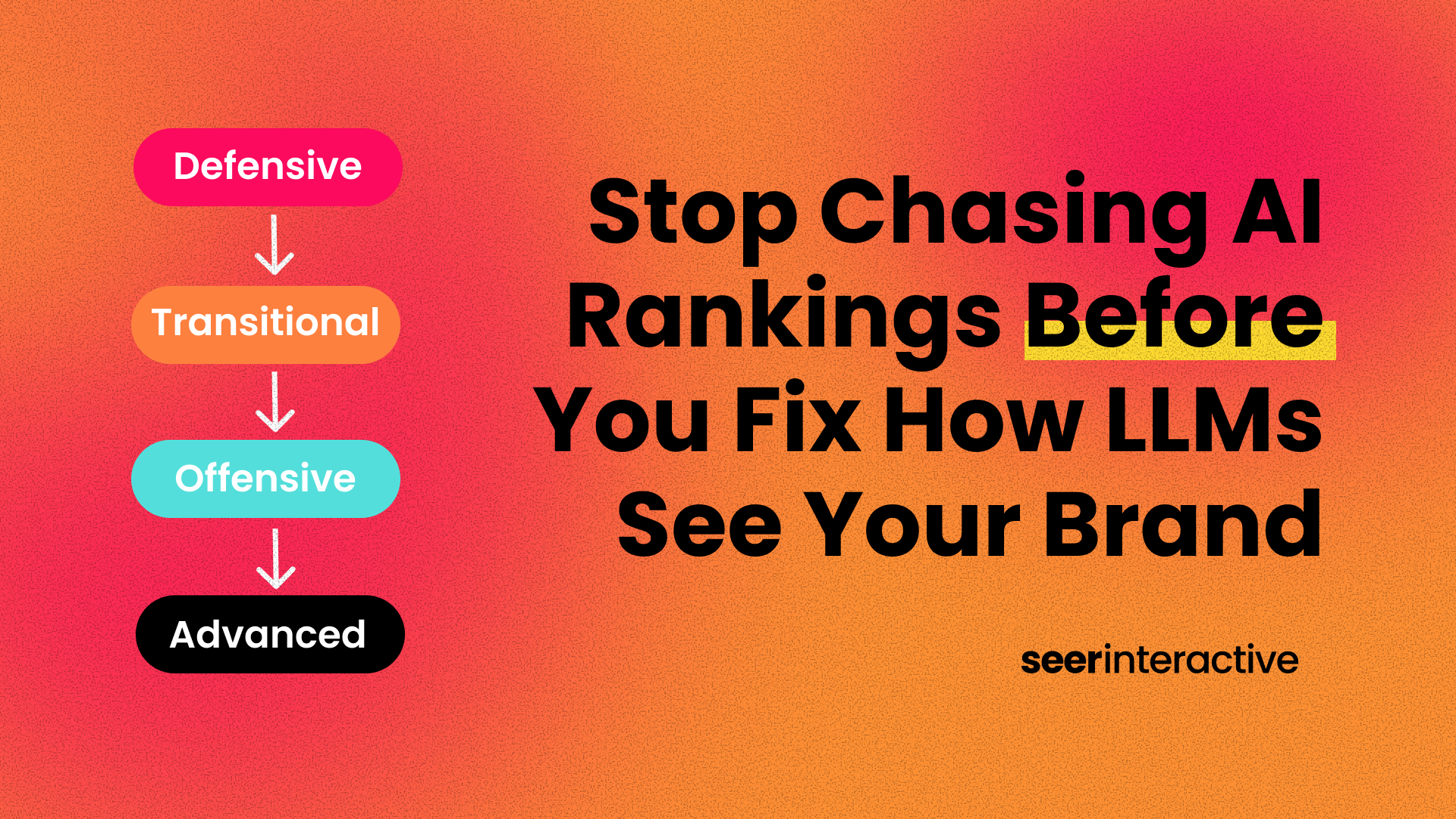
Stop Chasing AI Rankings Before You Fix How LLMs See Your Brand
The counterintuitive truth about AI visibility: Most brands are trying to win elections before voters know their name.