

Key Takeaways
- OpenAI will introduce advertising, giving ecommerce brands new ground to test out
- Google now allows brands to surface offers directly in AI Mode’s shopping comparisons
- Shopify and Google launched Universal Commerce Protocol (UCP) for AI-native transactions
- Microsoft Copilot now supports direct checkout functionality
- AI Brand Agents can serve as conversational shopping assistants directly on your website
The Bottom line: AI platforms are evolving from research tools into transaction layers — and brands need to prepare now.
In just one week this January, four major AI platforms announced ecommerce features that could fundamentally reshape how your customers discover, evaluate, and buy products.
While many of these announcements are still in the early stages, together they reveal a clear trend: AI-powered experiences are moving from "research assistant" to "transaction layer."
Below is a practical overview of what's changing and how brands should respond.
1. ChatGPT Will Soon Show Ads: What Marketers Need to Know
What's happening:
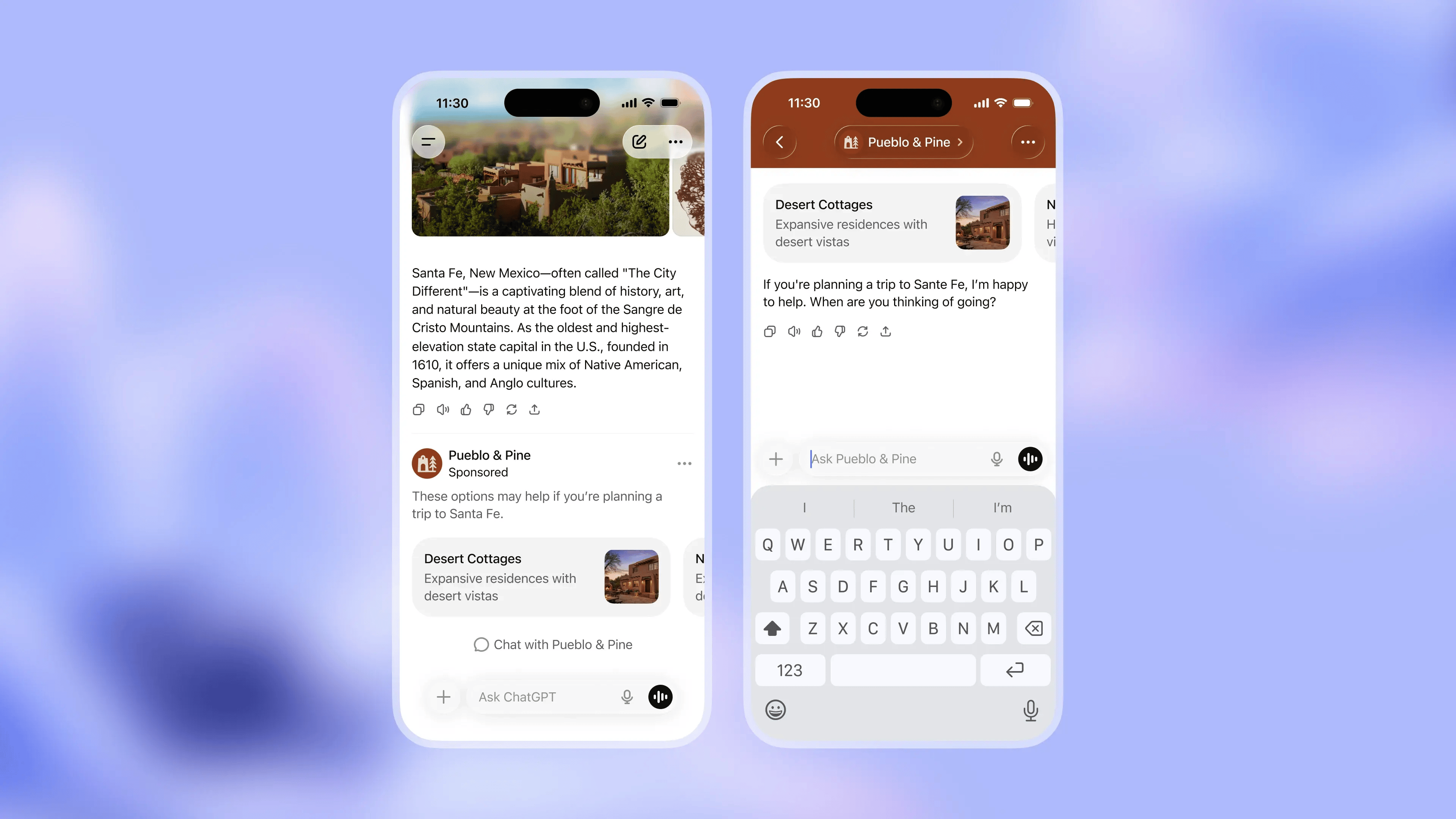
OpenAI announced plans to test advertising within ChatGPT, with rollout expected in the coming weeks. Ads will appear at the bottom of responses for adult users on the free tier and $8/month "Go" tier in the U.S. Paid subscriptions (Plus, Pro, Business, Enterprise) remain ad-free. OpenAI emphasized ads won't influence responses, conversations stay private, and users can disable personalization.
Why it matters:
Advertising in ChatGPT won't behave like traditional search or social — the context and user mindset are fundamentally different. Ads appear after the AI provides helpful information (post-answer placement), creating a new dynamic for how users perceive sponsored content. OpenAI committed to no ads for users under 18 or on sensitive topics (health, mental health, politics).
What brands should do now:
- Watch closely, don't rush in: This is a monitoring moment, not an immediate action moment. As details are released, it will be important to understand the targeting and reporting capabilities of this new channel.
- Evaluate how intent works differently in conversational environments versus search or social
- Consider where paid placement fits alongside organic AI answers — and whether co-existing with AI-generated content helps or hurts brand perception
- Assess first-mover advantage: Determine if early participation could provide meaningful learning opportunities
- Prepare budget scenarios for when advertiser access opens up
2. Google Displays “Direct Offers” in AI Shopping Experiences
What's happening:
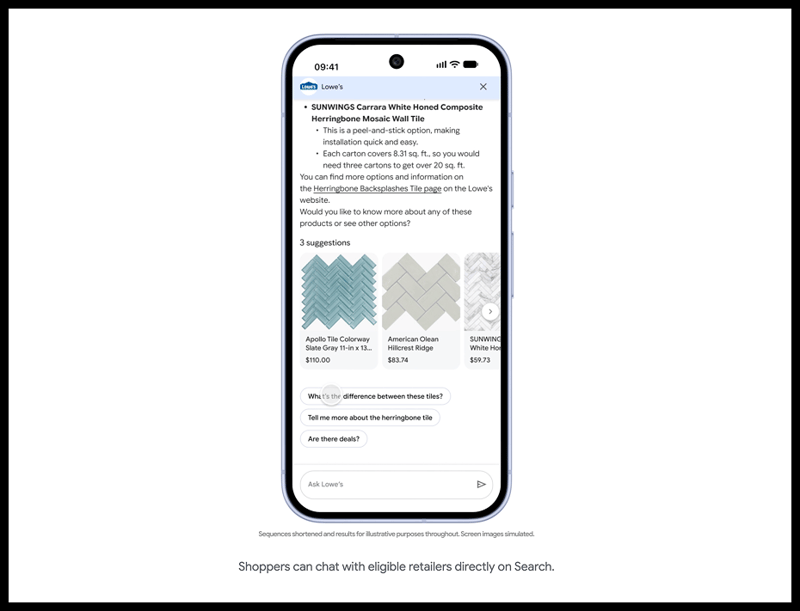
Google announced Direct Offers, allowing brands to surface discounts, free shipping, or loyalty perks directly within AI-powered shopping comparisons. When shoppers compare products, promotional incentives now appear alongside options in AI Mode.
Why it matters:
Offers are no longer just post-click tactics — they're part of discovery. If competitors surface compelling incentives at the comparison stage and you don't, you may lose customers before they reach your site.
What brands should do now:
- Pressure-test which incentives actually move decisions, not just clicks: Free shipping may perform differently than 20% off depending on your category and average order value
- Align promotional strategy with AI-driven shopping moments: You may need to offer different incentives for AI surfaces than for traditional paid search
- Break down internal silos: This will require coordination between media, merchandising, and ecommerce teams — it won't live neatly in one department
- Monitor competitive activity to understand what offers are appearing in your category
3. Universal Commerce Protocol (UCP): Think the ‘Buy Now’ Button within Google's AI Mode
What's happening:
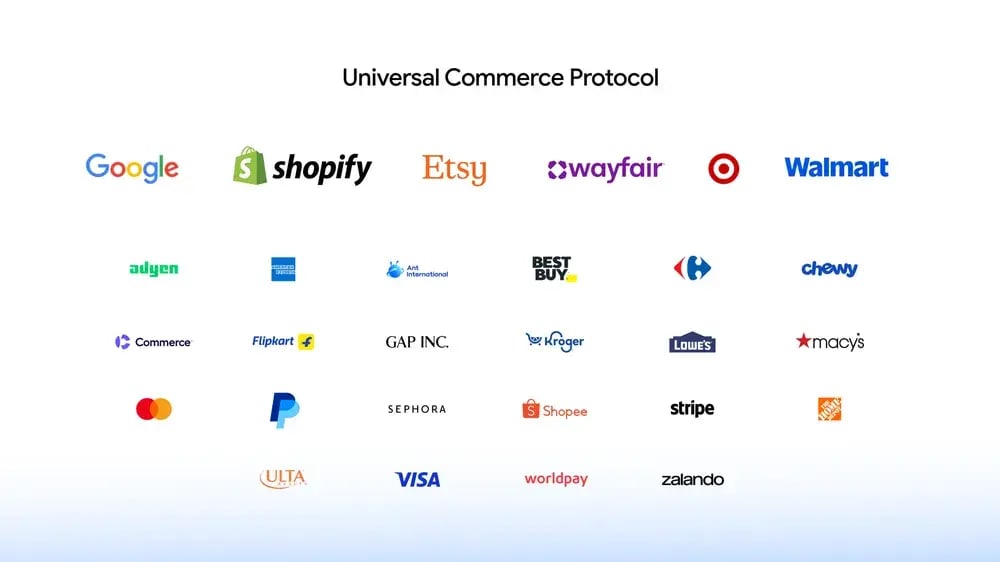
Google and Shopify announced the Universal Commerce Protocol (UCP), which enables AI agents and merchant systems to transact using a shared "commerce language." Users can complete purchases directly inside AI experiences without jumping to websites. For example, asking "buy those running shoes" could trigger (Buy) checkout through standardized APIs.
Why it matters:
Websites may no longer be the primary conversion surface for every journey. If AI agents complete purchases on behalf of users, traditional traffic and conversion metrics need reinterpretation. Brands must think about participating in AI-led journeys, not just driving site visits.
What brands should do now:
- Audit your commerce stack to understand how it could support API-driven, headless checkout experiences
- Evaluate your product feeds: Ensure pricing, inventory, descriptions, and offer data are structured, up-to-date, and accessible via APIs
- Start measuring "participation" alongside traffic: If transactions happen outside of your site, how will you track assisted conversions, brand consideration, or customer satisfaction?
- Engage with your ecommerce platform: Ask about their UCP roadmap and compatibility — Shopify merchants may have a head start, but other platforms will likely follow
- Test transaction flows as they become available to understand where drop-off or friction might occur
4. Microsoft Copilot Checkout: Purchase Without Leaving the Interface
What's happening:
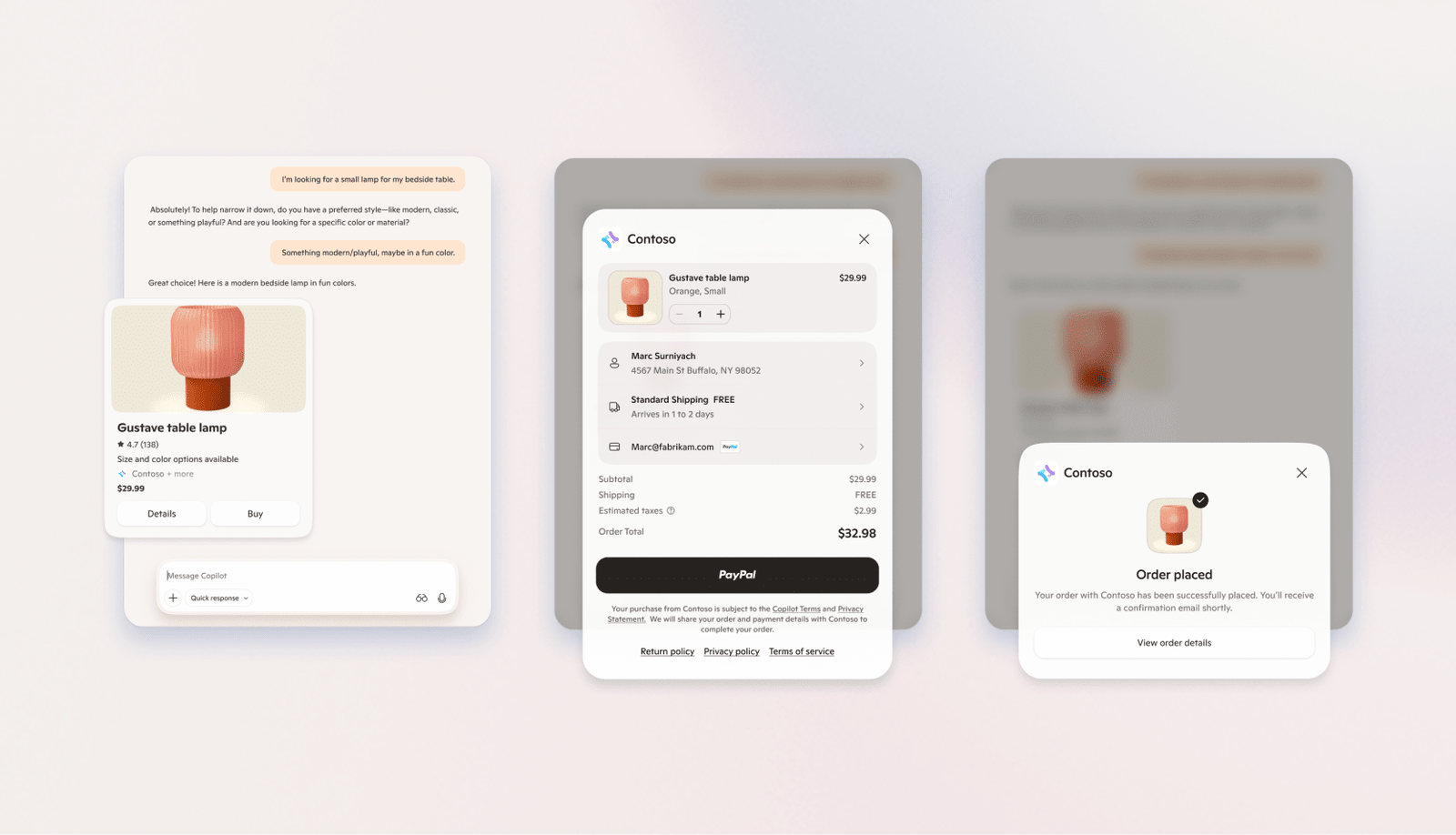
Microsoft announced Copilot Checkout, allowing users to discover, compare, and complete purchases directly within Copilot — while brands remain the merchant of record. Early data shows Copilot-assisted journeys led to 53% more purchases within 30 minutes compared to unassisted ones.
Why it matters:
Reducing friction at the decision stage dramatically impacts conversion, especially for considered purchases requiring reassurance or multiple questions. The traditional funnel becomes more fluid: discovery, consideration, and purchase happen in one interaction.
What brands should do now:
- Monitor eligibility requirements and supported payment platforms as Microsoft releases more details
- Evaluate how AI-assisted purchase paths complement your existing funnel: This won't replace your site entirely, but it may become a meaningful channel for certain customer segments
- Prepare for a world where the "assist" becomes as important as the ad: If AI is answering questions and guiding purchases, your product information, FAQs, and support content need to be accurate and comprehensive
- Test user experience once available to understand how customers interact with AI-guided checkout versus traditional flows
- Track new metrics: Look at assisted conversion rate, average handle time, question types, and customer satisfaction within AI-assisted journeys
5. AI-Powered Brand Agents: Your Voice, On Your Site
What's happening:
Microsoft launched Brand Agents — AI shopping assistants embedded on brand websites that speak in your brand's voice, answer questions, compare products, and guide purchasing decisions. Alexander Del Rossa, a premium sleepwear retailer, saw over 3X higher conversion in Brand Agent–assisted sessions.
Why it matters:
This replaces static product pages with guided, adaptive experiences. For brands with complex catalogs or frequent compatibility questions, AI agents can dramatically improve on-site experience and reduce support burden while increasing conversion.
What brands should do now:
- Document your brand voice, tone, and key messaging now: This becomes training data for your AI agent
- Map common customer questions and decision points: Where do people get stuck today? What questions come up repeatedly in support tickets or reviews?
- Identify high-drop-off pages and consider how an AI agent could provide real-time assistance
- Start small with pilot testing: Choose one product category or high-traffic landing page to test conversational support
- Monitor adoption and effectiveness: Track engagement rates, resolution rates, conversion lift, and customer feedback
- Watch platform availability: As Microsoft and others expand access, evaluate which solution best fits your tech stack and customer needs
The Big Takeaway: Prepare for a Compressed Journey
As consumers increasingly rely on AI to research, compare, and decide, the traditional funnel is compressing. Discovery, persuasion, and conversion are happening in fewer moments and fewer interfaces. That shift raises the bar for brands.
What This Means in Practice
- Structured feed data is critical: If your product info, pricing, inventory, and offers aren't accessible via APIs or standardized feeds, you won't show up in AI-powered shopping experiences
- Content quality matters more: AI agents rely on accurate information to answer questions and make recommendations
- Speed wins: Customers won't wait for slow sites or complicated checkout flows when AI can complete purchases in seconds
- Attribution gets harder: Traditional metrics may not capture the full picture — you'll need new ways to measure influence in AI-assisted journeys
Timeline & Budget Considerations
Near-term (Q1-Q2 2026):
- ChatGPT ads testing begins in the coming weeks (late January-February 2026) for free and Go tier users in the U.S.
- Google AI Mode’s Direct Offers are available now for eligible brands
- UCP and Copilot checkout are in early rollout — test when available
- Brand Agents feature is becoming available through Microsoft and other providers
Budget implications:
- ChatGPT ads: TBD, likely CPM or CPC model
- Google offers: Existing Google Merchant Center integration
- UCP/Copilot: May require commerce platform upgrades or API development
- Brand Agents: Licensing or subscription costs depending on provider
What You Should Do This Week
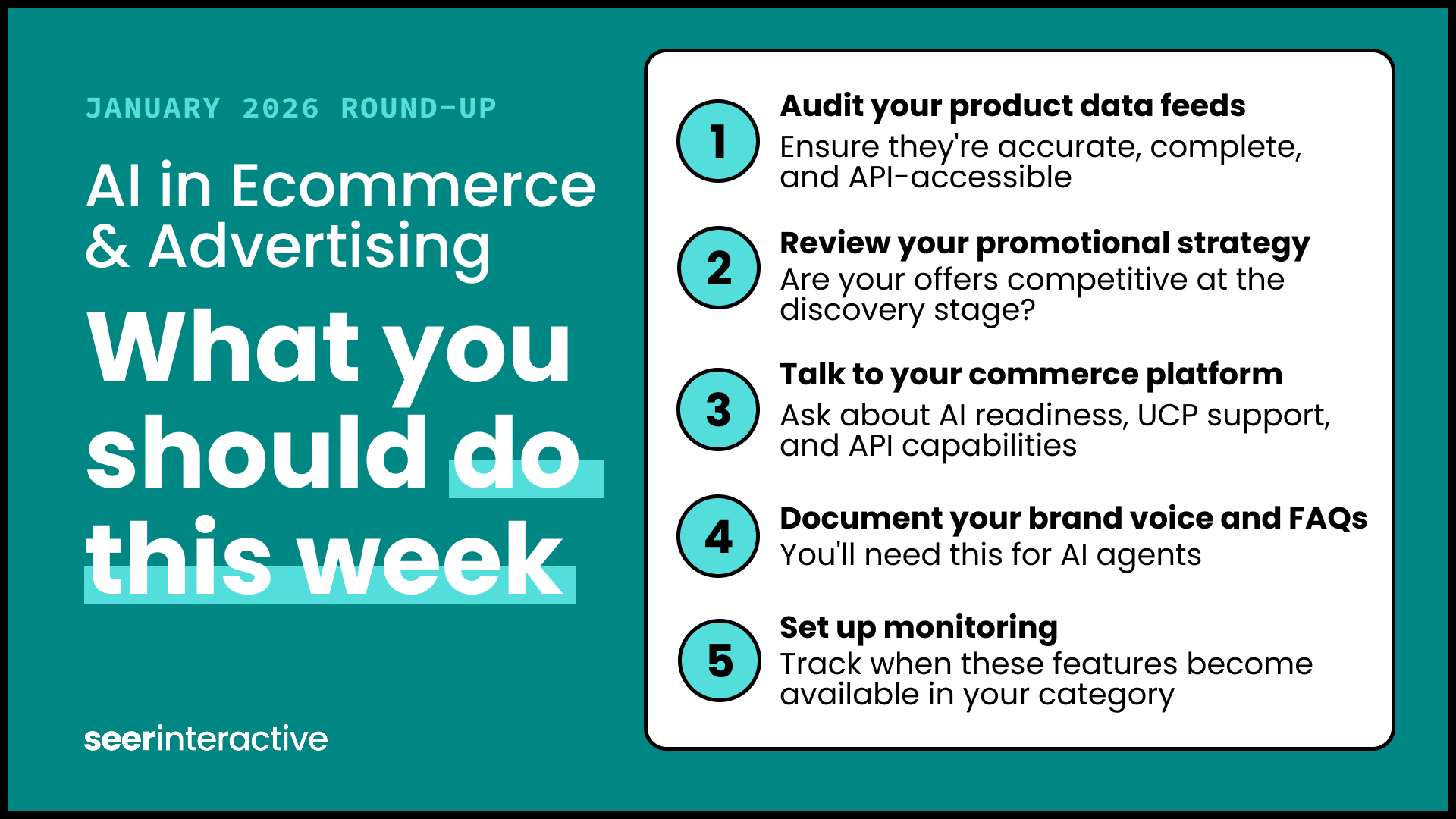
- Audit your product data feeds: Ensure they're accurate, complete, and API-accessible
- Review your promotional strategy: Are your offers competitive at the discovery stage?
- Talk to your commerce platform: Ask about AI readiness, UCP support, and API capabilities
- Document your brand voice and FAQs: You'll need this for AI agents
- Set up monitoring: Track when these features become available in your category
Stay Ahead of AI Commerce Changes
As AI continues to change rapidly and incorporate more ways for consumers to shop outside of traditional experiences, it’s important that marketers stay in the loop and experiment with new ecommerce features. The brands that move early to test and learn will be best positioned to win in this new landscape.
Want help preparing your brand for AI-powered commerce? Contact us to discuss your strategy, or subscribe below for updates as we continue tracking these developments.

.png)
.png)
.png)