

Think about how Amazon delivers ads today. If you search for a product and the brand you want isn’t there, you don’t get something irrelevant. You get the next most contextually relevant option. You don’t see tennis shoes when you search for juice, you see other types of juices and similar beverages.
That’s exactly what Google is trying to replicate across the broader web with their recently launched Universal Commerce Protocol (UCP). And just like on Amazon, if your brand isn’t present and structured correctly, a competitor gets your digital “shelf” space.
UCP is one of the most notable ecommerce features recently announced by many of the top AI platforms (which also include ChatGPT ads and Microsoft Copilot Checkout). Here’s what you need to know about UCP and what it means for marketers in the ecommerce space.
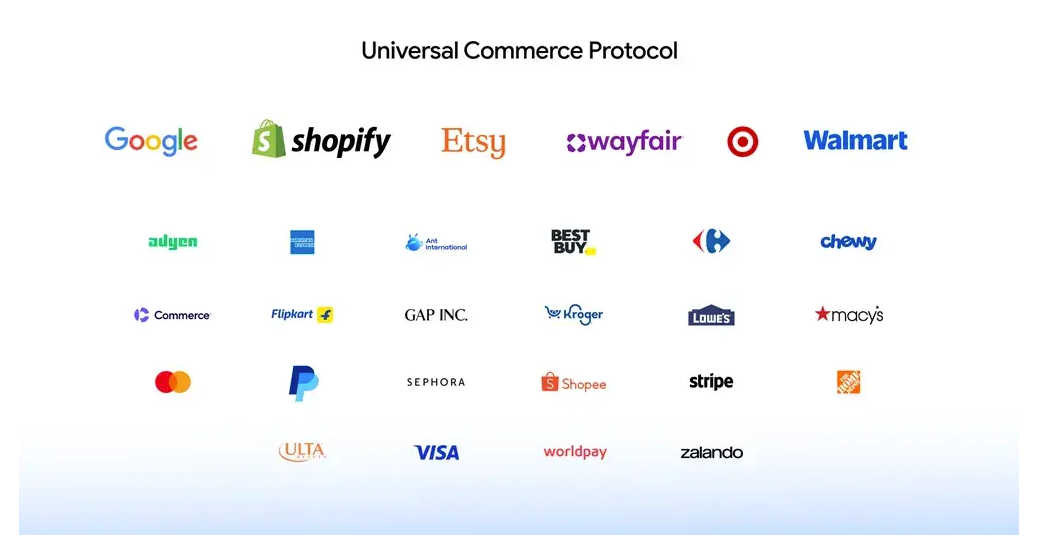
What Is UCP?
UCP is Google’s answer to the OpenAI/Shopify integration. In short, it’s designed to create a seamless, AI-assisted shopping journey across the ecommerce ecosystem: payment providers, digital storefronts, the works.
In its current version, UCP is essentially a “Buy Now” button inside AI Mode on Google Search and Gemini:
- A user asks a shopping question
- They receive AI-generated recommendations
- They can purchase directly, without leaving Google
It’s a single-item guest checkout for now. Take a look:
Near-term additions will include multi-item carts, more surfaces, and account/loyalty linking. Google is also expanding beyond the initial US-only rollout to eligible retailers globally.
The bigger story is the long-term vision: an AI agent that autonomously finds, evaluates, and buys products on a user’s behalf, before your customer ever opens a browser. That’s a different game entirely from current marketing efforts like ad placement.
New Advertising Features Worth Knowing
Several features are rolling out alongside UCP that marketers should get familiar with now:
- Direct Offer: The paid product tied to UCP (currently a pilot program) where advertisers bid to show exclusive discounts directly within AI Mode
- New Merchant Center (MC) attributes: Fields for product Q&A answers, compatible accessories, and substitutes that will feed the AI’s understanding of your catalog
- Business Agent: Branded AI chatbots that answer product questions on Search in your brand’s voice (Lowe’s, Michaels, and Poshmark are already live)
But Does It Actually Impact My Brand?
One question that keeps coming up in our client conversations as we talk about new AI ecommerce features: “Are my customers even on these platforms yet?”
It’s a fair question, and for some brands, the honest answer right now is not at scale. But here’s the problem with treating that as your signal to wait: by the time volume is undeniable, you’re not a week behind competitors who moved early— you’re months behind. The catch-up tax comes in time, money, and, for some brands, clients who have already migrated to competitors with a stronger AI presence.
UCP = A New Way to Make Purchasing Decisions
Brands that treat UCP like another channel to test when it matures are underestimating how the game has changed. AI agents don’t give second chances to brands that weren’t structured and present when they first evaluated options.
We think about it in terms of category fit rather than volume. If your product involves research, comparison, or spec-matching, the case for moving early is strong. Think: motorcycle parts, software, or anything where an AI actually helps a user find the right option. More habitual or impulsive purchase categories have more runway.
Spend level matters too. If you’re already investing heavily in paid search, allocating even a small percentage to testing AI-native surfaces gives you data and positioning before competitors have either.
Our prediction: Within 24 months, ecommerce brands that haven’t engaged with UCP will begin to see real consequences: stifled growth, negative revenue impact, and client loss to competitors who structured their feeds and presence early. The brands that come out ahead will be those who recognized early on that AI platforms are becoming key infrastructure for the future of ecommerce, and built accordingly.
Why do we think this? Going back to our original example, Amazon didn't patent "one-click" purchasing by accident. It is one of the clearest examples we have of what happens when you remove friction from the buyer journey. Fewer steps equal higher conversions. UCP is making the same bet across the broader ecommerce ecosystem, which means brands that aren't ready for it will feel it down the line.
What to Do Now
So what should your brand do to make sure you don’t get left behind? We recommend you:
- Get on the UCP waitlist: While UCP is currently available to limited merchants via an early access program, you can still join the waitlist
- Clean up your Merchant Center feeds: Optimize product descriptions and listings before UCP scales. If your feed is disorganized when AI agents start evaluating products in your category, you’ll lose that shelf space to a competitor who prepared.
- Watch for Direct Offers access: Treat early testing the way you’d treat any brand awareness play — measure reach and CPM first, then look for correlated lifts in branded search and direct traffic over time
- Build new MC attributes into your feed workflows early: The product Q&A, accessories, and substitutes fields aren’t optional extras. AI agents understand and recommend your catalog through them. Getting ahead of them now is a real (if temporary) advantage.
The Bottom Line for Marketers
AI-assisted shopping lets brands reach new audiences without driving customers to a website first. But the more important shift is structural. If your brand isn’t present and well-organized when an AI agent is evaluating options, you’ll get left out of the conversation entirely.
We’ll be watching UCP closely as it develops. We’d recommend you do the same.
Are you getting questions from your team or leadership about AI-assisted commerce? The Seer team can help you find the answers. Contact us to learn more.

.png)
.png)
.png)