
Most paid teams are approaching LLM ads the way we approach any new placement:
- new inventory
- test a budget
- see what happens.
The risk we're worried about is wasted spend. The ad underperforms, we pause it, we move on.
That's not the downside I'm worried about.
What happens to your ad performance when ChatGPT is trashing your brand and you don't know it?
I'm worried about the ad doing exactly what it's supposed to do, showing up, while the answer next to it recommends a competitor, surfaces a negative review, or describes your brand in a way you'd never choose yourself. At that point the problem isn't media efficiency.
You just paid to put a spotlight on the wrong message.
Existing performance when paid shows up next to organic
When paid ads ranked alongside organic results for a brand we work with, organic CTR went up 156%.
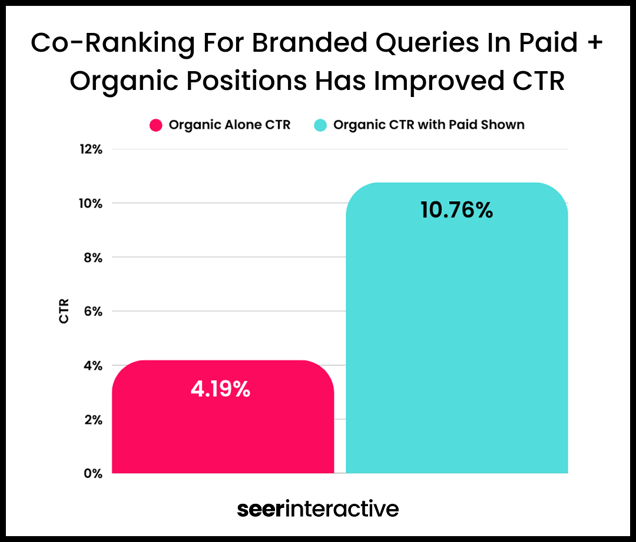
My hypothesis is the paid ad made the organic result feel more legitimate. The two together told buyers: this brand is the answer.
Then we paused the ads - organic didn't cover the drop. We believe that we lost the credibility signal the paid placement was providing.
Do ChatGPT ads send a credibility signal boosting CTR for organic? Maybe.
The difference is you have far less control, as a paid search marketer you can see what's ranking next to you. There are whole companies who manage this issue, yet as we embark on ChatGPT launching ads - how do we understand the interplay between these?
GEO (organic) and ChatGPT Paid ads must work together
In ChatGPT, the answer sitting next to your ad is generated in real time, built from everything the model understands about your brand. You don't control it. You might not even know what it says until a buyer is already reading it. And its personalized based on their history and what ChatGPT knows about them.
The old world had two buffers. Now it has none.
In traditional search, when you bid on a keyword, your ad showed up and organic results appeared below it.
There was a measurable pixel distance between your ad and whatever else was on that page.
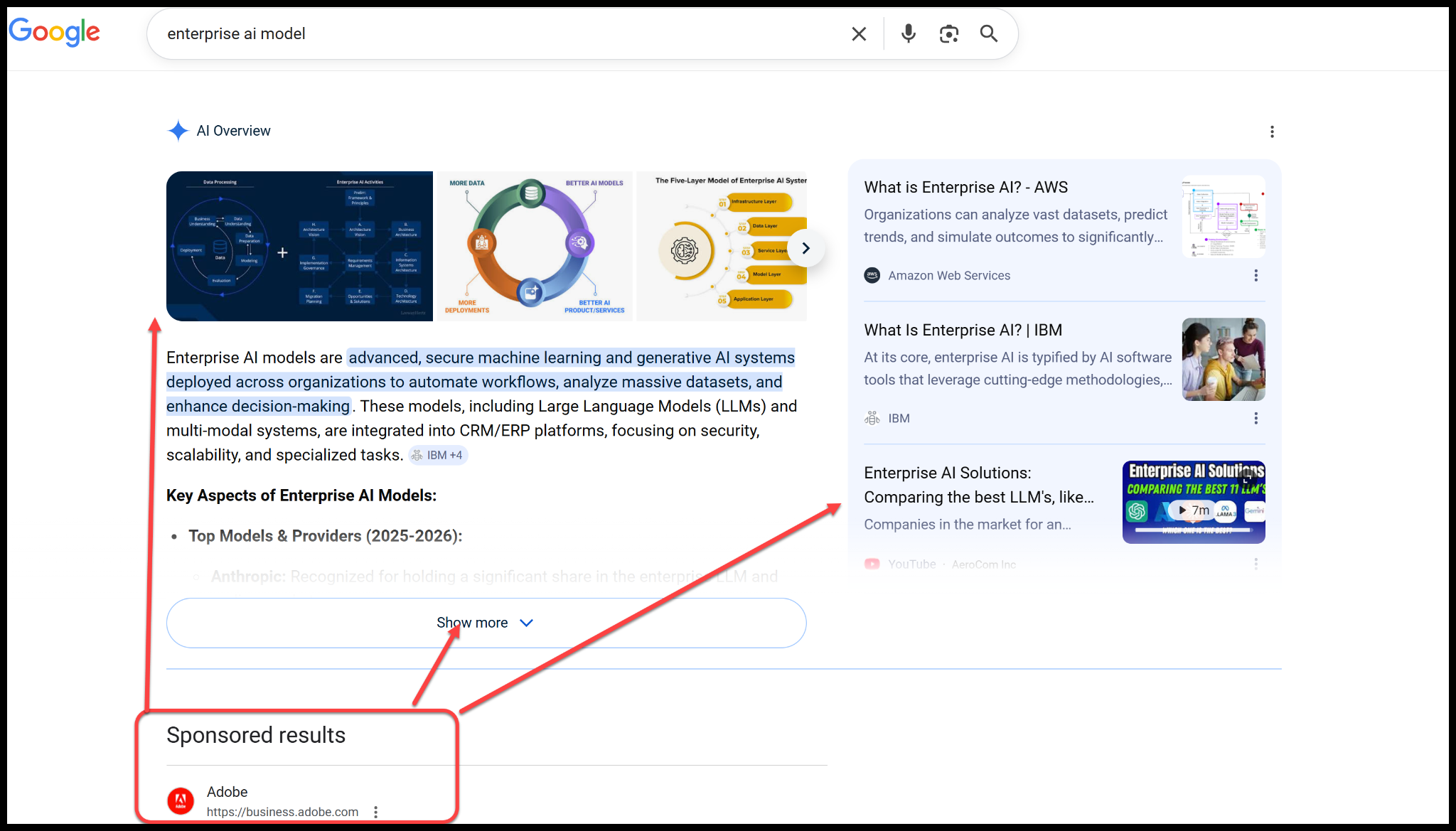
Here you can see distance between your ad and the organic results, Seer has always been highly cross divisional in how we think (old post from 10 years ago).
If I’m Adobe, ChatGPT, or Databricks all of which have Google ads here I can use this organic intel (images, reddit, AI overviews) to understand what Google projects the customer wants.
- Do I have images that show how enterprise AI works on my landing pages in paid since Google thinks most people want that?
- Am I visible organically in the AI Overview & citations, what are they saying about my brand? Those things could impact my ad performance.
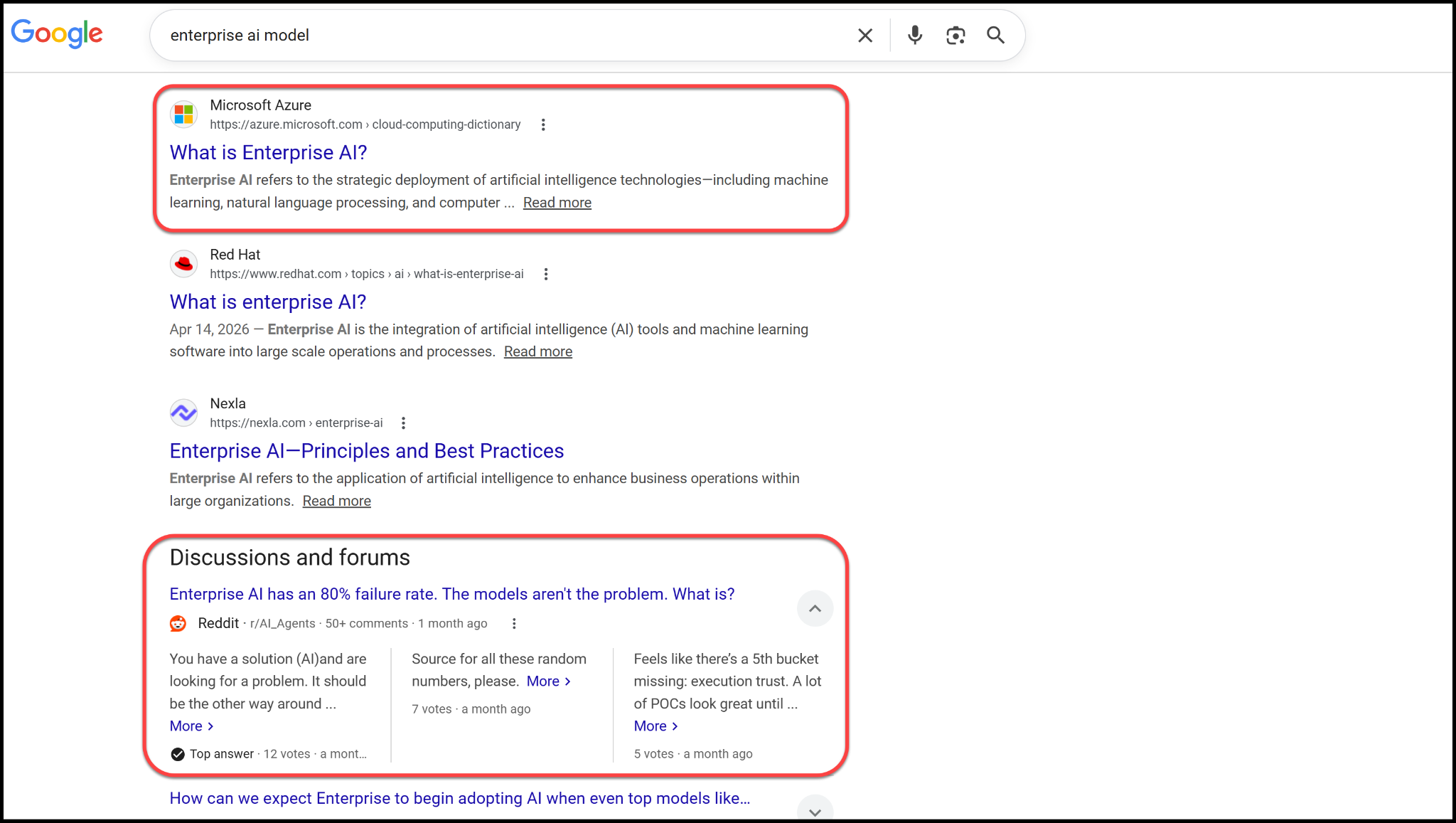
- I can get the competing domains, to analyze ad performance … how does my ad perform when Microsoft shows up, I can ask about how my ads perform when reddit shows up.
The big difference between AI answers and search answers: friction
In the simpler Google days - if something unflattering was ranked on page one, the user still had to click on it, load the page, close the pop-ups, and actually read it. That friction was your secret friend.
Humans got tired of clicking on all those results.
None of us wanted to click on 50 sites, read 50 posts, and try to remember it all and come up with a conclusion, only to have to do more searches after you learn about the topic and more and more and more.
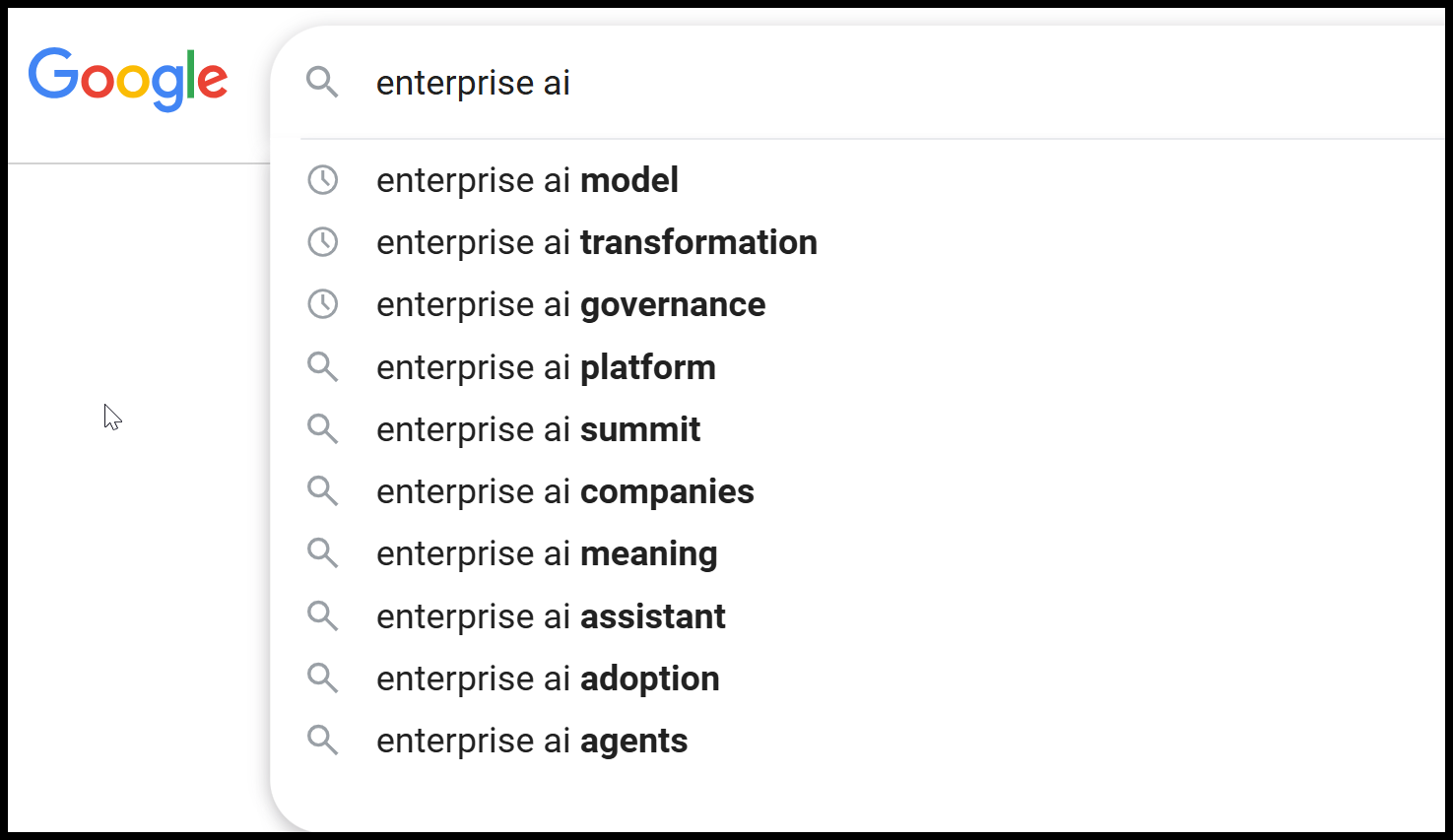
If on your learning journey you googled each of these words, and clicked on all the results, and actually read them all, you would have gone to 100 pages, and read so many dang words.
Is your ad copy on ChatGPT oblivious to what ChatGPT is saying?
This is exactly what happened to 1 bad review of our brand in 25 years … the sites on page 5 and 8 of Google results that no human would dig into now got into answers for AI which could impact what people think about us.
Remember: Click-through rates on organic results hover around 1%-2%. Most people never got to most of the results on page 1 much less page 2.
So in practice: you had distance from the organic layer, and friction protecting you from it. The two buffers meant that even if something negative existed, it could be buried enough that it rarely mattered.
In an AI world, we not only get less friction, we also give it more guidance by typing in so much more about ourselves.
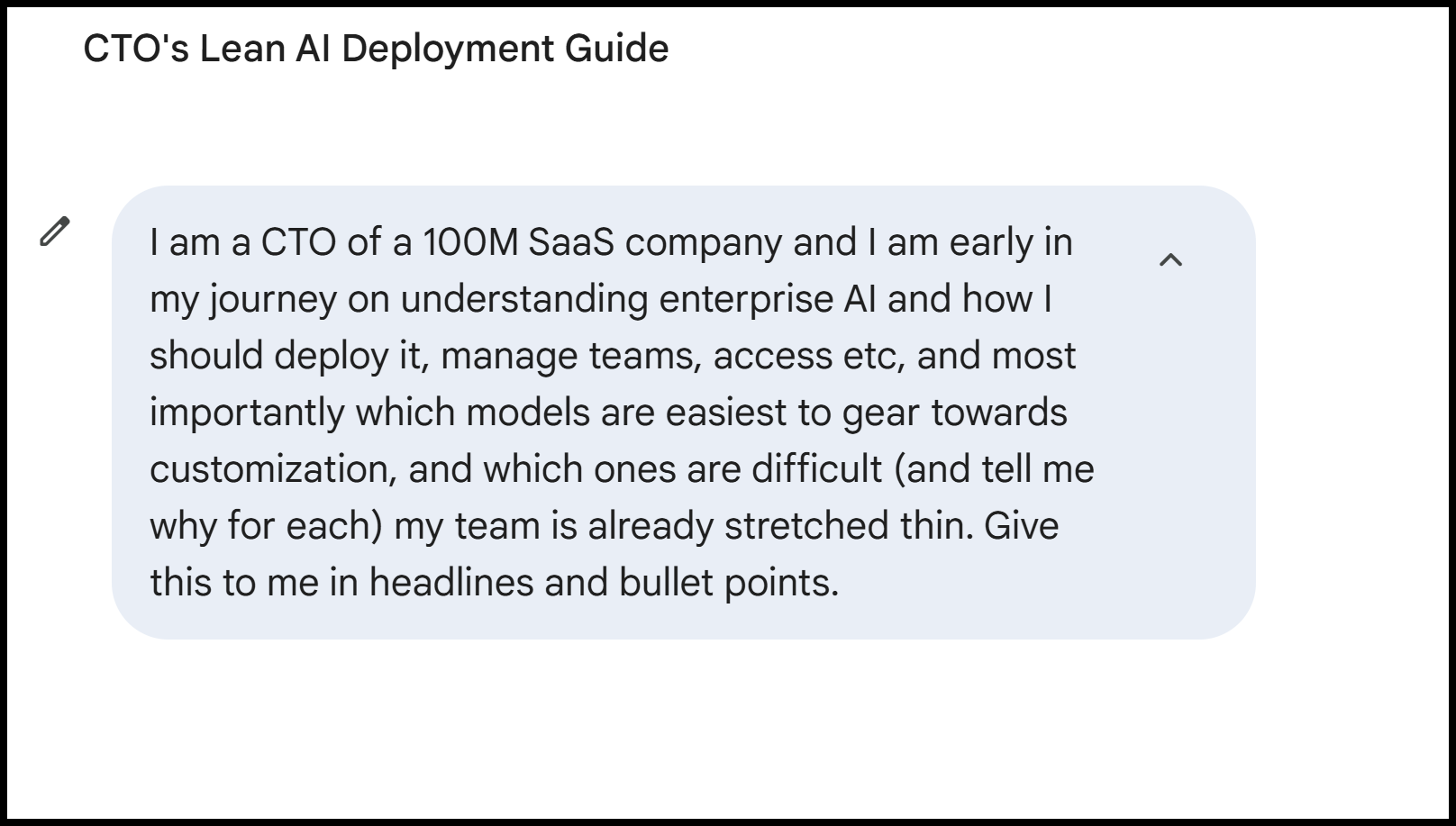
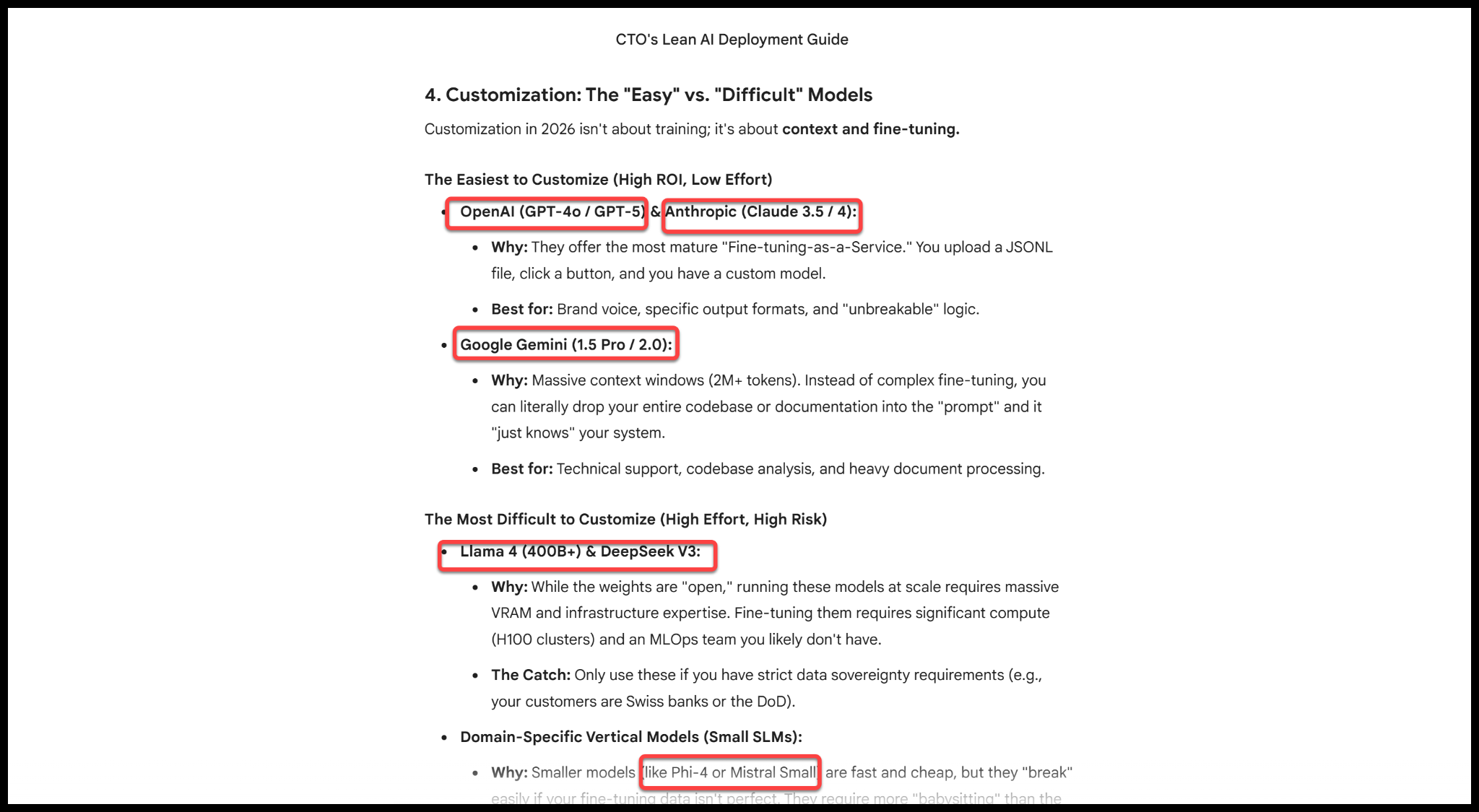
In an LLM, both of those buffers are gone.
So in this example above if you are LLama, you might be advertising all day right next to content that is like you should never pick these guys.
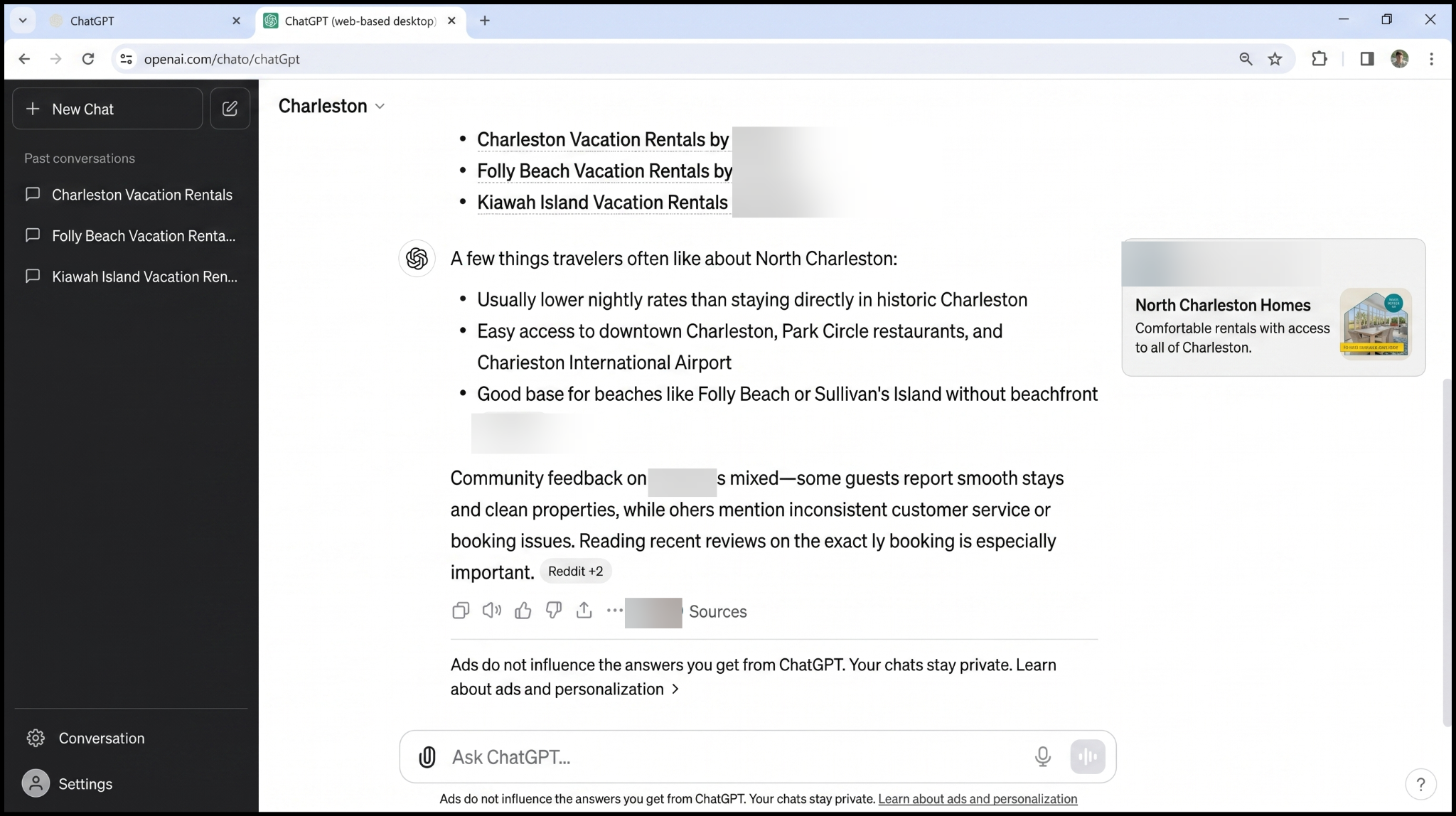
Before any LLM ad budget gets approved, go into the platform.
Run the exact prompts you're planning to bid on. Read what comes back.
-
Is your brand in the answers organically?
-
What is the sentiment?
-
Is the response framed the way you'd want?
-
What are competitors being credited for that you're not?
-
Evaluate your site and have ChatGPT tell you how well you answer those prompts compared to your top competitors
Client experiment: ChatGPT didn't recommend them
I did this for a B2B client getting ready to launch on ChatGPT. What came back was uncomfortable in the right way. For several of the themes they were planning to target, their content didn't support the answer well.
The product was a fit. The content wasn't framed in a way the LLM could pick up and cite. A competitor was doing it cleaner.
Here's what that looked like visualized:
| Content Topic | Your Brand | Competitor 1 | Competitor 2 |
|---|---|---|---|
| Quantified ROI / Business Case Content | ~ | ✔ | ✔ |
| Step-by-Step How The Product Works | ✕ | ✔ | ~ |
| Pricing Transparency or Cost Guidance | ✕ | ✔ | ✕ |
| Use Case or Industry Vertical Pages | ✔ | ~ | ✔ |
| Buyer Persona Pages (e.g. IT / Finance / Ops) | ✕ | ✔ | ~ |
| Case Studies With Measurable Outcomes | ~ | ✔ | ✕ |
| Comparison or "vs. Competitor" Content | ✕ | ✔ | ✔ |
| Integration or Technical Capability Pages | ✔ | ✔ | ✕ |
Use the AI that serves your ads to tell you if you should advertise in the first place
The thing that stuck with me: I used the same AI that would be serving their ads to figure out whether they were ready to run them.
No fancy tool. Just logic.
If ChatGPT is deciding who belongs in an answer, it's a pretty good judge of whether you're one of them.
I think most teams are skipping this step entirely.
If your organic sentiment is positive, you'll likely get more ROI from your ads
Once you've run the audit, take it a step further: for each prompt you're planning to bid on, track what percentage of the time the LLM answer about your brand is positive. Run it 10 times. Get a baseline.
That number matters more than most teams realize. If the answer is positive 80% of the time, your ad has something to amplify. If it's 50/50, you're gambling. If it skews negative, you're actively paying to make sure more people see the problem.
Nobody has clean data yet on how organic sentiment affects LLM ad CTR and conversion rates. But we know enough from search to believe the correlation is real. The brands that figure this out first — that tie their content gap work to measurable shifts in how the LLM frames them, and then connect that to ad performance — are going to have a significant advantage.
You can't buy credibility, organic AI visibility is just that!
Organic AI visibility is credibility. Paid makes the signal louder. It cannot fix a weak signal.
Brands that earn citations, close content gaps, and show up in answers before they run ads will get compounding returns on that spend.
The ad and the answer reinforce each other.
Buyers see both and think: this is clearly the right option.
Brands that skip straight to the ad will pay for impressions that could actively work against them. And that erosion doesn't stay in the ad platform. It follows the buyer into every other touchpoint downstream.
Before your next LLM ad budget gets approved, get answers to these questions:
- What does this platform say about us when someone asks the prompts we're planning to bid on?
- Are we in the organic answer, or just the ad?
- What percentage of the time is that organic answer positive?
- If we're not in the organic answer, what would it actually take to get there — and how long will that realistically take?
- How can I optimize my site for both human and AI visitors?
If the answer is "we're only in the ad right now," that's not a reason to kill the budget. It's a reason to run the content audit first, close the gaps you can close quickly, and treat LLM ad spend as something you earn the right to scale.
This conversation shouldn't happen inside the paid team in isolation. Whoever owns your AI visibility strategy needs to be in the room before that budget gets signed off.
If that person doesn't exist at your company yet, that's the first gap you need to close.


.png)
.png)