
At Seer, we don’t do performance reviews just to check a box. They’re core to how we invest in people and live out our values. But that level of care and detail doesn’t come easy.
As the People Partner who leads this process, I figured there had to be a better way to keep reviews meaningful and human-centered without overwhelming the people writing them.
So I built a custom GPT: a fully integrated AI-powered review assistant that helped our team write clearer, more equitable reviews - faster. This gave our team back hours they could reinvest into client work, sales, and strategic priorities.
I’ll show you how I built the tool (with zero engineering background), the problem it solves, how it evolved, and the impact it had across the org.
The Challenge: Reviews That Matter… But Ask Too Much
We’ve always taken performance reviews seriously at Seer. They’re how we ensure every team member gets meaningful feedback and understands how to grow.
We do full-cycle reviews twice a year, which include:
- Peer reviews
- Self-assessments
- Upward feedback
- Manager reviews
Each one is written with care, aligned to our Universal Role Expectations (UREs), and calibrated across teams to reduce bias and create equity. They are dense, valuable, and non-negotiable.
But that level of quality comes with a cost.
How to Tackle Burnout, Bias, and Bandwidth
As our org grew, so did the volume and complexity of feedback. And every cycle, I saw the same patterns emerge:
- Time drain: Reviews were taking hours (even days) to complete, on top of people’s regular work
- Cognitive load: Managers and peers were being asked to synthesize six months of performance from memory
- Recency bias: Work from earlier in the half was being forgotten or underrepresented
- Inconsistency: Review quality varied drastically depending on who was writing them, how much time they had, and how experienced they were
- Inequity in goal-setting: Some reviews had carefully written goals; others had none at all because the manager ran out of time or didn’t know where to start
Our team started to explore AI, and I realized its potential for performance reviews. But we needed a tool with the ‘rules of engagement’ and prompts built in - something centralized and easy to use.
A tool that could:
- Reduce the time and mental load of review writing
- Address the blockers we were seeing across the org
- Uplevel review quality, clarity, and equity
- Bring consistency and equity to the process, without sacrificing nuance
The Solution: Building a GPT That Works for Humans
When I first started exploring the idea of building a custom GPT for reviews, I had one core goal:
Lighten the manual and mental load of performance reviews - without lowering the bar.
I didn’t want a shortcut. I wanted a support tool for our team. Something that could help people do better work, faster, while improving the quality, consistency, and equitability of what we were producing.
V1: Testing the Waters with ChatGPT
It was Q4 of 2024. Our team was starting to lean into AI, and while there was excitement, there was also overwhelm. I knew we needed something simple and effective - so I built the very first version of our review GPT using ChatGPT itself.
I opened ChatGPT in one window, told it what I wanted to build and why, and asked it to walk me through how to create a custom GPT. I followed its instructions in real time, building the tool as it taught me how.
That first version included:
- PDF templates for each review type (peer, upward, self, manager)
- A full breakdown of our 1–5 rating scale
- Our UREs, so the GPT could compare input against role-level standards
- A Guru card with example inputs and instructions on how to use the tool
Even though it was simple, the results were promising. Early users reported big time savings, better structure, and a clearer sense of how to write meaningful, constructive reviews. The GPT helped frame the feedback, while still leaving room for the human behind the screen to bring the nuance and care.
V2: Leveling Up My GPT from Helpful to High-Impact
Before our H1 2025 review session, I decided to revisit my custom GPT.
By then, our team had gotten more comfortable with AI. They were ready for something more advanced, so I built a new version of the GPT that could do more with even less lift from the user.
Here’s what I added:
Smarter Content, Lower Cognitive Load
- I rewrote the GPT’s instructions to analyze user inputs, identify themes, and generate growth goals aligned to role expectations
- It now scans for strengths and gaps, then auto-creates 2–3 personalized growth goals for the reviewee (for manager reviews + self-assessments)
Streamlined Formatting
- All review output is formatted in bullet points - making it faster to read, easier to digest for all parties, and more actionable during calibration and review convos
Built-in Talk Tracks
- The GPT can now generate a review talk track to guide conversations between managers and direct reports
No Ratings From the Robot
- GPTs love to people-please - I caught mine handing out our highest-performance rating like it was pumpkin pie on Thanksgiving - which I fixed by instructing it to never give ratings, even when asked by the user
Driving Adoption Through Training (and Tiny Nudges)
To ensure the tool actually got used, I rolled out a bite-sized, 4-week training plan that aligned to each phase of the review cycle.
This included:
- Weekly Slack “hot tips” for how to use the GPT depending on the review type
- Examples of strong input data to feed into the tool (praise, voice notes containing context, performance objectives/goals, documented feedback, 1:1 notes, etc.)
- Quick videos showing how to pull info from platforms like Slack and Small Improvements
- Guidance on customizing tone to avoid overly robotic outputs
And it worked - usage skyrocketed. In our H1 2025 cycle, the majority of the org used the GPT to support their reviews across all four review types.
The Impact: Time Saved, Better Reviews, and Business Value
By the time we wrapped H1 2025 reviews, it was clear: this tool not only saved time, it changed how our team felt about the review process.
Easy Adoption
Instead of burnout and blank pages, our people felt equipped to write meaningfully and share feedback with clarity and confidence. The GPT helped team members move from “I don’t know where to start” to “Wow, that was actually easier than I thought.”
More Balanced Reviews
Across departments, I saw significantly more consistent formatting and timeframes. Reviews felt more holistic, referencing examples from the full six-month period - something we had struggled with in the past. Strengths and growth areas were more clearly articulated, often with specific examples and tied directly to the skills outlined in our UREs.
Clearly Defined Goals and Metrics
Notably, the goals for the next half were more specific and measurable. Without prompting, our scoring actually became more aligned across the organization. I believe that’s a natural byproduct of having better-written, more consistent reviews.
And Most Importantly…The Team Loved It
All the feedback I received about the custom GPT and new process was positive:
“This thing is amazing. I’m finding it cuts both raw time and cognitive load. I can be thoughtful about what I want to communicate without spending a lot of time figuring out how to pull the ideas out of me.”
— VP of Generative AI
“This Performance Review GPT has been a lifesaver 🛟 and will have a lasting impact on how we approach this process moving forward.”
— Team Member
“I just had a teammate list this GPT as their ‘highlight’ for the week.”
— People Manager
“It saved me so much time and helped me recognize strengths and growth opportunities I would’ve missed.”
— Team Member
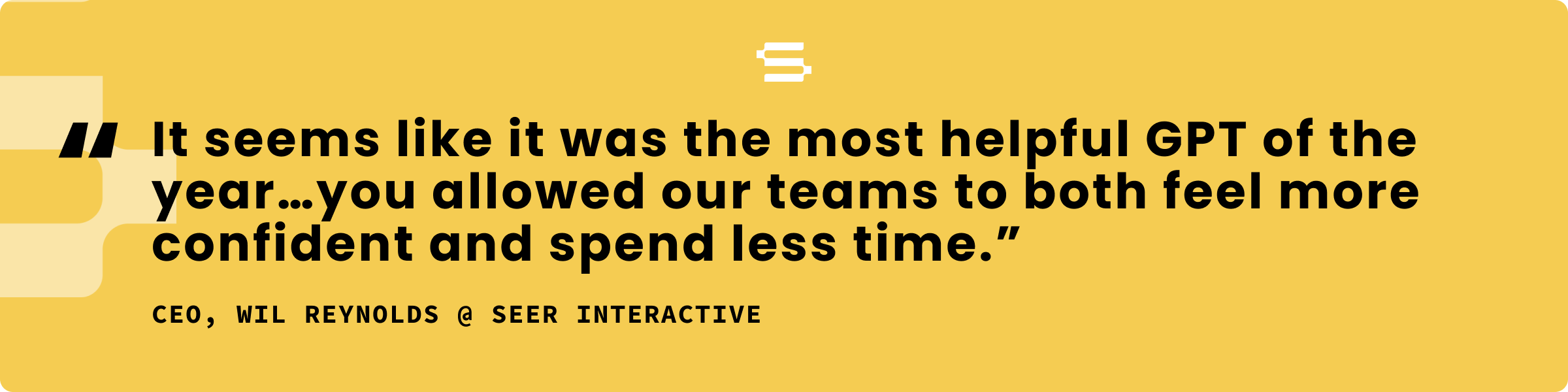
“It seems like it was the most helpful GPT of the year…you allowed our teams to both feel more confident and spend less time.”
— CEO
Takeaways from Our Review AI Experiment
This project is one of many ways we’re experimenting with AI at Seer. Our goal isn’t to chase trends, but to find practical uses that lighten the load and make work more sustainable.
With performance reviews, the change was simple but meaningful: less time wrestling with structure and wording, more energy for thoughtful feedback and goal-setting. And for our teammates, that gave them more time back to focus on their work and their clients.
It’s not a silver bullet, but it’s one small way we’ve made a tough process a little easier for everyone involved.

.png)
.png)