We looked back at hundreds of sales calls about GEO and looked for the questions people are asking, the pressures they are under, and decided to write up the questions people are asking and the questions they should be asking in an RFP situation.
Like my SEO RFP guide, this guide isn’t limited to those of you looking for an RFP template for your upcoming GEO/AEO project:
The pressure is REAL.
-
Boards are asking about AI visibility.
-
CMOs are getting GEO case studies showing results in a week.
-
Your CEO wants to know why you haven't "done that GEO thing yet."
Where are GEO RFPs failing already?
Most GEO RFPs that exist right now are SEO RFPs with "AI visibility" swapped in. Same categories. Same questions. Same evaluation criteria… but trying to apply it to something that’s totally new to the industry.
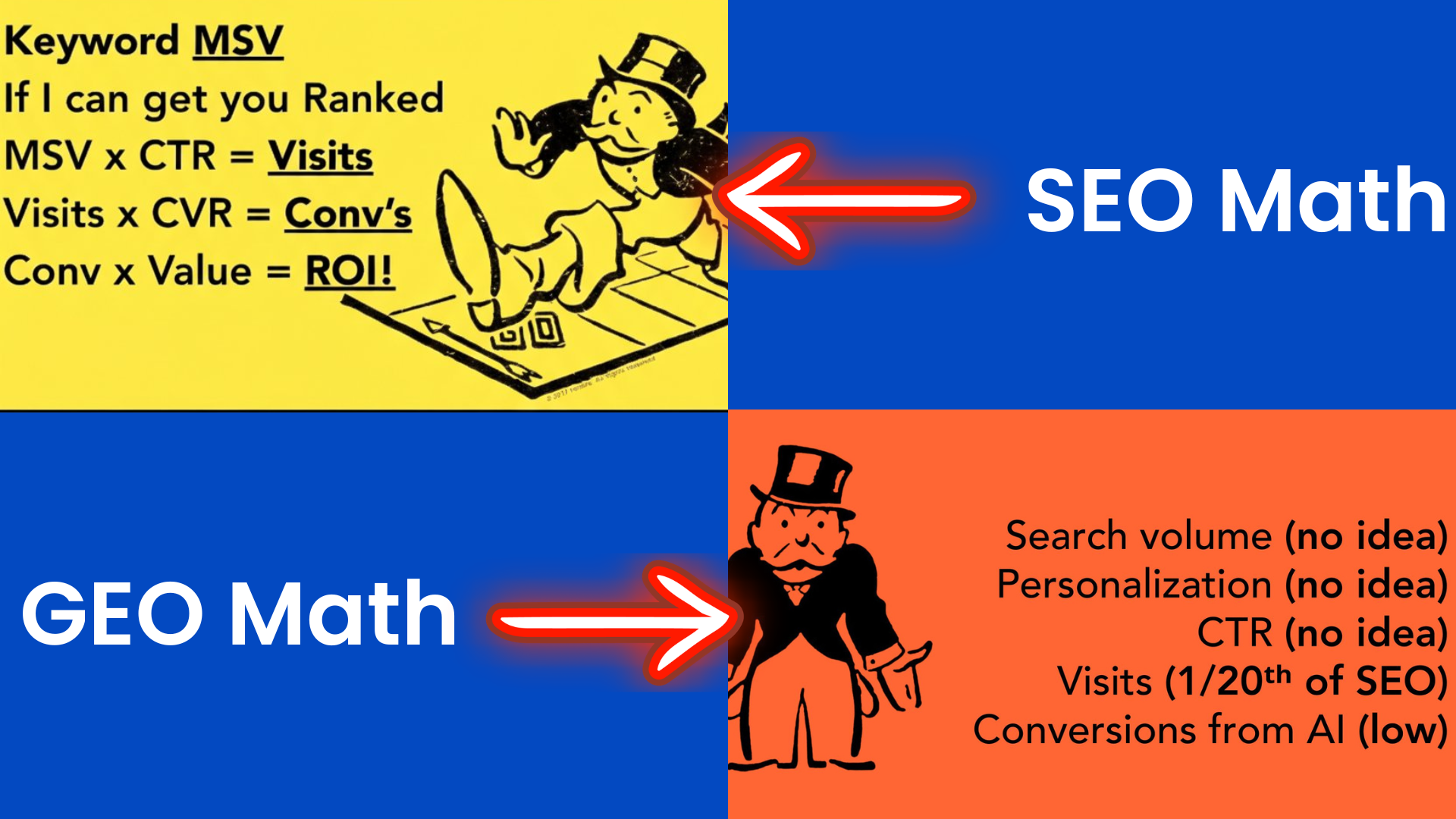
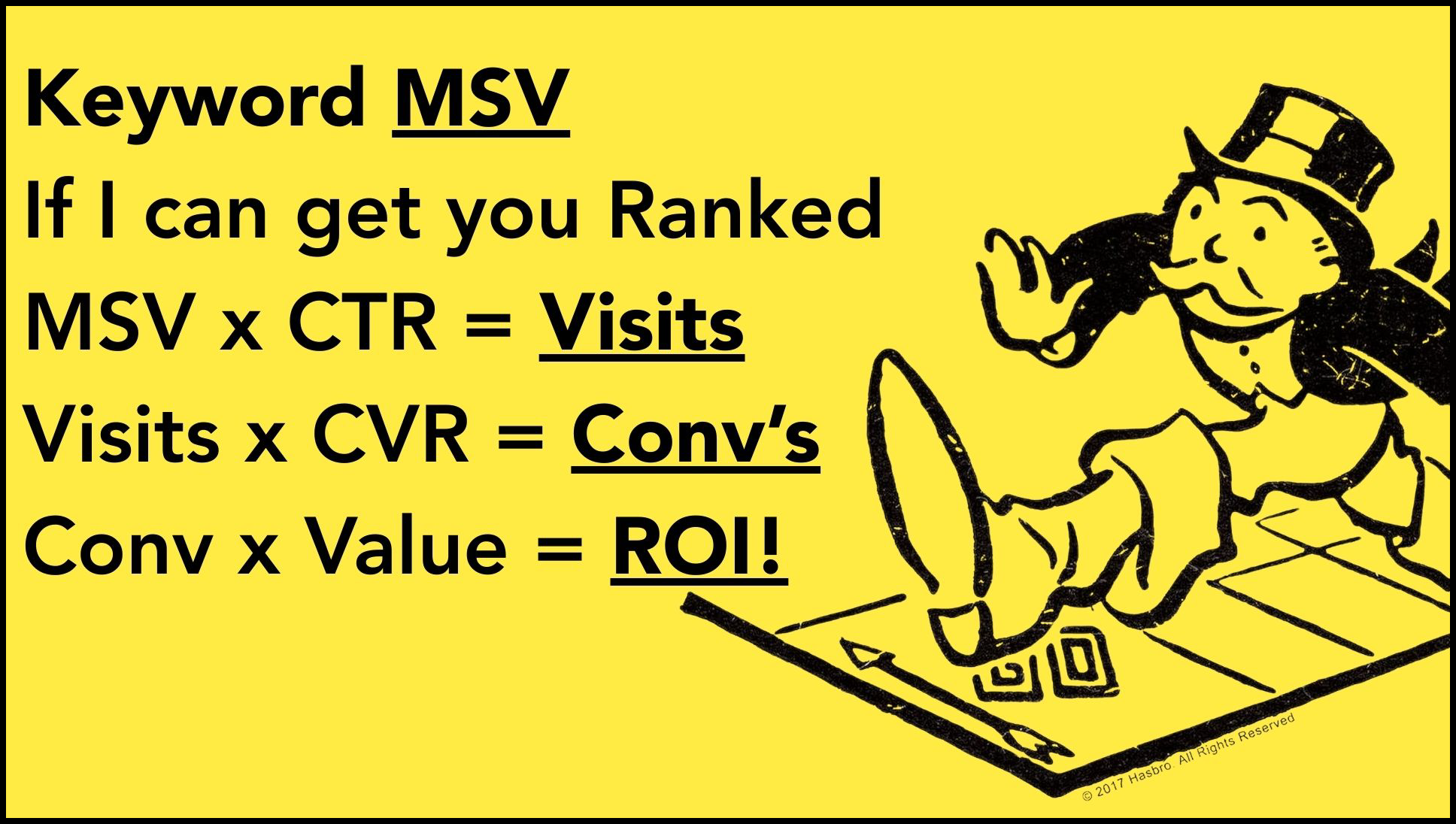
SEO had much easier and more reliable ROI math:
How many people are searching answered with MSV
What is my visibility answered with Ranking
What is my expected traffic answered with CTR curve
What is my expected leads or conversions answered with Conversion Rate
What is the value of a lead answered with CRM data
GEO ROI math is impossible:
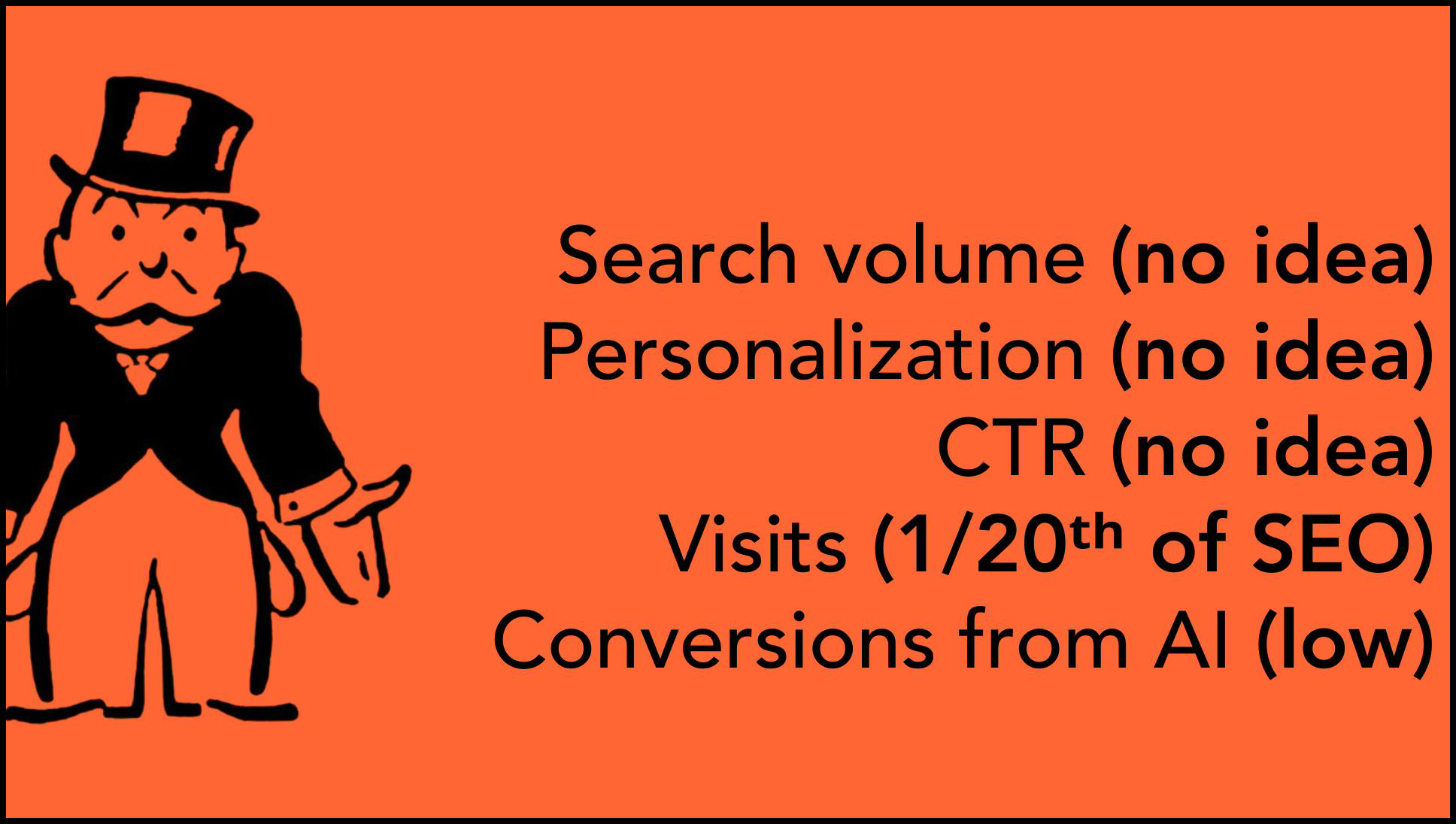
Search volume - unanswerable, MSV of 1 pretty much for every search
Visibility - this we can get, thankfully, but it is less reliable than SEO due to things like personalization and the probabilistic nature of answers.
CTR - LLMs are still playing with layouts of answers aggressively, we saw some clients get 400% more homepage visits from ChatGPT when they made a change to layouts in May 2026.
Unlike SEO where you can see you're ranking 11th or 18th, in AI if a result shows 3 brands, and you are constantly the 4th most recommended brand you don’t know that, in SEO you do. You can tell your client to be patient b/c you are right there! In a GEO world, you don’t know if you are the next brand in line or the 20th!
That’s why I didn’t “just revise the SEO RFP guide to be AI Search or SEO+GEO”. This is different.
Questions You Should Be Asking in Your Generative Engine Optimization RFP
Understanding of GEO philosophy & risk
-
Walk me through a GEO win you're proud of? What happened 30/60/90 days later that changed that or reinforced the win?
→ What you are looking for here, have the person do it LIVE. Show the prompt, show the impact. I would say show me the page you built / edited, walk me through why you did what you did, and then take me to Semrush or Ahrefs to show me impact.
Read more: Harpreet Chatha has found examples of case studies like this that show GEO wins, but don't show the aftermath of the penalties that came after. Follow Lily Ray and Glenn Gabe for finds like these. -
Speed Question: Imagine I told you I needed results in 1 week/month/quarter, tell me about how you think about hitting that timeline, what you would do or wouldn't do to hit that goal?
→ What I would be looking for is examples of quick wins, that worked and are long term sustainable. I would expect someone to come back with the question…what parts of your website can you change and how quickly can you change them? You want to get a feel for how risky the GEO agency are willing to be with your brand, how do they push back or accept those risks on your behalf.
Read more: Here is an example of us getting GEO results in 36 hours you can get fast results, the question is do they stick? -
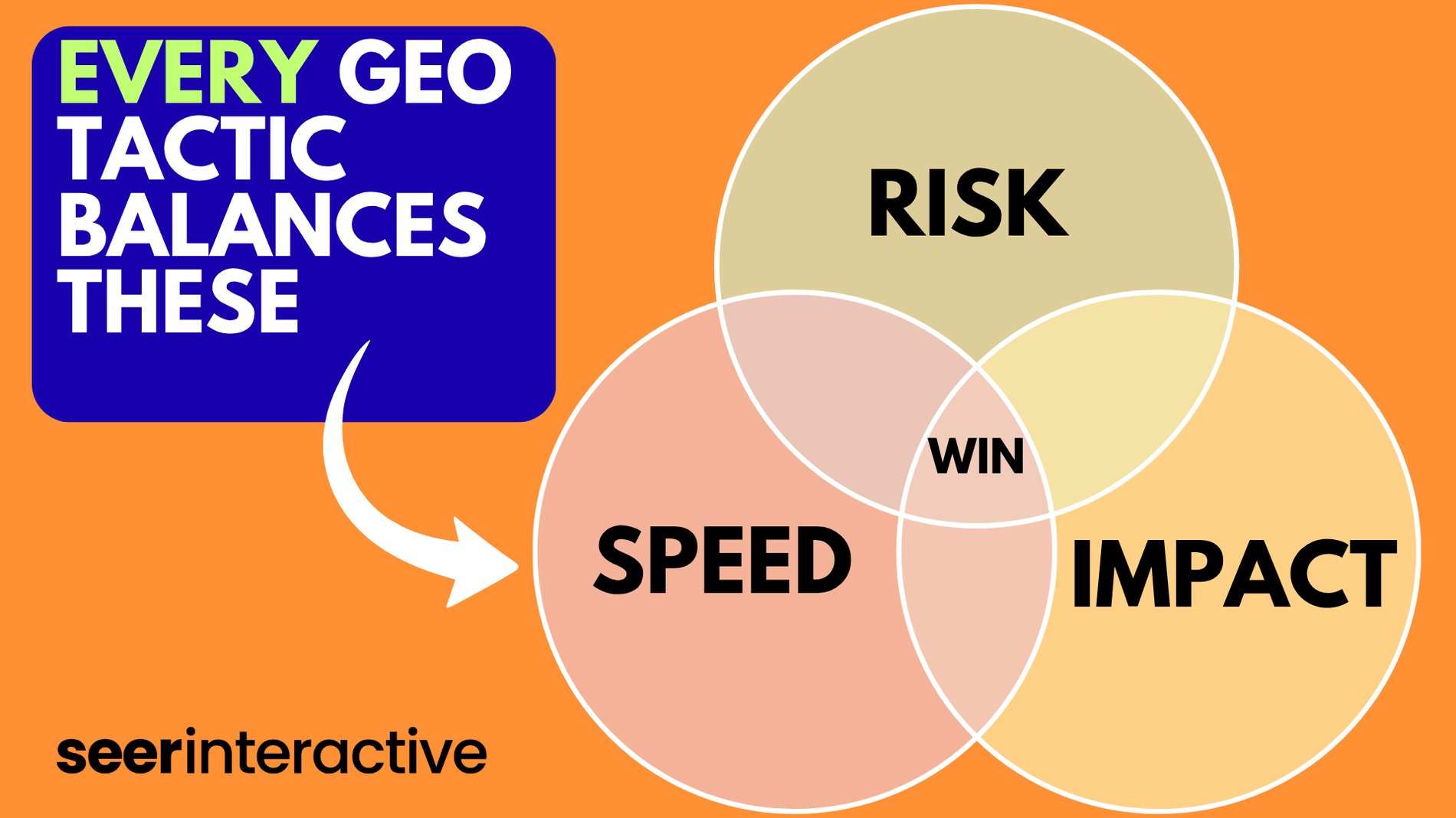
How do you manage the trade-offs between speed of results and risk of getting those results?
→ What you are looking for here is someone who can show that they can swing from long term strategy and quick wins and how well they understand the tasks associated with both. Short term, would be, editing your top cited pages that trigger web search telling me that a change can be picked up quickly. Long term is that PR collaboration to make sure 3rd party sites are validating that what we say about ourselves is credible.
Read more: here from Lily Ray on the over optimization cycle discover tactic > share publicly > tactic gets abused > Google demotes it.
Here is our tool on how to balance risk, speed, and impact.
-
How would you determine if SEO is still worth doing for my business?
→ This is a math problem, I want to hear that you will look at my downward slide in traffic in SEO, hold up visit value, conversion value against cost to do SEO and build out a revenue model for me. GEO is getting all the heat, but SEO is still working just fine and driving traffic and leads and sales for every one of our clients today. A calculator tells me that you can process when it is time to switch strategy and you understand the impact on my business.
Read more: Aaron Haynes in this post talks about where SEO work does (and does NOT) carry over into GEO impact. -
What are the things you don't know, have hypotheses about, and what GEO experiments are you running to find out?
→ I'm trying to just get a feel for what are you testing RIGHT NOW. How are you going to keep me ahead of the curve if everything you learn comes from someone else publishing their work?
Read more: Here is Chad Gingrich posting one of our findings just a week ago on Robots.txt findings with AI crawling. Companies should be able to share how & what they are testing.
Prompt Strategy
-
If I gave you 3 months of transcripts, a customer panel, social media leader, and a UX researcher how would you use them?
→ Do not frame this as part of prompting, you want to ask this question broadly to see if they think about the human elements to broaden their perspective on actual client asks, this is the kind of thing that fast results agencies don't contemplate because they just build listicles. I believe long term sustainable AI optimization is going to require cross div collaboration, is that natural for the agency?
Read more: Cassie Wilson Clark posted this recently: AI Search Visibility Is a Whole-Org Problem
"If a leadership team assigns AI search optimization exclusively to the SEO or content team, there will be gaps that no tactic can close."
AI engines aren't just reading your website. They're cross-referencing it. Which means your AI visibility strategy has to touch more than one team and more than one channel -
Walk me through your methodology on how to pick prompts.
→ I'm looking for a split: if I lead you with some non-branded prompts, are you ready to show me how I am not a source for my own branded prompts? Brand prompt optimization is less sexy, but a consulting company will help you realize that if someone is asking about your brand and you aren't a source for it, you are allowing others to control your brand narrative. IMHO this should be fixed first.
Read more: Here is a post we put together on how we try to get more holistic inputs to determine the prompts worth tracking for our clients in a more human way. Paid search data, call transcripts and UX interviews are three of our favorite ways to understand the people behind the prompts.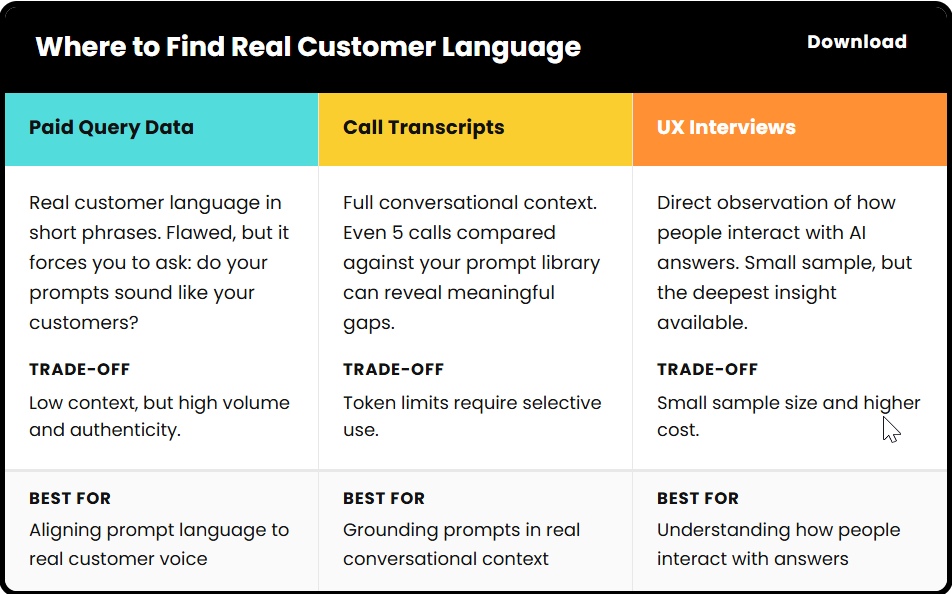
-
What is the one dataset or team that, if I shared it with you, would unlock the most value in helping me get better AI visibility?
-
If I tell you I want to show up for "the best enterprise backup," how would you help me pick the right prompts? How much of that is agentic vs human? Show me, record a video, walk me through how your team would do it.
Content & On-Site Strategy
-
What is the hardest thing to get clients to do, that if we did you believe would have the biggest impact?
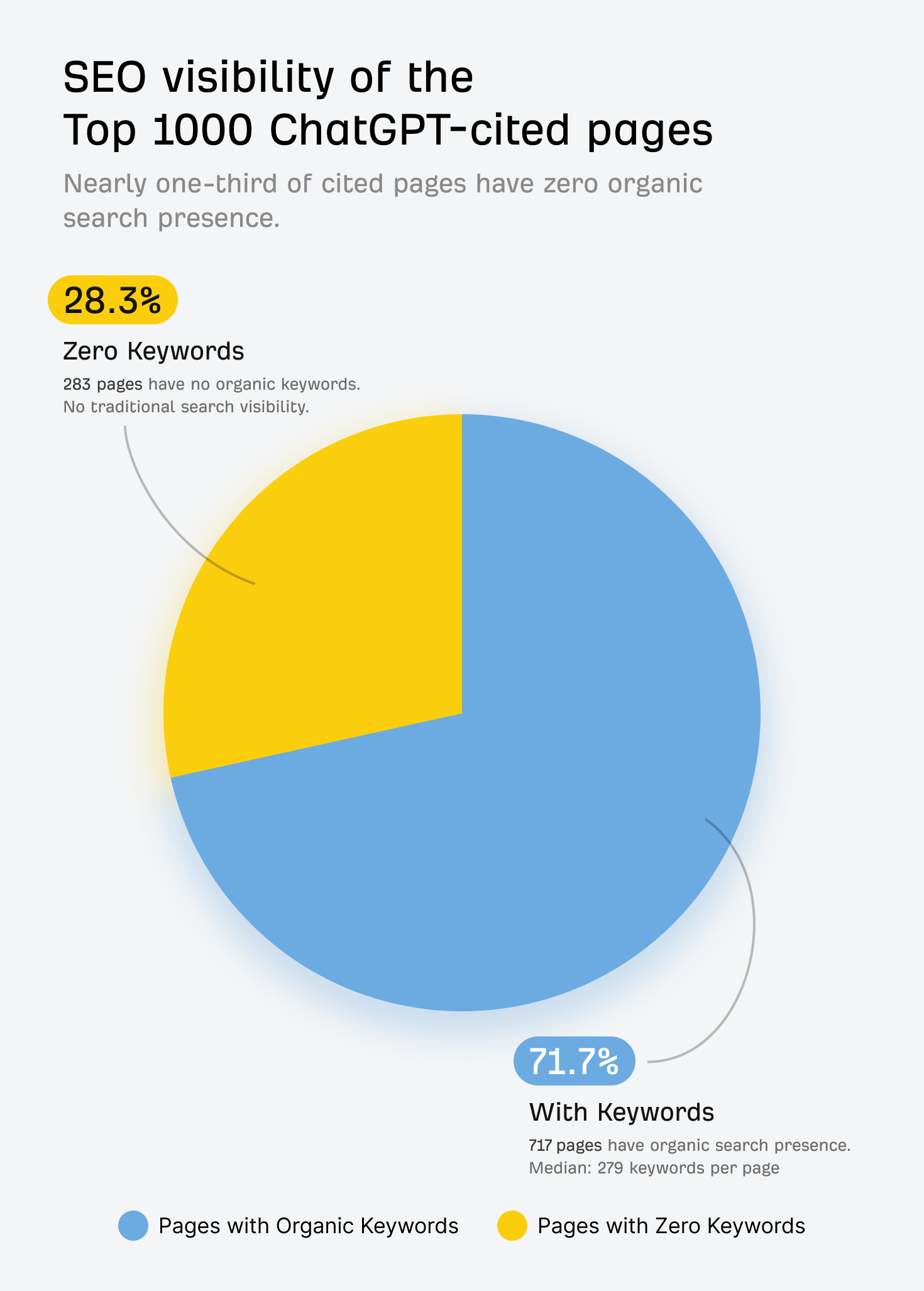
Read more: Louise Linehan wrote this over on the ahrefs blog "67% of ChatGPT’s Top 1,000 Citations Are Off-Limits to Marketers" which made me think, many of the top citations are off limits to SEO but aren't off limits to brand and more holistic marketers. This is the beginning of the hard work to be done.
-
If I told you I wanted to make my entire website plain-text Markdown files, what would your recommendation be and why?
→ I'm looking for someone to articulate the user vs agent split — does my site need to look good for both, and how would you test this. Again you want to see and hear balance not pundentry, we are all figuring this out for the first time. How do they think about tackling this, how they manage trade offs between human and AI bots needs.
Read more: Again this always comes back to testing, is your partner running experiments to test agentic browsers, how they show up, and what they can see and not see like John Lovett and Jess Propst did here on getting AI to crawl your site with an agent vs a human. -
If I need 10 pieces of content vs. 100, how does that change your pricing and approach?
→ If the cost is 10x to do 10x more content, the agency is not AI forward. I would tell a client I could do 10 or 100 at the same price, the difference is the quality you're going to get. Sure, 10x more content might be 2-3x more cost, but it shouldn't be 6-10x more cost.
GEO Measurement
-
How do you ensure visibility in AI drives bottom-line impact after we're mentioned? How do you connect the dots between that "visibility" and real meaningful impact?
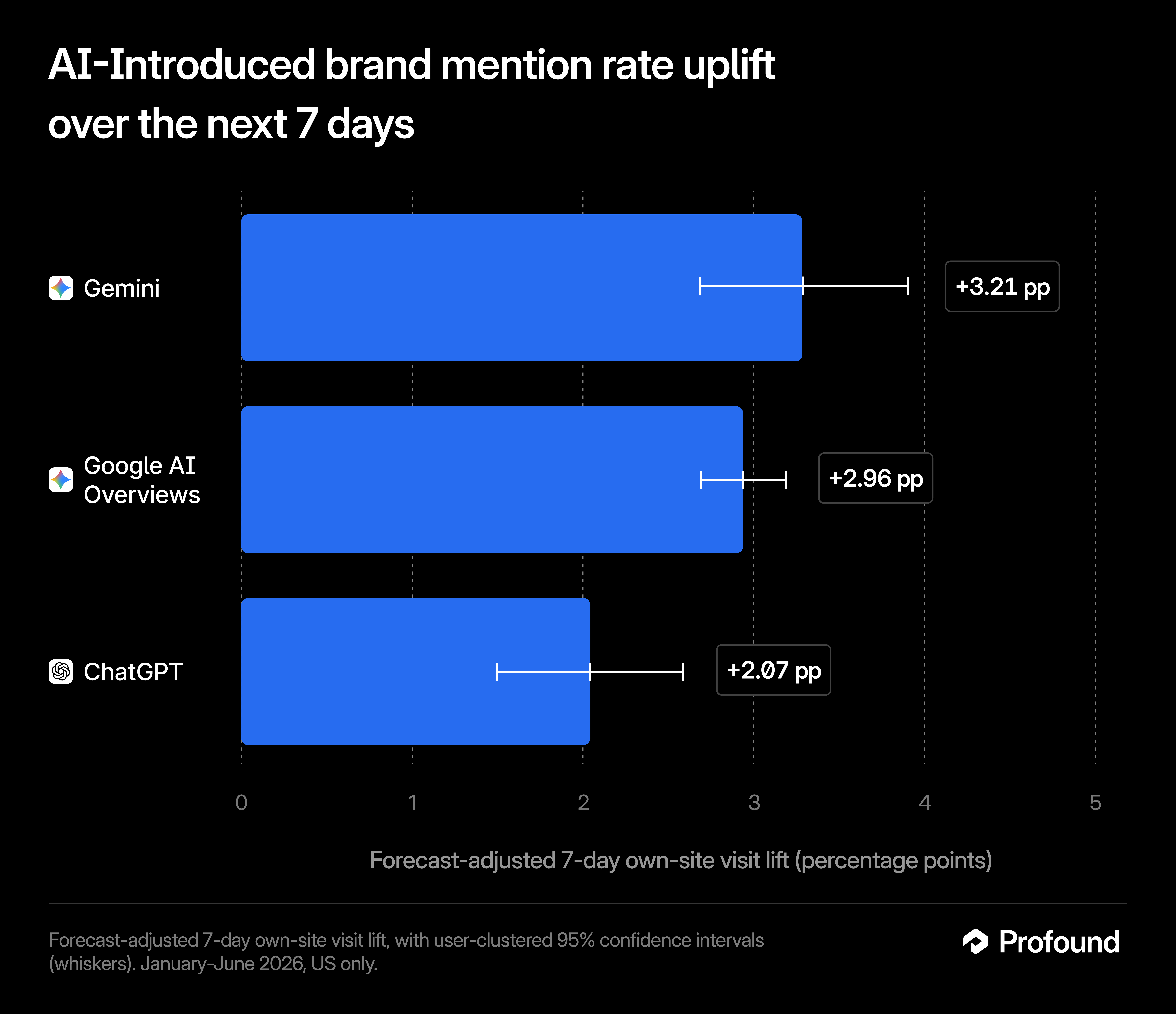
Read more: Profound did a REALLY good study recently, that looks at click behavior via a panel so you can see the propensity of offsite activity to show brand signals even when people don't click though. They found that "After an AI assistant mentions a brand, users visit that brand's website at 1.5–2.5x their forecasted baseline rate over the following 7 days." That is a mention that doesn't get clicked, then over 7 days the users are 1.5 - 2.5x more likely to get to that brand site. This is why tracking visibility as traffic is for suckers. Think of it more like a billboard. Is your agency open to this kind of thinking, or are they still reporting on traffic and trying to defend the "low traffic".
-
When have you seen AI visibility improvements NOT drive bottom line impact? What do you do and how do you explain it?
Read more: We are mis-framing AI visibility. Buyers are using the SEO rubric for GEO reality. So much of what we're use to doesn't exit anymore to track the ROI of "search" activity.
-
How is optimization strategy impacted when AI answers include web search vs AI answers on training data alone?
-
If AI traffic is only 2% of overall traffic and conversions why should I care & spend so much about optimizing for it?
- How does a recent change in a newer model alter how you think about optimization. (A great example would be recent ChatGPT 5.5+ query fan out using brands and site: searches).
-
Now if I asked how my GEO performance compares to similar clients in your portfolio, how would you answer that? And how long would it take you to get me that answer? (How agentic is this company really, have they done the work to connect their systems and data to help scan work done across clients).
Agency AI Maturity
-
Walk me through how your company uses skills and agents. Share your screen with me, and show me an end to end example of me asking for something (a new page of content, a competitor evaluation, a board-ready slide deck) and show me how your skills improve speed and quality of outputs.
-
Does your agency have a teams-based Claude account (or NinjaCat, or ChatGPT) or do you collaborate via individual ones?
-
How many skills / pull requests / md's has the team assigned to my account contributed to building? Can you show me anything internally that they built?
-
Show me any experiments your agency has run on your own site?
Read more: I think ahrefs's takes the cake here. Running AI experiments is like how car companies build futuristic models that will never once see the road, you want to signal to the market (that can't run aggressive tests on their own sites that you are taking on some risks in design, testing, etc so that you can learn and save them from the mistakes.) -
What training do you put your people through and how do you keep team members up to speed on changes, product updates and announcements?
Staying Ahead of a Fast-Moving Space
-
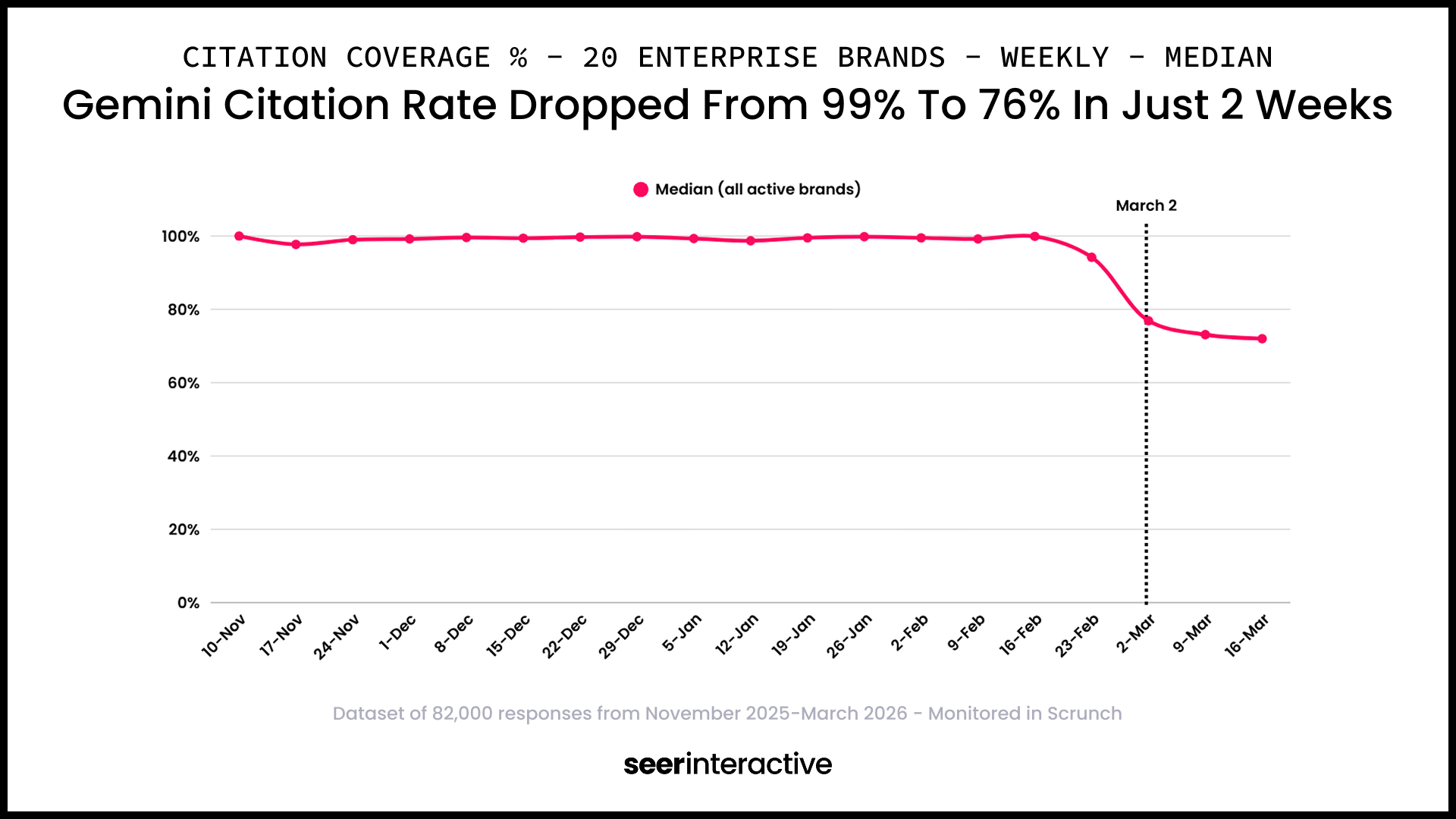
Do you track layout changes top AI results? This is important because teams will take credit when visibility goes up, but may not know "chatgpt is showing more answers" which is required to separate if the bump is from a layout change vs if a bump is from their work? If an LLM moves from showing four brands to eight, how would you catch that and factor it into our results?
Read more: One of the values of an agency is the ability to see across clients, and in this example from Nick Haigler you can see he was tracking citation rates by model, so suddenly when client traffic drops or flattens out, he knows to tell them "Gemini made a change this week, that is why vs scrambling because the client is mad"
-
Do you know the last time Google made a change to AI Overviews or ChatGPT made a change, and how it impacted clients - visibility and leads / sales?
-
AI results, layouts, models, are changing all the time. What systems do you have in place to capture those changes from model to model and how quickly can I expect your team to evaluate it and tell me what it means for my brand?
-
I have misinformation about my brand for [insert prompt here] walk me through how you would tackle that?
Every wave of this thing has separated the practitioners from the opportunists
That’s not new. This has been the game since the beginning of search. The link schemes, doorway pages, now thin, irrelevant content. Each time those that built something real are the ones who have the opportunity for the long term win.
With GEO, the feedback loop feels faster, the wins look more convincing… until they’re not. And a CEO is more likely to forward you a case study than to be skeptical about it.
The point of this guide isn’t to stump anyone. It’s about finding the right team for you of people who really get it. There’s a lot of great pitches out there, but when it comes to the real job to be done, who’s got your back? You need a real answer when you’re faced with hard questions. And sometimes the best answer is honesty about what we really don’t know yet.
If the agency across the table from you can answer these questions specifically, with data, tradeoffs and are honest about the things they’re still learning and experimenting with, that’s the partner you want.
.png)
-png.png)