
TL;DR: We interviewed 28 people across almost 100 tasks, having them use AI to solve a product selection problem, and we ask them what brands people intend to buy, before using AI, then we check what brand they considered after.
One AI research session cut GE's purchase consideration in half while lesser known brands like Rheem surged.
The questions we wanted to answer:
When someone has a task, what brands do they think would solve their problem before they search or use AI?
Then after they prompt AI, how does their brand preference shift, if at all?
Kevin Indig found that only 2.3% of citations stay consistent across just 3 runs of the same prompts. And sources are turning over 56-74% every single week. (check the article out here).
So if you’re checking whether your brand shows up in AI and calling it a day… that’s not tracking, that’s guessing. We didn’t want to count mentions.
How much does AI change the brandsa person intends to buy from.
Here's our research approach:
Question 1: Before any research - "Which brands would you consider purchasing for [product]?"
Complete this activity: Use AI to find a [product] you would actually purchase.
Question 2: After AI research - "Which brand do you now intend to purchase and why?"
28 participants - 3 product tasks each - 84 total AI research sessions
When I saw this graphic above from our UX team, I literally was stopped in my tracks.
18 people pre-AI-search thought “General Electric” would be a good solution. After their AI search only 8 thought GE was a good solution.
This is real time brand degradation based on an AI search.
9 people thought Whirlpool would be great, after their AI search experience only 2 still believed it.
This behavior disrupts positively and negatively.
For established brands that lack AI visibility, it can erase years of brand equity in a single research session.
People assumed you were a good answer and something in the answer process either made them think you were not anymore or they saw new brands that changed their consideration set.
But for brands like Rheem, AI creates an opportunity to gain consideration from people who may not have known them beforehand.
By the end of their research journey, consumers were more familiar with Rheem and more likely to consider them for their purchase.
The big takeaway:

Seeing people change their consideration set in real time, with your own eyes based on a single prompt, gets you realizing that all the money you invest in your brand over years is more fragile than you might think if you don’t show up at this critical moment.
Smaller players with smaller budgets got a shot?!
We ran 84 AI-assisted research sessions across 28 participants to measure how AI changes which brands people intend to buy. Here's what shifted:
Rheem: went from low unaided awareness to dominating water heater purchase intent after AI research.
Delta: overtook significant ground in faucet consideration after AI research despite not being top of mind beforehand.
GE: dropped meaningfully in appliance consideration after people researched with AI. More on this in a second.
Samsung: held stronger than GE post-AI research, in the same product categories.
Ask yourself these questions relative to your brand's AI visibility:
1. If someone researched your category with AI today, would you gain or lose ground compared to unaided awareness?
2. Are you tracking what AI says about your brand in active, task-based decision contexts, not just generic category queries?
The old model was simple: awareness is a moat. If people know your name, you're in the consideration set. Hard to build, hard to erode.
AI research has the potential to erode that effort in a single search session.
When a consumer asks an AI "what water heater should I buy for a family of four," that consumer has expected brands in mind.
All You Need is 3 Minutes and Google Suggest...
If you don't have a lot of time, take your main category, do a quick search, and just look at the suggestions, don't hit enter. You can also do this at scale with also asked!
Not hitting enter on Google is an exercise in empathy, hearing from the customer in their own voice and validating your gut.
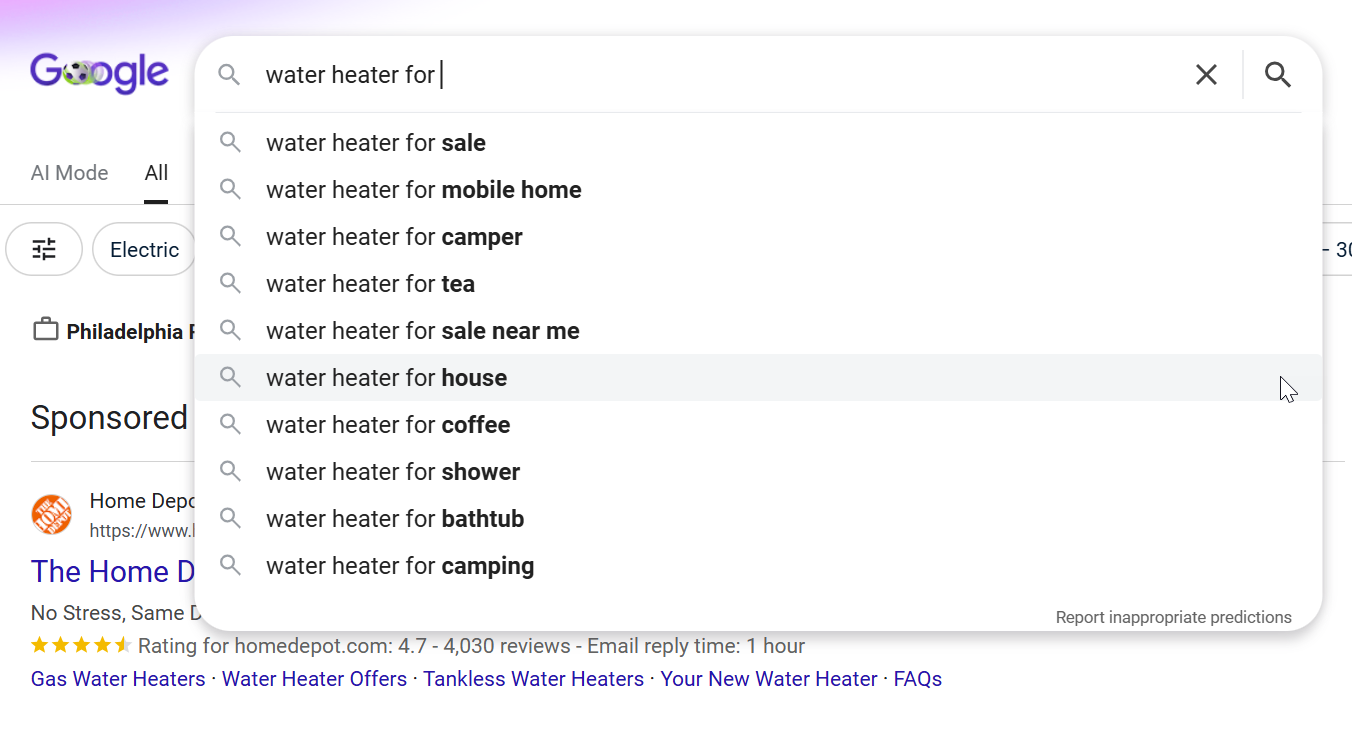
Ok, so I don’t see anything in suggest that comes up, lets type in the letter "f" (looking for family of type searches).
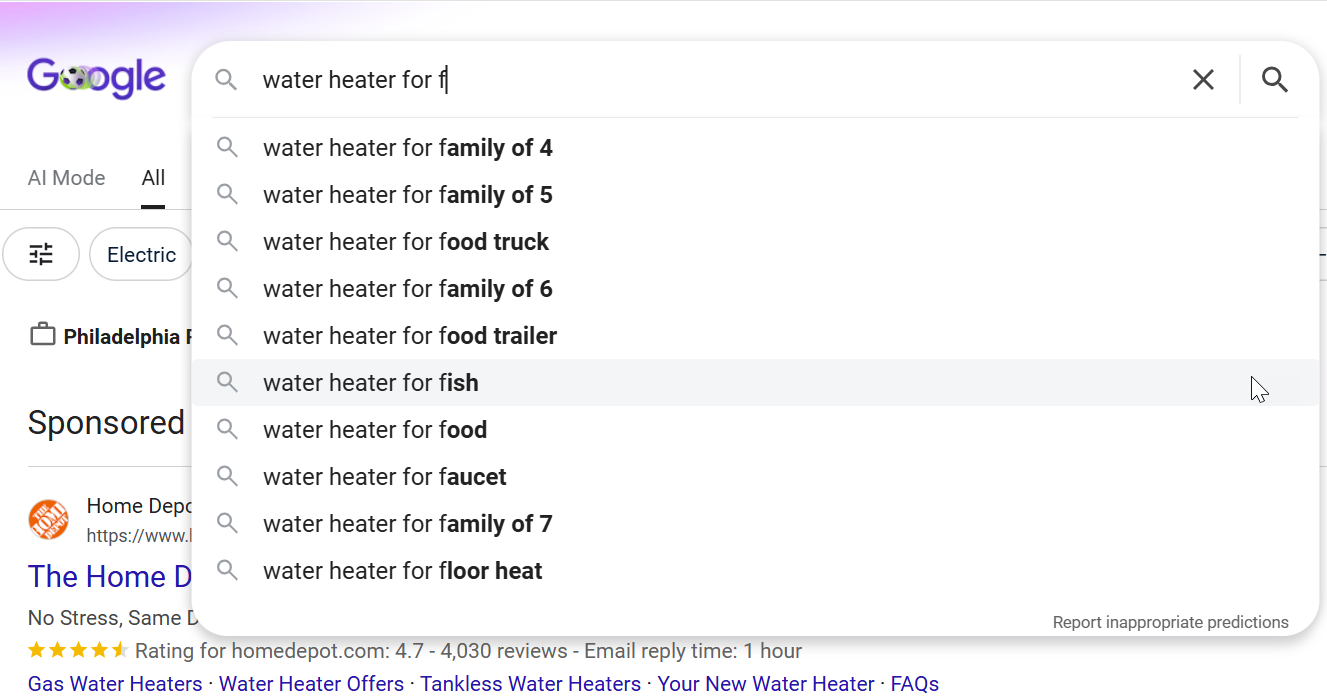
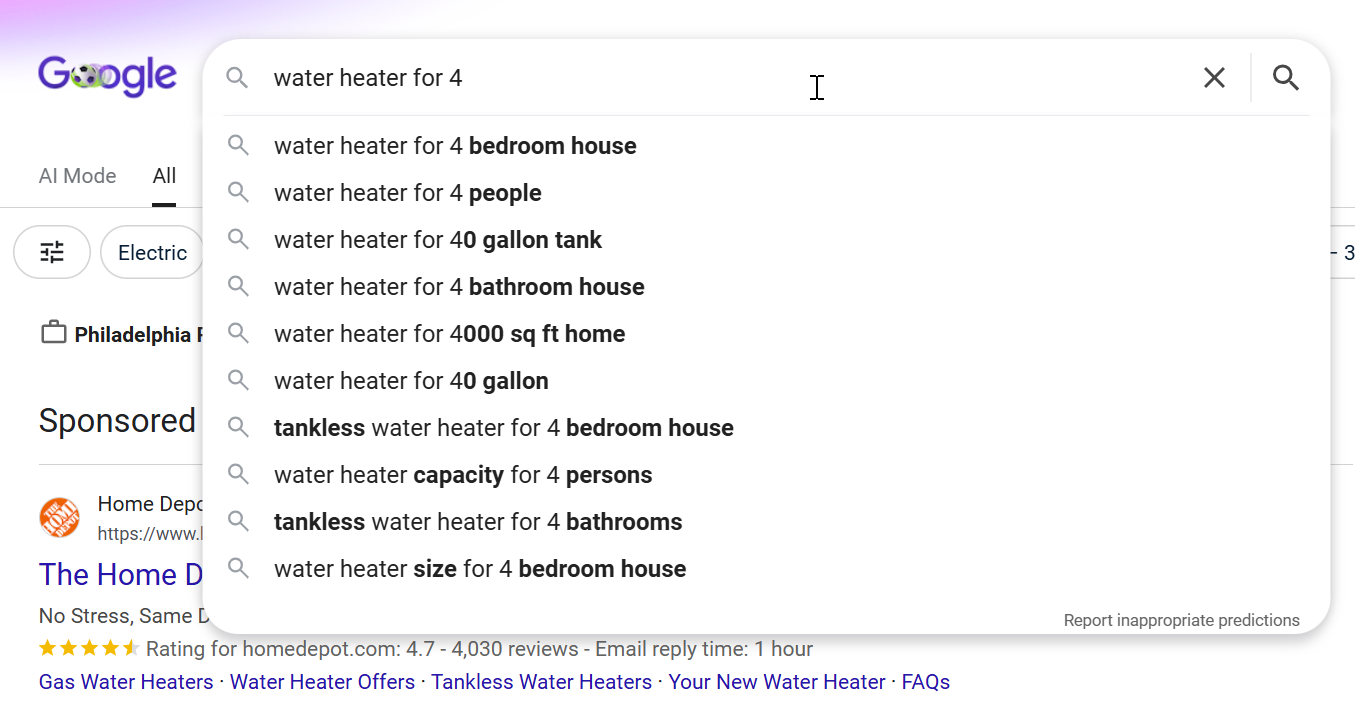
Ok, I got some basic validation, I might need more, so what I would do is go back to a tool like Semrush to look for volume, but not volume today because we know that AI search is going to “mess with” volume.
I’d also consider looking at my paid data to see if I can get, not only search terms, but conversion propensity to make a strong case.
Let’s assume it all lines up that we should go after this.
Now I’m going to look at my pages, my facets, my content and say to my client, “have we ever talked about our water heaters through the following lenses”:
-
Size of house
-
Number of bathrooms
-
Number of people in the family
Can we produce content? Sure, but I think we also would want to embed this into our specs if we’re allowed to.
.png?width=1280&height=720&name=AI%20Prompts%20OG%20(5).png)
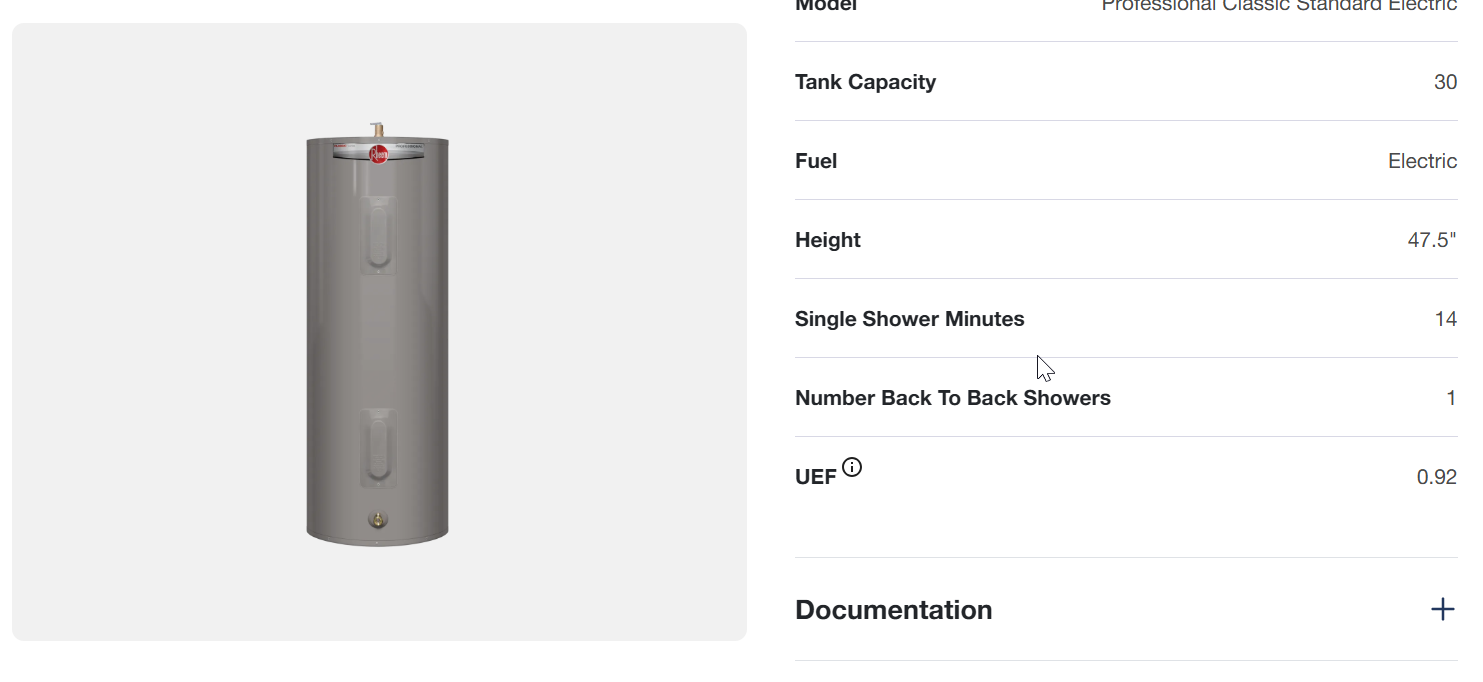
Looking at Rheem, they’re speaking the customer's language right there:
Number of back to back showers, that is how we think…not 40-60-80 gallons, like what General Electric uses on their site.
If you're a challenger brand, this is your moment.
The playbook for challenger brands used to require enormous media spend to even get into the consideration set. There’s on site and off site things you can do:
On site, do the keyword research and start your use cases, who is this for and why, and more importantly who is it not for and why?
Check reddit out, ranking #1 for this query:
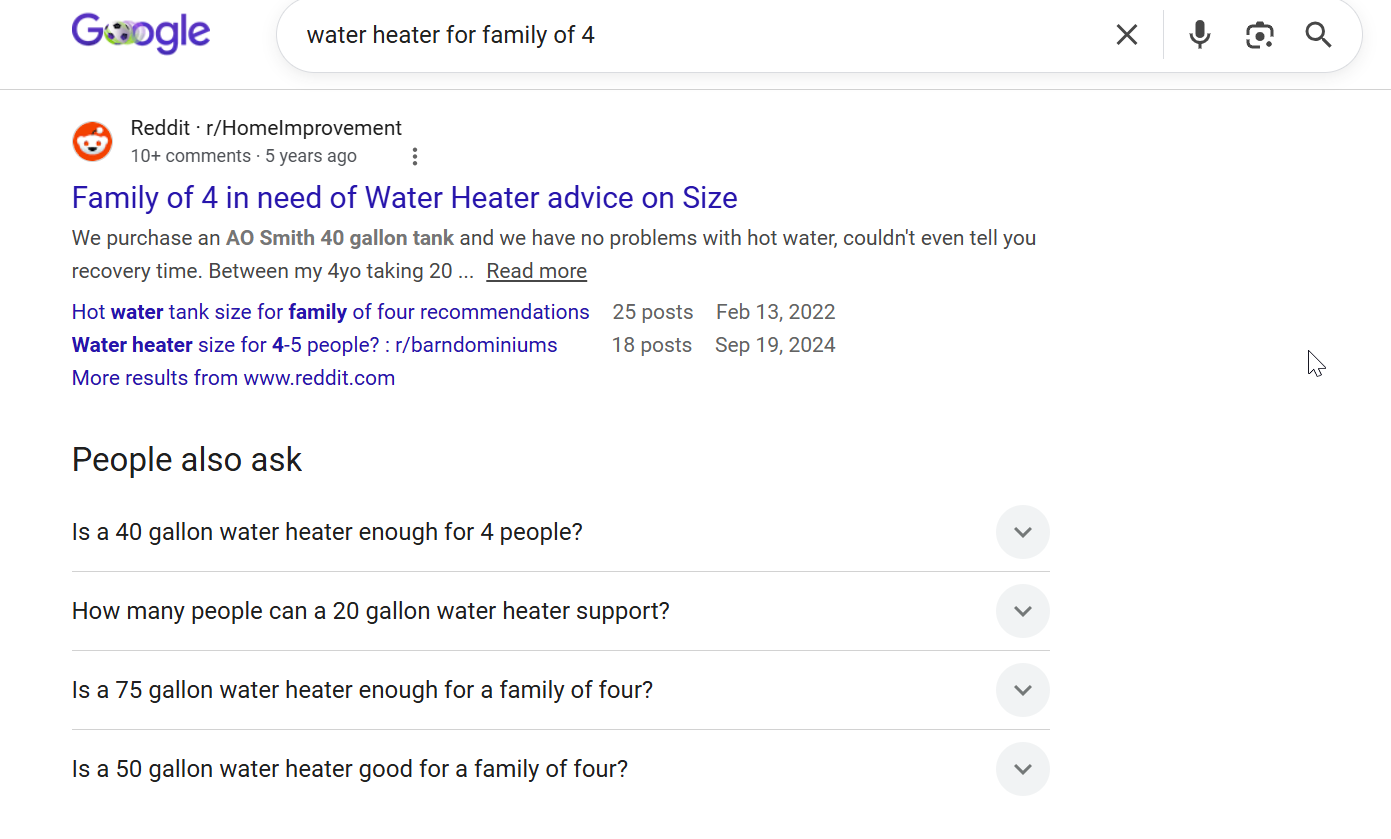
You should go in and monitor these threads, and monitor the brands that are being mentioned.
Is there sentiment around your brand that is positive or is the sentiment neutral/negative.
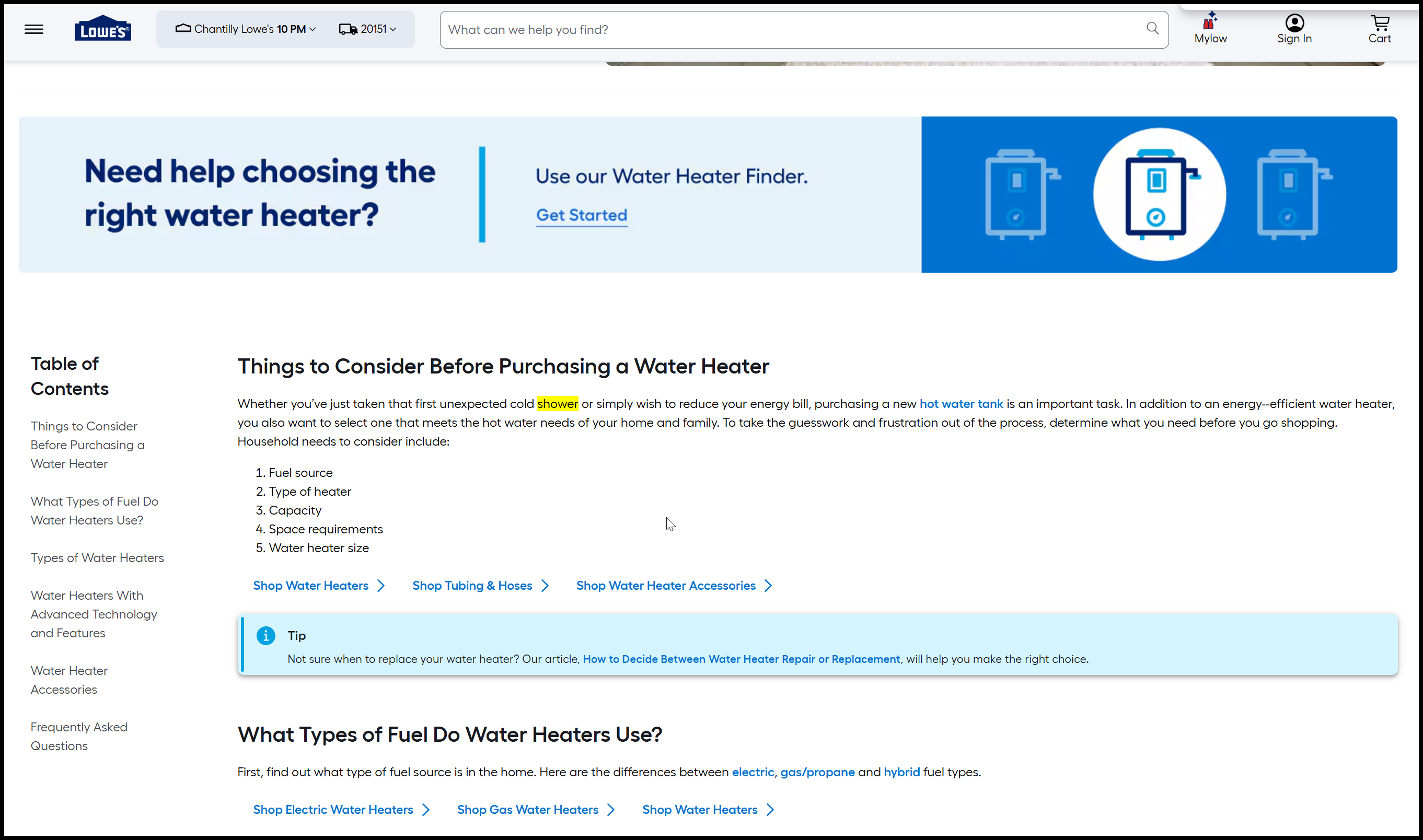
You can make the content like Lowes did here and see if you can influence this, notice that the biggest thing we see is # of bathrooms and showers getting cold, that is how humans are thinking. This is about gas vs propane though, maybe incorporating that kind of stuff in is helpful to get you more likely to show up around usage.
You can go the scientific route and make video content that shows a 10 minute shower and how many people can take one, getting your name more and more associated with “Rheem and family of X” or video content like “lets turn on showers in 4 bedrooms and see how long it takes to lose hot water.”
You can add content like this to not only include the old content that is working but this new frame, and all we had to do was not hit enter on Google.
Can AI search erode your brand moat? Maybe.
Pre AI, GE was already believed as a brand who could solve the problem. Then the person used AI...
Post AI, GE was still believed (in the persons mind), but because they either weren’t seen (recommended) or what was said about them was negative, their choosability took a hit and allowed new competitors who don’t have the brand recognition to come in and snatch that brand asset value.
Remember choosability is where the money gets made, visibility is vanity metric.
One important nuance: participants generally weren't prompting for specific brands.
Only 8 of 84 initial prompts (9.5%) mentioned any brand name, and some of those explicitly stated they were open to alternatives (e.g., "I think it is a GE microwave, but I'm not too particular about brands.").
This suggests the shifts we observed weren't primarily driven by users seeking validation a brand they preferred. Instead, AI was often influencing consideration sets during open-ended product research.


.png)
.png)