
TL;DR
AI agents can complete a purchase without ever loading your site, so GA4 may never record the sale while your order system does.
The channels GA4 can see can look like they’re shrinking while revenue holds, which is how a brand could cut budget on the wrong number.
To avoid this:
-
Treat your order system/CRM as the source of truth
-
Reconcile your order system/CRM with GA4 monthly
-
Leave agent checkout on by default unless your first order exists to start a subscription or loyalty relationship
This post walks through what GA4 misses, what hotels lost when online travel agencies took the customer relationship, and the decisions to make this quarter.
AI agents are starting to shop, book, and apply for things for your customers. A lot of brands already sell through them, but most never decided to.
Most of the talk on this is about strategy: who owns the customer, whether to opt in, how to stay visible, etc.
Those questions matter, but I think the first real damage will be quieter.
Your measurement breaks before your strategy does.
In the next year, many brands will watch a channel shrink in GA4 while it grows in their order system. Some will cut budget on that signal.
That's the mistake I want to help you avoid.
Here's how fast this came together…
-
September 2025:
-
OpenAI put Instant Checkout inside ChatGPT, built on an open Agentic Commerce Protocol developed with Stripe
-
Google announced its Agent Payments Protocol (AP2) with more than 60 payments and commerce partners
-
-
Early 2026:
-
OpenClaw, an open-source agent that does tasks on its own, went viral and showed how many people wanted an AI that acts instead of answers
-
-
May 2026:
-
Google followed at I/O with Gemini Spark, an agent that keeps working in the background
-
-
September 2026:
-
Meta launched Muse, a consumer agent that browses sites, fills out forms, and buys things; it hit No. 1 on the US App Store in ten days
-
OpenAI later answered with Dots, always-on agents for its premium ChatGPT plans
-
Retailers are already picking sides. Shopify switched on agent checkout for Muse by default across eligible stores. Amazon blocked Muse outright.
What Your Reports Stop Seeing
When an agent buys through a platform integration, your storefront may never load.
With Muse on Shopify, the order lands in Shopify attributed to Meta, and that's about it. Google Analytics 4 (GA4), browser pixels, and tag manager containers don't fire, because checkout happens off your domain. Only server-side events get through.
There are sneakier gaps too. A platform's sales channel can lump agent orders in with other checkouts from that platform. When an agent sends the shopper to your site instead, the visit can look like a normal session with no agent tag. And agents that drive a browser the way a person does can simply look human.
When we sent OpenAI’s Operator agent to our own site, GA4 logged the visit as Bing organic, and only a bot-detection tag caught it. When an agent checks out through a platform, GA4 has no visit to mislabel at all. The order exists in Shopify and nowhere else.
Just this week, Adobe’s data showed ChatGPT visits dropping by about 31,000 per day across 500 pages while Direct rose around 26,000 per day on the same pages. Same visitors, new label.
Put those together and you get a predictable failure. GA4 says revenue in a channel is falling. Your order system says the revenue just moved. If your dashboards run on GA4, the first decision you make about agentic commerce will be made on data that can't see it.
Travel Already Ran This Experiment
Travel went through something very similar.
The part that hurt most wasn't even losing the booking. Losing sight of the customer was the real problem.
Flights and hotels got here by different roads. Most people booked flights through a travel agent long before the web, and when booking moved online, the airlines were slow to follow.
Expedia and Travelocity got there first, in the mid-1990s. By the time five of the biggest US airlines launched Orbitz in 2001 to win some of that back, travelers had already learned to start somewhere else.
Hotels at least had their own sites. Then the online travel agencies, and later Google Hotels and Google Flights, put comparison, price, and booking in one place.
The traveler's first stop moved and the brand's site became one listing among many.
Hotels didn't lose their bookings, but they did lose their attribution.
They went from destination to supplier: still delivering the stay, but no longer owning the search, the comparison, or, much of the time, the customer record.
Distribution got easier: the agencies brought in guests a hotel could never have reached on its own. Over time it also got more expensive. Commissions that once sat around 10% now commonly run 15% to 30% a booking. And the agencies started buying ads on the hotels’ own names, so a guest searching for a hotel by name often clicked through to Booking.com instead.
That’s the measurement problem in its earlier form. Hotels couldn’t see which guests the agencies were winning, so they couldn’t tell what those bookings were costing them. Every decision after that depended on getting that clarity back.
3 Decisions About Agentic Commerce That You Can't Make Blind
Once you can see agent revenue, three decisions follow. Each one depends on that visibility.
1. Leave Agent Checkout On & Fix Measurement This Month
Every new agent and protocol brings the same three options: let it find your products, let it complete the purchase, or keep it out.
On Shopify, direct checkout for Muse is on for eligible stores unless you turn it off under Sales channels > Agentic > Meta.
For the shopper, it's very easy: no cart, no account, no checkout page, just a yes to the chatbot. That also means none of the critical CRO moments where you'd normally capture an email or offer an upsell, which is how we’ve traditionally chased customer lifetime value (LTV).
My default for a mid-market Shopify brand: leave the agent on.
Turning it off doesn't keep those shoppers on your site. What it does is send them to a competitor whose products the agent can buy. And you only learn what the channel is worth by letting orders come through and counting them properly.
If your first order mostly exists to start something else, like a subscription, a loyalty sign-up, or a configured bundle, consider a switch to discovery-only. There, the agent can find you but sends the shopper to your site to pay. An agent checkout keeps the first order and drops the reason you wanted it.
Either way, write the decision down, and set a date to review it against order-system data, not GA4.
Nobody has clean data on this yet, including us. If you want to know before you decide, run a holdout: turn agent checkout off in a small slice of your markets for eight to 12 weeks and compare revenue against the markets where it stayed on. The difference is one way of understanding what the channel is actually worth.
2. Know What the Platform Can't Copy, and Route It Through Channels You Own
Plenty of people still book hotels direct. The hotels held on by giving travelers reasons the agencies couldn't match, not by trying to out-search them.
In 2016, Hilton, Marriott and Hyatt all launched book-direct pushes built on member-only rates. Hilton's "Stop Clicking Around" campaign offered loyalty members up to 10% off for booking direct. With this, they were able to dodge those commissions, create that guest relationship, and were granted access to the data that came with it.
Agent checkouts have their own limits. As of writing, Meta's direct checkout doesn't support subscriptions, bundles, customizable products or B2B-only products. ChatGPT's Instant Checkout launched with single-item purchases only.
Those gaps are a pretty good map of your lasting advantage:
- Loyalty and membership: Perks that only work when you know the customer
- Subscriptions and replenishment: Recurring revenue the agent can't set up for you
- Customization and bundles: Products that need your experience to configure
- Post-purchase: Onboarding, service, returns and community
Travel has a cautionary side here too. Book a hotel through Expedia, hit a problem, and the hotel often sends you back to Expedia. Plenty of travelers learned to book direct just to skip that runaround.
Agent orders could go the same way: If no one clearly owns the customer after checkout, they blame whoever they can reach, and that's usually you.
Protecting any of this only works if you can measure it. Without a clean count of agent orders, you can't tell whether agents are taking your simple one-off orders, which is fine, or your best repeat customers, which isn't.
3. Know What the Channel Is Worth Before Someone Sends You the Bill
In travel, the free listings came first and the paid placements came after. Once travelers got used to booking through a platform, showing up there became something brands paid for.
Agentic commerce is on the same path, just faster.
Meta charges no channel fee for Muse checkout beyond standard payment processing.
ChatGPT's Instant Checkout reportedly started charging merchants a 4% fee in January 2026, about four months after launch.
For now, which products an agent recommends is still mostly earned, not bought.
When a platform starts charging, you'll be asked whether the channel is worth the fee. If GA4 is your only source, you'll be answering from a number that misses most of the revenue.
The cheap move today is getting your structured data in order: titles, attributes, variants, prices, stock levels, shipping and return policies. Agents choose from that data. It's the same groundwork that gets a brand into AI answers, which plenty of teams already do under GEO.
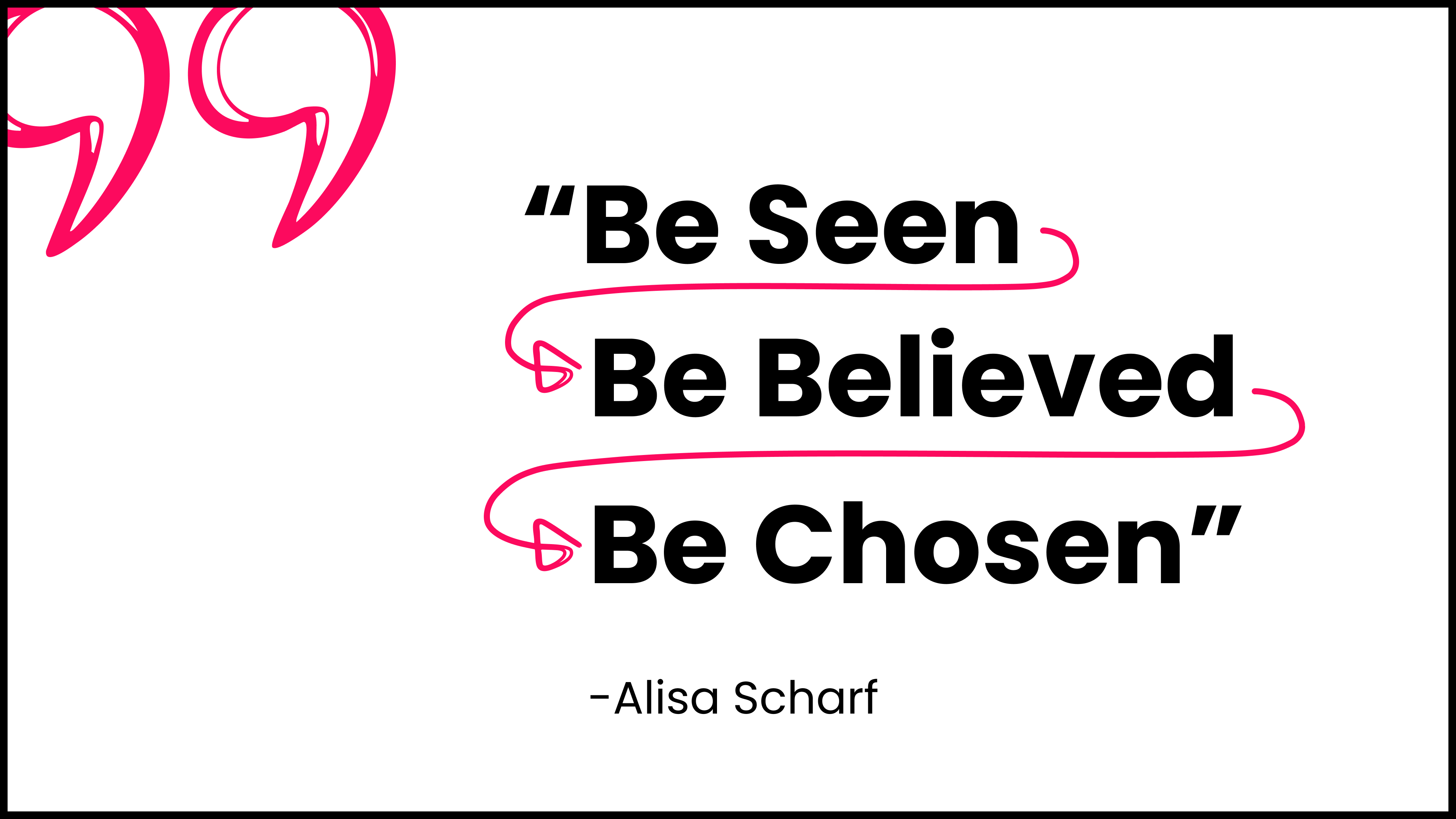
My colleague, Alisa Scharf, lays it out in how marketers should prepare for agentic commerce: be seen, be believed, be chosen.
Our own AI-answer tracking suggests the short list is already short. We pulled three months of unbranded shopping prompts (questions that don’t name a brand) across three retail categories we track.
-
In motorsports parts, two retailers took 65% of all mentions among the six brands we track. It held on every platform: 66% on Gemini, 69% on ChatGPT, 60% on Perplexity.
-
In denim, the top two took 56% of mentions among 14 brands.
-
In premium women’s apparel, a more crowded category, the brand we track showed up in about 1 in 13 answers.
These are answers, not purchases. But an agent that shops for you starts from the same short list. If you’re not on it, there’s nothing to buy.
Where the Travel Analogy Falls Apart
Travel is a good guide. But agentic commerce will probably be faster and less forgiving because:
-
There's no results page. On a travel site, a traveler still scrolled a list and could pick your brand, whereas an agent usually just picks. Second place may mean invisible.
-
Loyalty may attach to the agent. If a shopper trusts their agent to "get the usual," that habit belongs to the agent and not to whichever brand it buys from. That could ultimately impact how ecommerce brands handle customer lifetime value (LTV).
-
The clock is shorter. The travel shift took more than a decade. Here, OpenAI and Google launched checkout and payment protocols within weeks of each other, and a consumer agent topped the App Store in ten days.
All three of these make the measurement problem worse. There’s less time, fewer signals, and a customer who may never visit your site.
Not an Ecommerce Brand? This Still Applies To You
The core idea travels: whoever owns the moment of intent turns the brand into a supplier. What changes is what the agent actually finishes. The measurement gap still shows up and your CRM or booking system is the source of truth (not GA4).
What I'd Do This Quarter
None of this calls for an overhaul. It calls for four decisions, made soon and on purpose, in this order:
-
Close the measurement gap first. Make your order system or CRM the source of truth. Reconcile it with GA4 monthly, with each agent platform on its own line. Don't cut a channel on GA4 data until you've done this.
-
Check your exposure. Figure out which agents and platforms can find, recommend, or buy from you today, and which integrations are already on by default. Then make the opt-in call on purpose: on by default, discovery-only where the first order feeds a subscription, or loyalty program.
-
Protect what's yours. List the loyalty, subscription, customization, and post-purchase experiences agents can't replicate, and route them through channels you own.
-
Get agent-ready. Audit your catalog, service, and policy data for completeness and accuracy while visibility is still earned.
We're piloting an Agent Readiness Audit at Seer that scores how well AI agents can find, understand and act on your key pages, and ranks what to fix first. If you want to know where your brand stands, let's talk.