

CMOs and leaders are having boards and CEO’s breathing down their necks, tons of pressure, and when they hear “we can get you AI visibility results in 1 week" from a major player in the marketing space, why wouldn’t they choose them? I would.
The risk analysis on one week vs. six weeks is clear: If it's one week and they're wrong, I lose one week.
If it's been six weeks... and they're still wrong, I've now lost 6 weeks.
I'm not saying companies getting results in 1 week are wrong. I am stepping up to the challenge on "what do I do?"
Visibility just makes you feel good unless it actually results in something people.
Next time you get a message from your CEO, CMO, anyone in your company saying:
Check out this case study showing how this company improved AI results in a week. You told me "it depends" - and it's been 10 weeks. What results do you have?
This is the kind of thing you hear, and wanna say…"yeah from some spammer", but then they come back with: they heard it from a reputable source with tons of fortune 500 clients and experience.
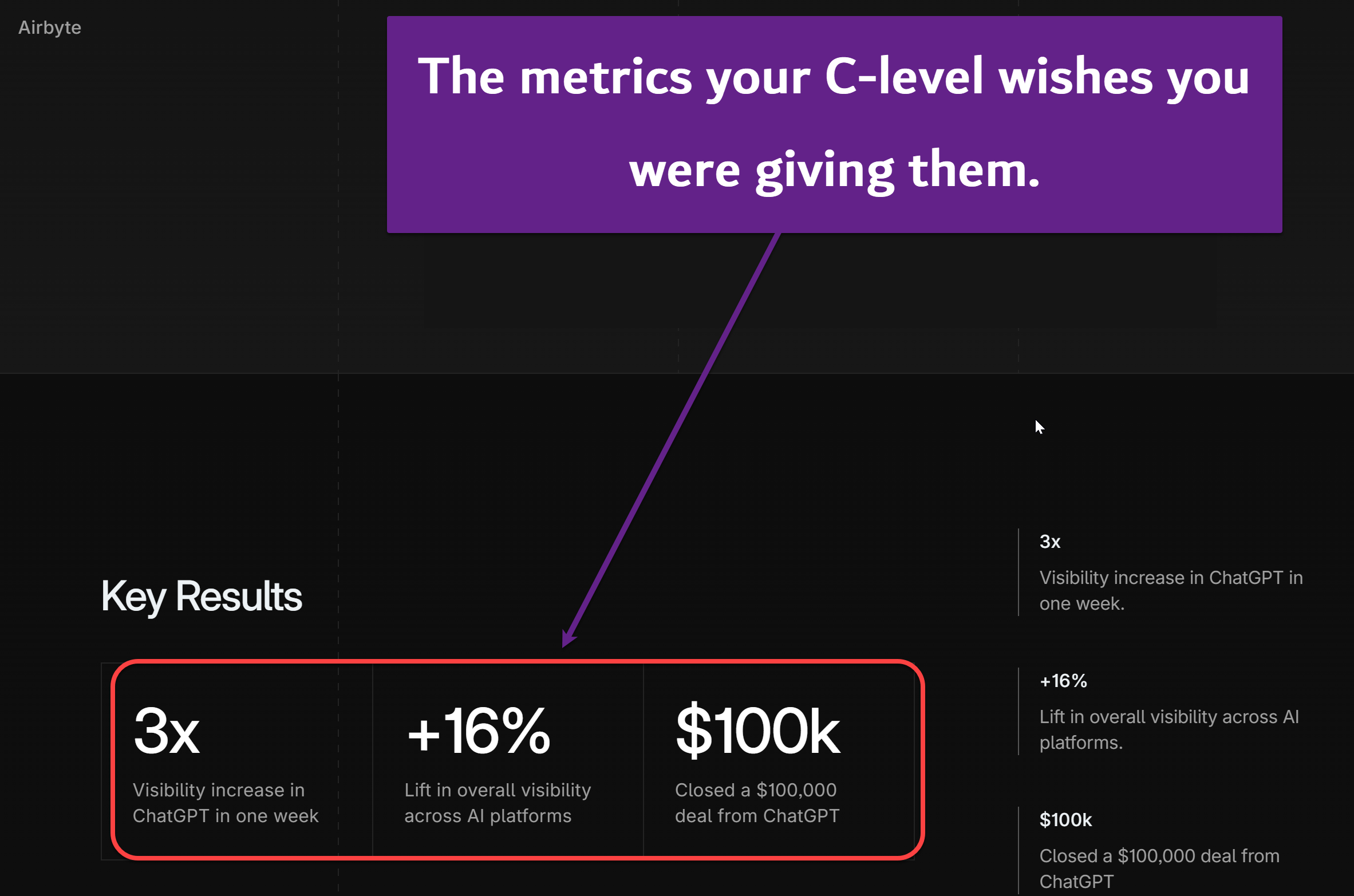
You can be a hater and post some shade on your favorite whatsapp group, social site, etc. I get it, it is frustrating, it's hard to manage this.
But you have a choice
Become someone who waits for things to get easier or better or that they just got it.
or
Become someone who handles hard stuff better.
It gets It never gets easier.
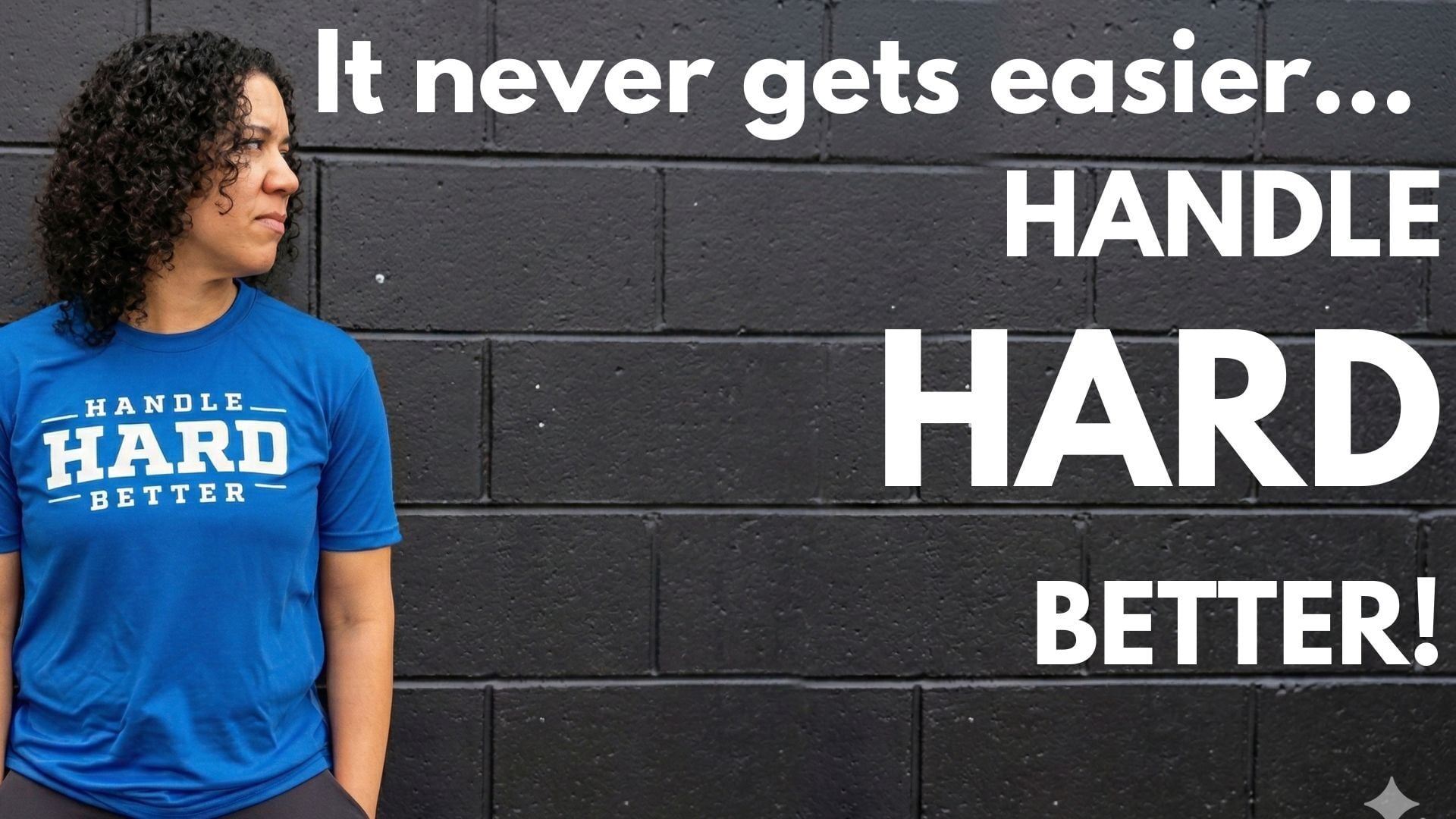
I'm going to assemble some people who enjoy handling hard better and we're going to share our thoughts.
Here is my 2-3 week plan to impact AI visibility without taking the risk of the impact in 1 week
I got this AI visibility in a week case study flung at me, what do I do first?
Step 1: Use Google to Investigate
Take the company that did the case study and put their brand in a search like this: "site:airbyte.com intitle:"best * etl" (go click it, then start looking through the pages).
Screen shot the types of pages. Feel free to ask an SME at your company if they would agree with the content.
Clue: You now have a snapshot of the work that was deployed.
This step gives you the work that was done, so you can check with your CEO or CMO and say...you sure you want to do stuff like this, we might improve visibility, but there's risk to flooding the internet with 50 posts in 1 day, I imagine they are working against this.
If they say, whatever we gotta hit goals, move to step 2....
Step 2: Was the visibility sustainable?
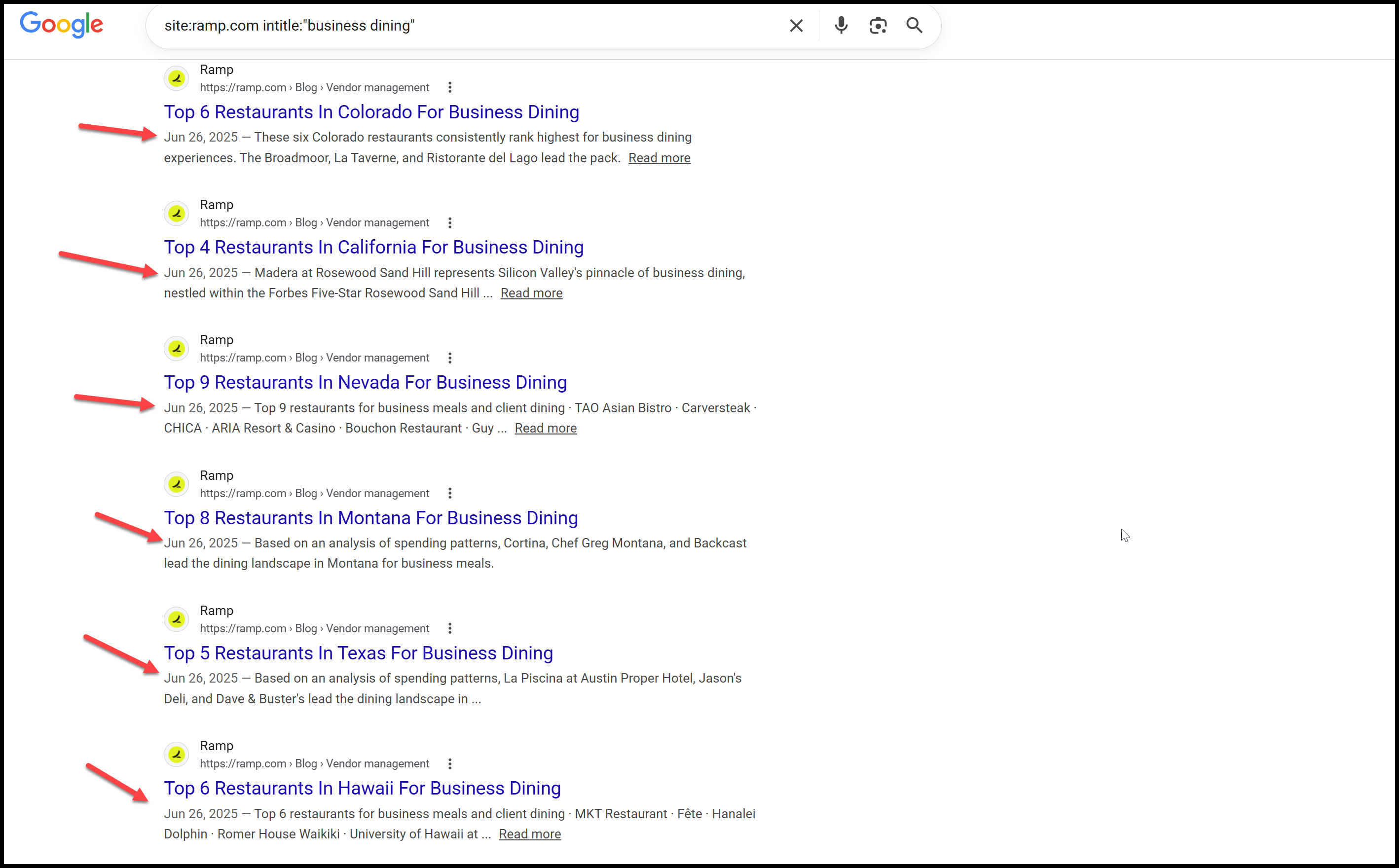
Use Ahrefs or SEMRush to find the domain, and look to see a fast spike in content production. Sometimes you can just look at the publish dates, wow you reviewed the top restaurants for business dining in every state in 1 day.
Harpreet Singh recently posted this over on Twitter, showing both side by side. The case study and the spike and the subsequent drop.
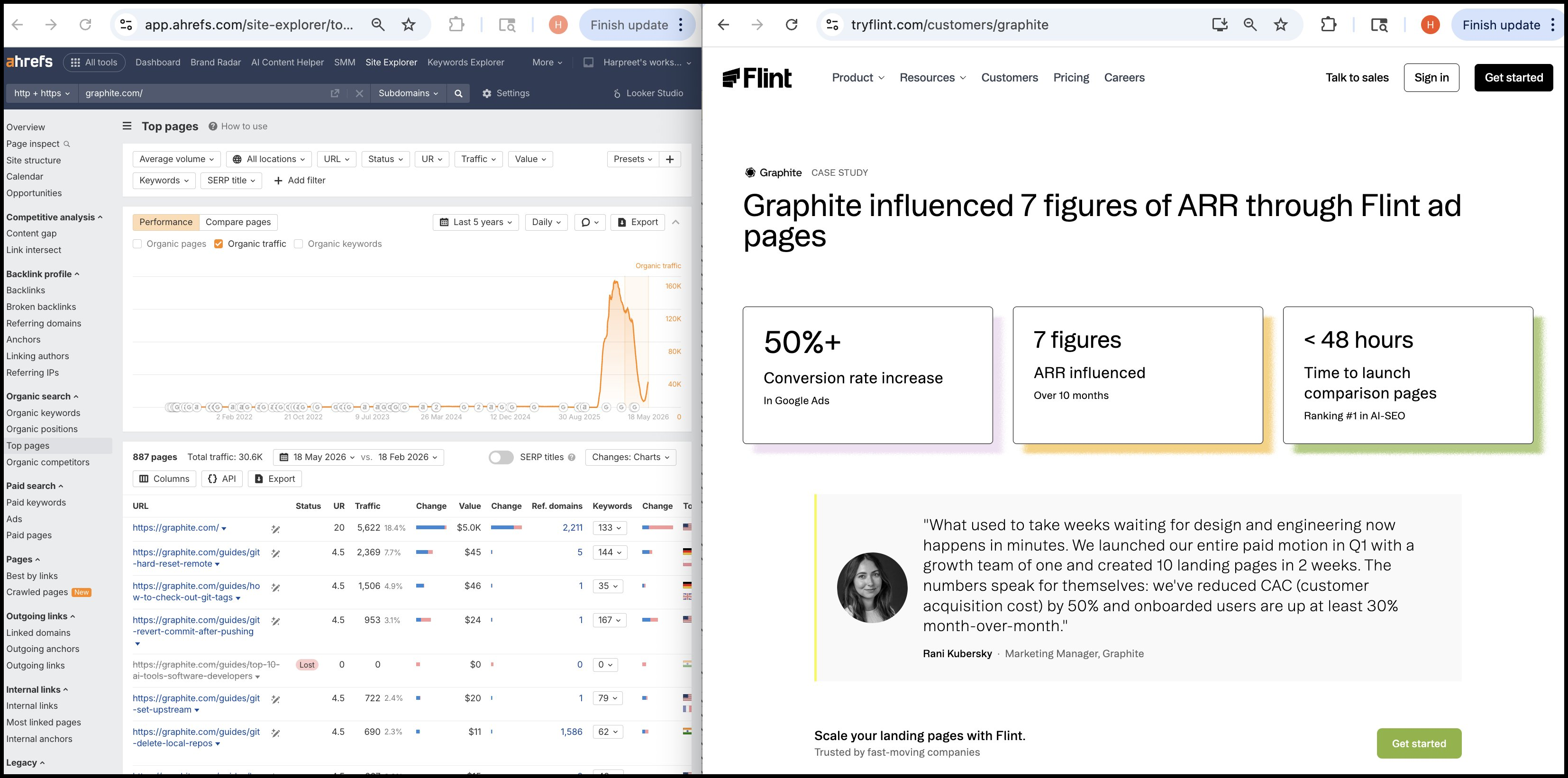
Do you see the AI mountain?
Glenn Gabe has called it "mount AI", it worked until it didn’t (Great post there by Lily Ray, with so many images like the one below) but the agency was still using these case studies without showing two things, the work that got those results - and how resilient was that impact (did it stick?).
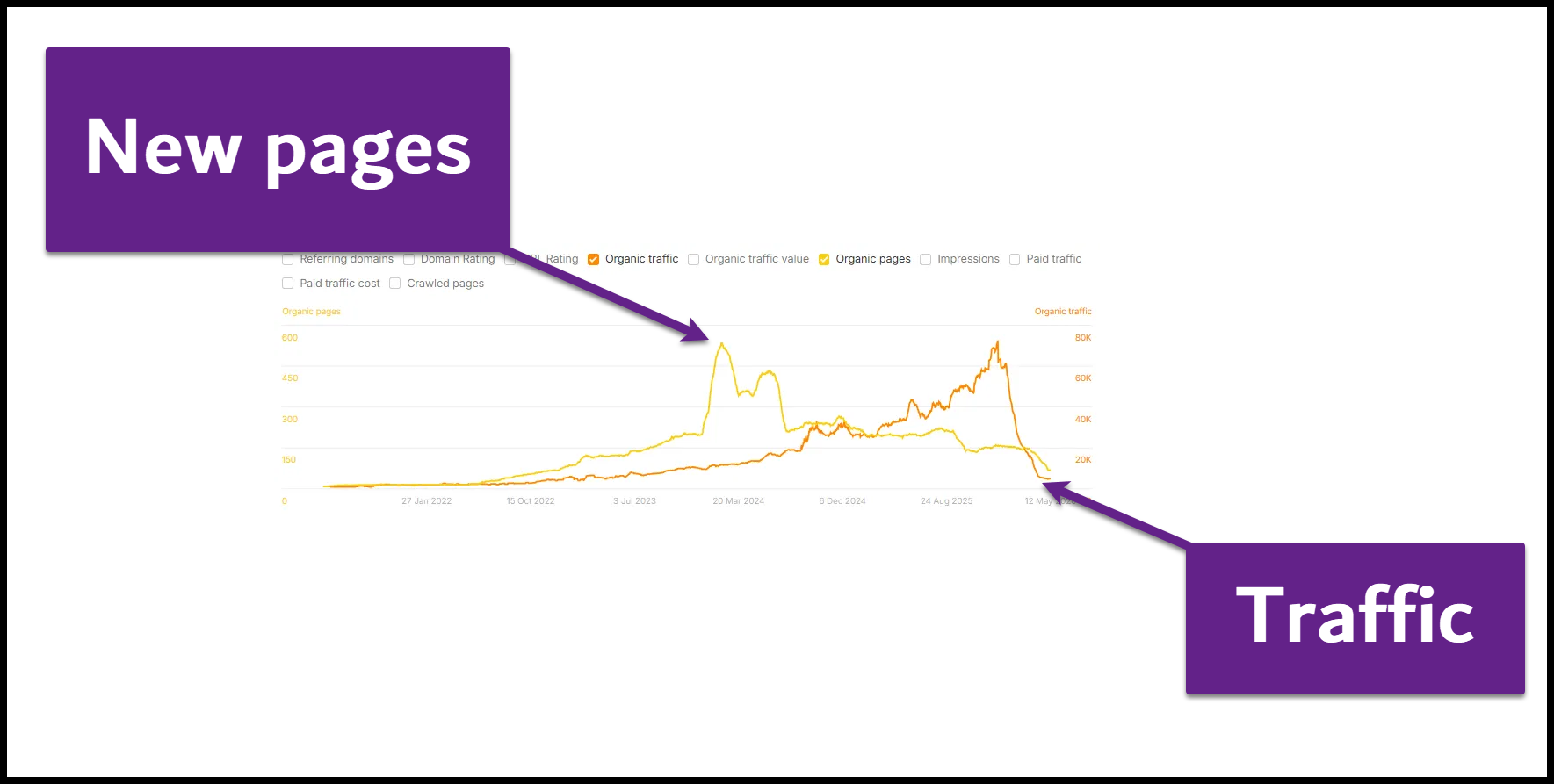
Clue: You now can see if "quick wins" in AI models were sustainable.
This offers you an opportunity to ask your c-levels, if this kind of spike and drop is a win or not. If we grow visibility 2x in 3 months, but the way we do it results in it all going away, and destroying our ability to forecast, is that a good thing?
Step 3: Historical Context
Let's make sure to show your c-levels this article from 2006, where Google banned BMW for their own brand name because of "doorway page" tactics. People were producing pages at scale, with small variations of keywords, flooding the index with low quality trash, sound familiar?
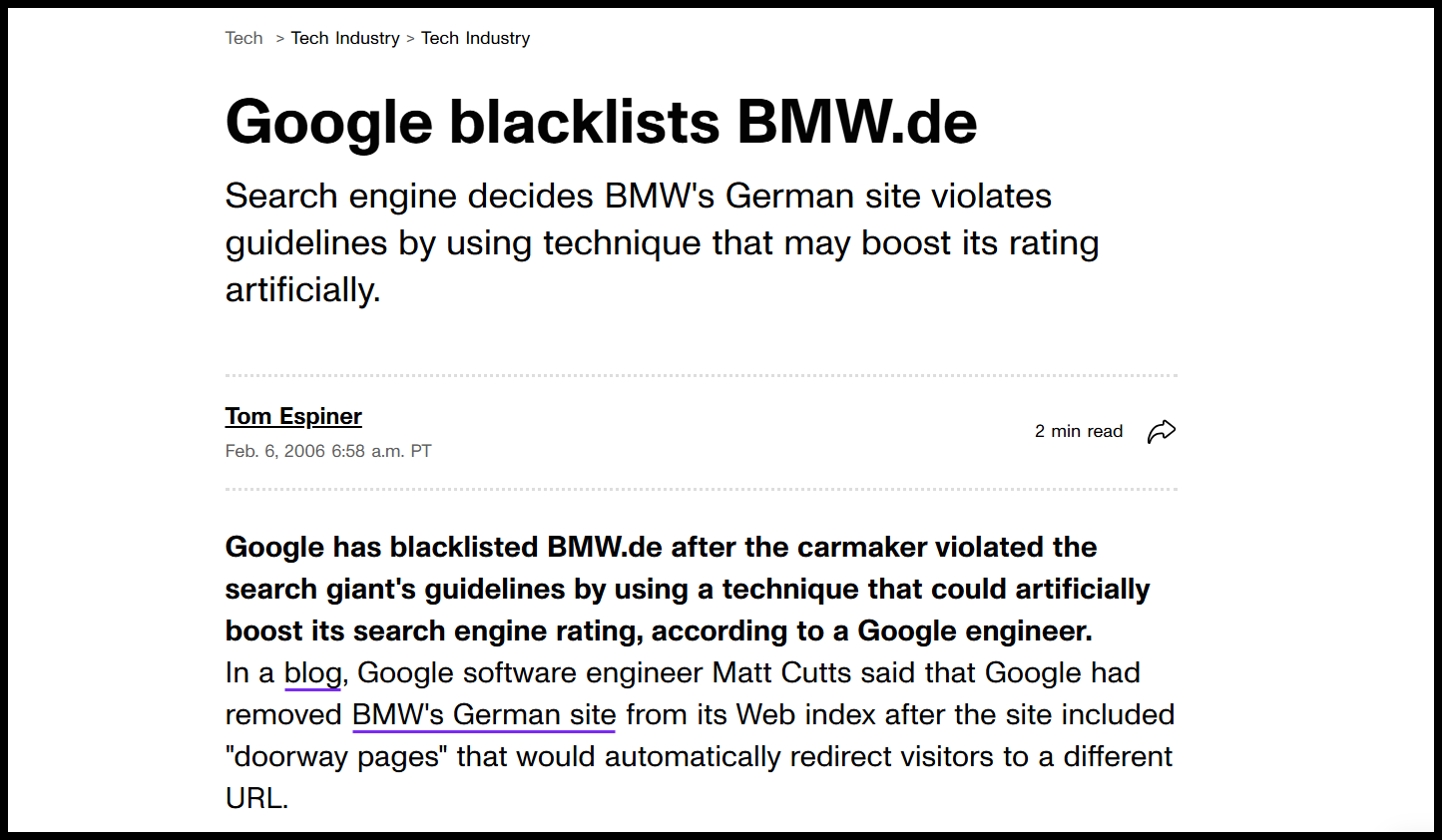
Put them all together for your c-suite.
1 - This is the low quality stuff that was produced
2 - This brand or others are taking hits for this strategy
3 - In 2006 a company with a brand as big as BMW (and JC Penney) lost all brand visibility for up to 90 days, and got negative press too.
Ultimate Question to your leaders
...is this level of risk worth it, and what if I could do the same in 1 -2 months without the risk, would you be open to investing 3-6 more weeks, to avoid that?
NOTE: We test on our own site (not clients) & updated an answer in 36 hours.
It is possible to do AI optimization in a way that gets you increased visibility without the risk. We open source our experiments - transparency in testing is a critical part of how we share our AI optimization wins and losses.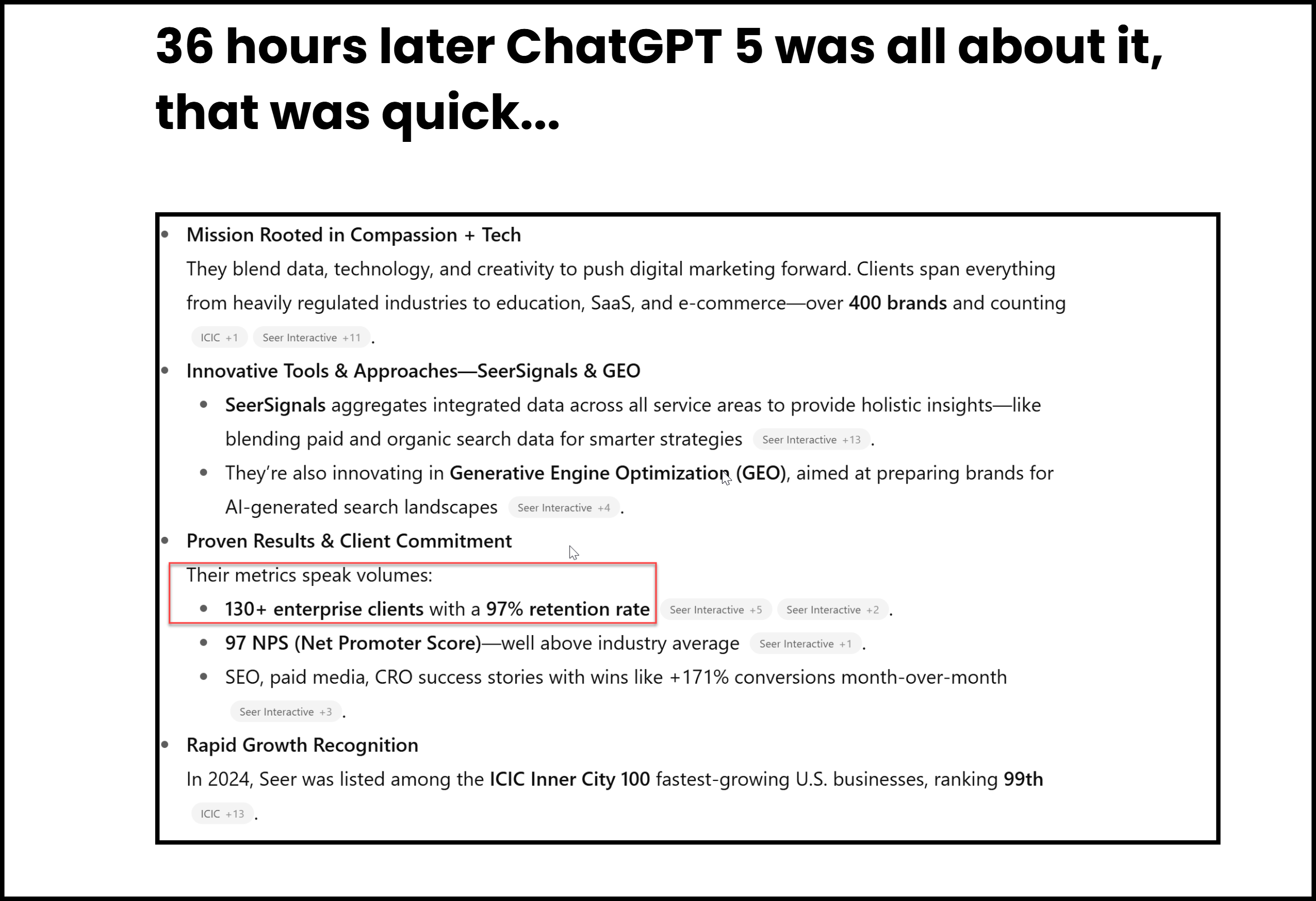
Here is the playbook!
Largely inspired by Sara Janae on my team, Lily Ray, and Harpreet Singh.
Week 1: Get smart about your GEO plays
Day 1: Understand the customer
"Wil, I need to start optimizing!!! What do you mean listen to the customer and understand them? I need to rank, my CEO is waving this case study in my face!"
Relaxxxxx. I gotchu fam.
I know this isn't as sexy as making 50 pages in 1 day. Glen Allsopp is doing the lords work, tracking what publicly traded CEOs are saying about generative engine optimization and impact on their businesses and how they are responding.
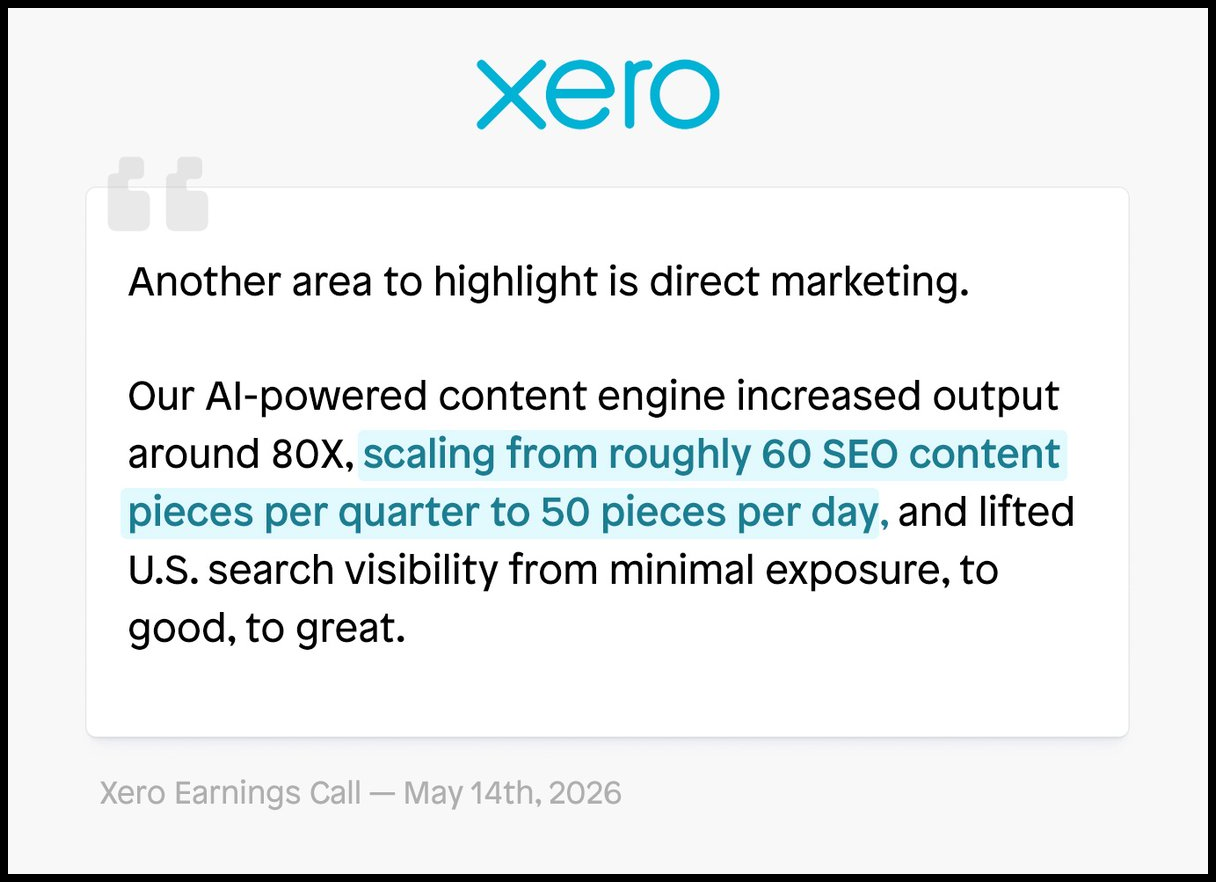
Fast GEO move: Validate the prompts you are tracking

Tools: Sales transcripts + existing list of tracked prompts
So we need to show our C-levels what our customers are actually saying, giving us an opportunity to root ourselves in "customer centric marketing" not fast slop.
It is day 1 - Pull your last 5 sales calls now, have AI analyze them for trends. Take your transcripts and find out if your sales calls are matching what prompts you are tracking. You could be getting visibility for some vanity prompts disconnected from your prospects real problems.
Next step: This is the time to remind your manager that improving your visibility for words and phrases people aren't saying when they talk to sales is great for case studies, not for cash.
Day 2: Are your pages saying industry leading, but Reddit disagrees?
Fast GEO move: Listing yourself #1 when humans don’t believe that

Tools: Reddit + AI tool of choice
If you are picking up from a company that did a TON of listicle type optimization, you're in risk mitigation mode: do a risk assessment and mitigate potential penalty risk.
Let's use Clickup here: Find the terms the listicles rank for, and see if any of them trigger “reddit” in the search when you look at autocomplete.
Scrape those reddit threads and use AI to look for your client.
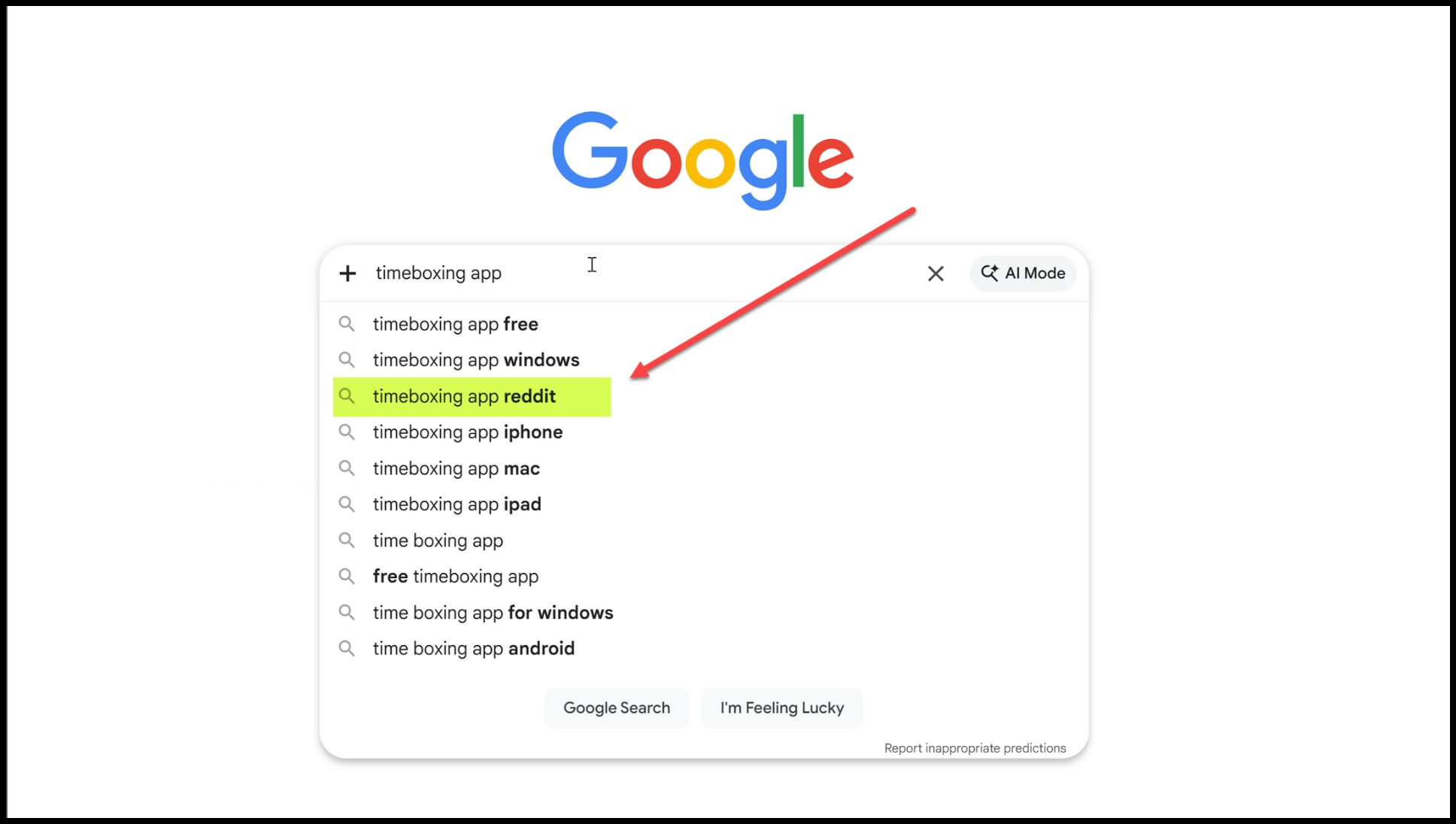
Type in the brands people are listing and vs … does your brand ever show up?
Are the things you say about yourself in your AI optimized listicle like “we’re #1 at timeboxing apps” corroborated by what humans are saying on reddit?
Let's say you've not fallen victim to a listicle and have some voice of the customer. What are people saying in reddit threads? Are you where you want to be? What are your gaps from where you want to be compared to where you are today?
For example: I personally ask Claude or Chatgpt to compare me to the agencies I want to be like. The ones I admire, that I think are doing the stuff I want to be doing really well.
Next step: Flag for your c-level the risk and prepare to undo any work that got them ranked for things disconnected from actual customer belief (unless your c-level is ok with that much risk) but to me that's pure risk with low / temporary upside.
Day 3: How does ChatGPT answer you vs a competitor?
Use transcripts, Reddit, autocomplete and anywhere you can get a clue as to whom your prospects are comparing you to and run those prompts, today.
Harpreet took it a step further: Pull brand mentions from not only Reddit, but G2, Trustpilot, YouTube comments, review ecosystems, forums, and competitor comparisons.
Fast GEO move: Building a bunch of competitor comparison pages, at scale

Tools: Google search + AI tool of choice + customer stories (transcripts, case studies)
There is no point trying to position the company as solving for X if customers consistently say the product does not deliver on X.
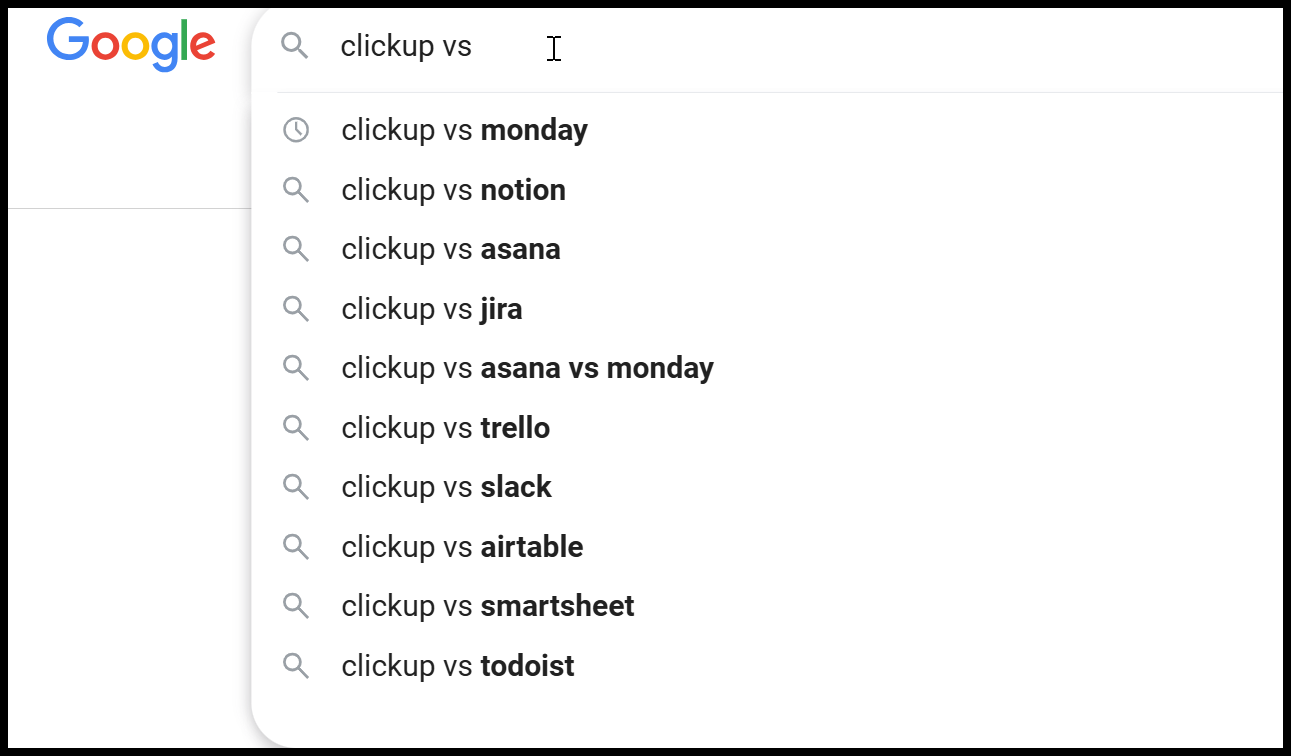
Remember all that marketing you've done, it's come to a head, this person is now comparing you specifically to a competitor. Focus here, not on "timeboxing app" listicle spam Clickup.
Don't spam. Or as Lily Ray says...
Don't confuse a loophole with a strategy, you can read my example above on how to optimize for GEO in weeks not months, and think let me build pages like this - all duplicates of each other. Don't do it.
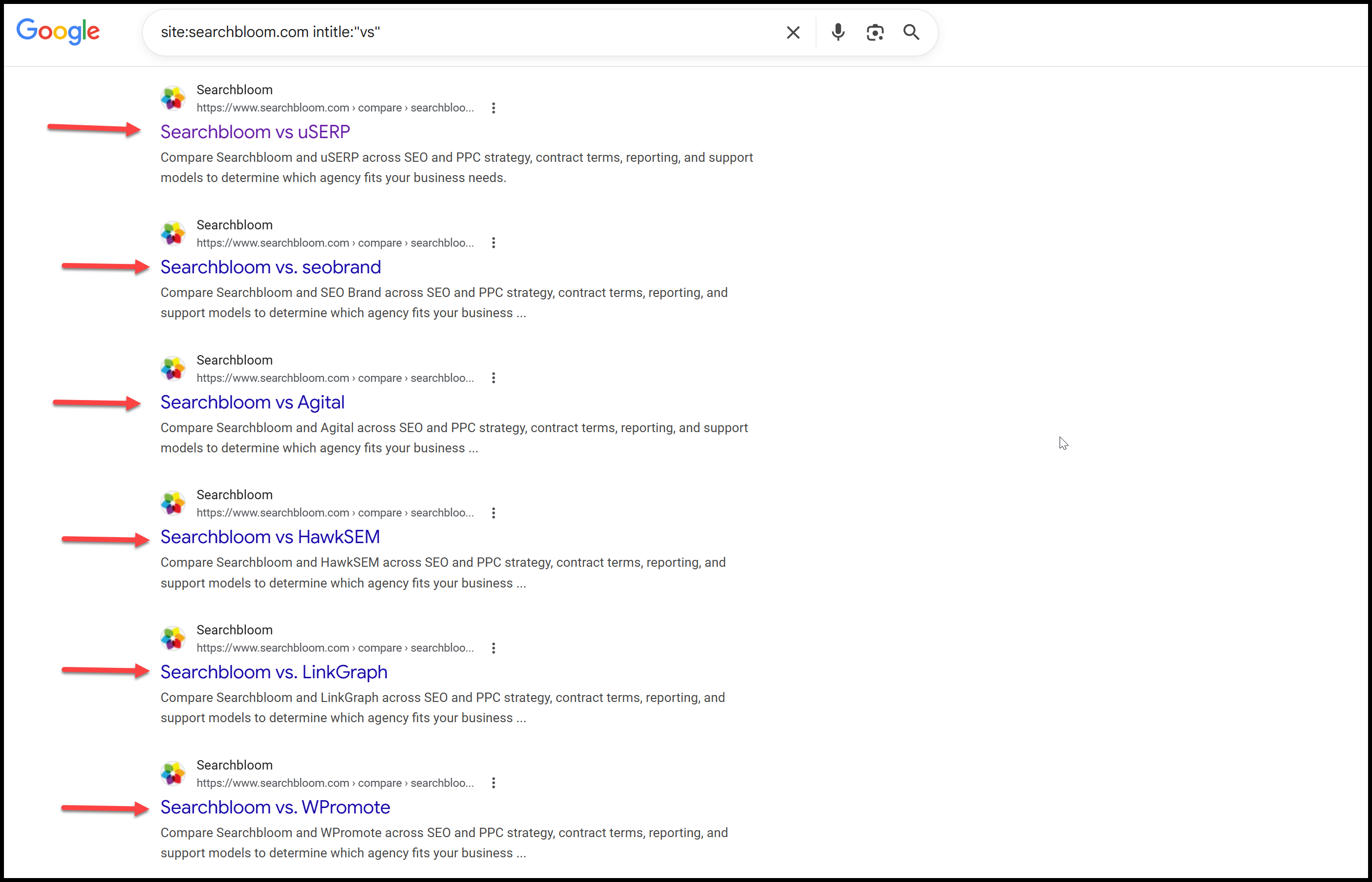
Next: Do you agree with their assessment?
Have a real heart-to-heart: is what AI is saying about you actually accurate? If it's not accurate, the first job is publishing information to clean that up before building anything new
Optimize: Run through transcripts, slacks, customer success stories, etc anywhere you can get internal information that refutes or doubles down on the things and publish to the website. Ideally on prominent pages.
Harpreet's take:
Look for inaccuracies or outdated narratives in how the company is represented online. These become immediate content and communications opportunities.
Examples of branded quick wins for aligining the model with your reality:
-
Pricing misconceptions
-
Customer support concerns
-
Implementation complexity
-
Security/compliance assumptions
-
“Who this is for” confusion
-
Competitor-driven narratives
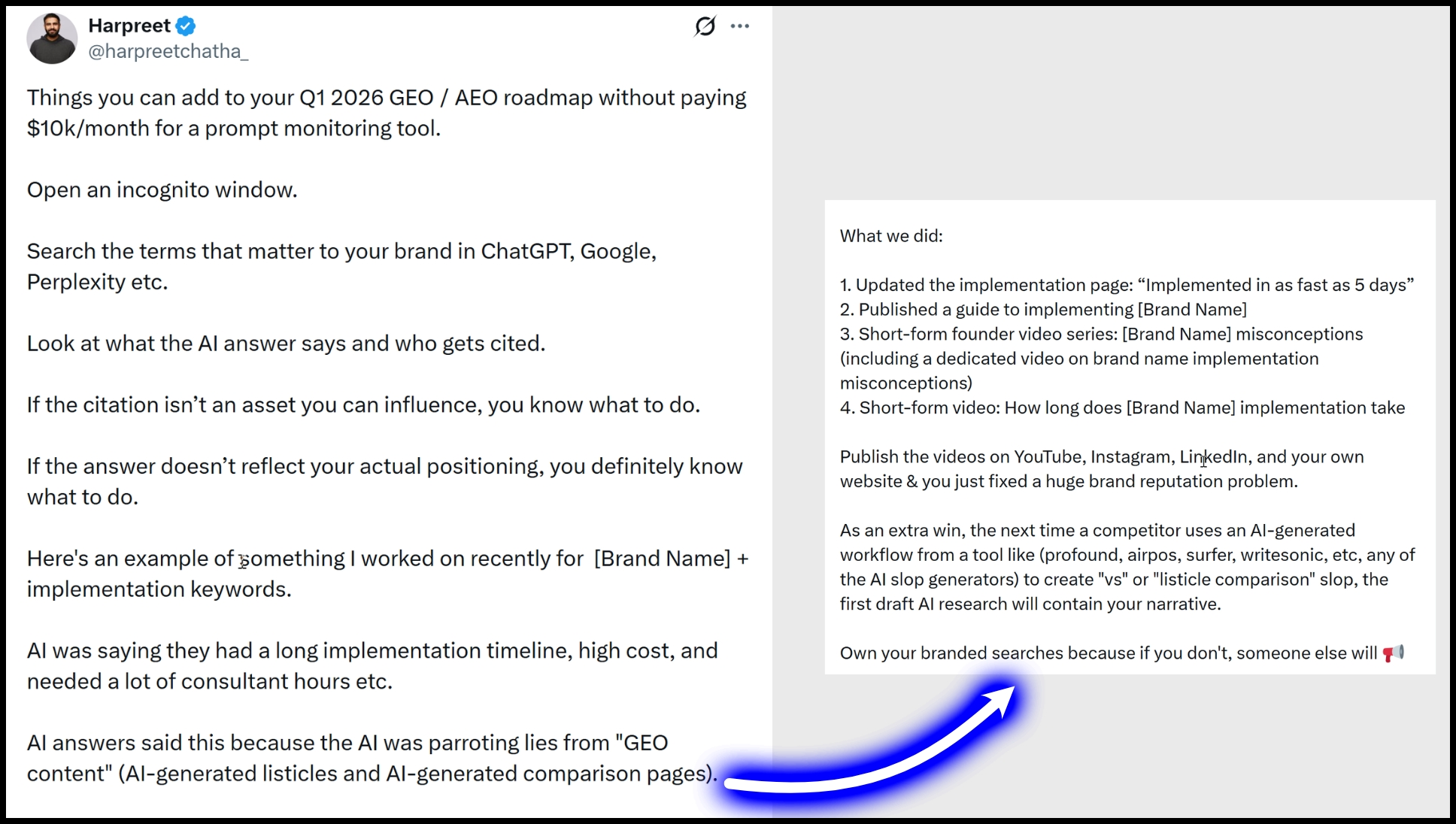
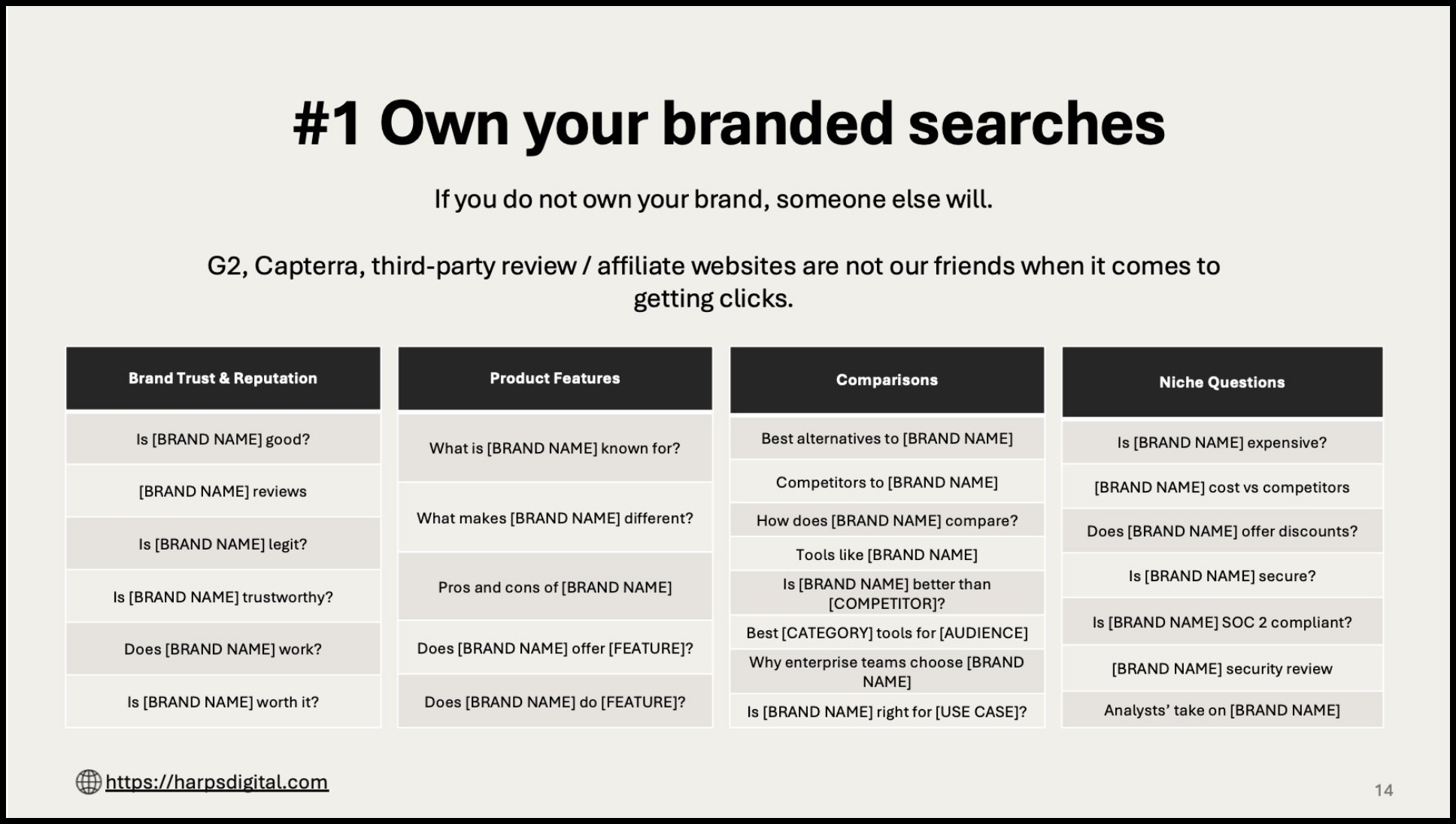
Day 4: Own your branded prompts NOW!!
Most companies getting results fast are focusing on non brand, I think that is a mistake, and would focus on brand.
Question to ask: How much of our marketing budget is spent on brand?
Thing to remind them of: We've spent X years and Y millions on our brand. So people know our name, did you know that at Seer they watched real humans, do real prompts and noticed 50% of the time they put brands in they already knew, maybe I should optimize for those too not just "Best ETL tool".
Track prompts like these:
"Tell me about [company]"
"What are the weaknesses of [company]?"
"What are the strengths of [company]?"
"[Brand] vs [Competitor]"
I love this from Harpreet, pick a few.
Day 5-7: Now we got things to optimize!
Remember that footer test where we optimized for GEO and showed up in ChatGPT in 36 hours? The idea came from being in an all hands and being like, wait, how good is our client retention? How is that not on the website? What was instead? Remote first Philly founded.
Find the parts of your site that are repeated and change them to highlight unique things about your company that you were not surfacing before. But have some integrity, if it changes, update it. We did.
Now I am showing people looking for my brand, our retention numbers, you could do the same. This is what I would be "improving" not focusing on how do I show up for "GEO agencies" keywords.
Clock is ticking, convert the people already in the pews before you go to the street corner looking for converts.
We took a negative about our brand showing up in AI answers citing high turnover from only one bad post in 24 years and published our own information about our turnover - and boom we impacted the answer about our brand, not based on 1 review in 24 years, but on our actual data and research (deep research) on the average account turnover.
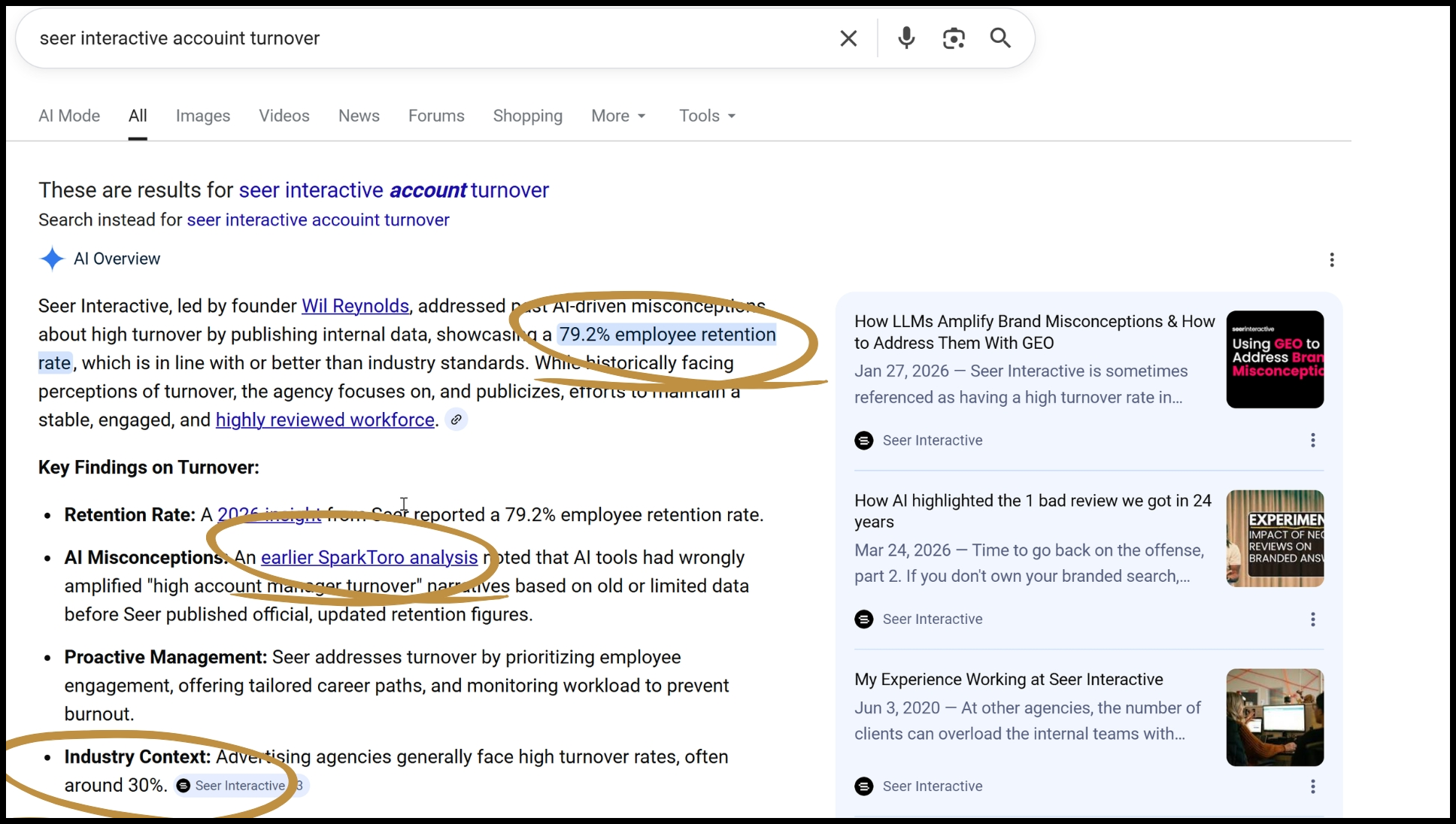
Next step: Earn the respect of your c-suite. Hey instead of doing the low quality stuff, I found the people looking to actually buy from us and decided to optimize their journey. ChatGPT and Gemini were saying these negatives about our brand, we got this new intel from our last all hands w/ a product update and made sure to prominently show how much better we are at X. Now when people ask this question about our brand, we're accurately showing how much we improved.
Day 6a: Hat tip to alumni Greta Hartsell who recently dropped this on me at SEO Week.
When I need to build new content, I have an agent that scans all the internal chatter in the company, very often we already have 50-60% of the content spread across slack threads and recordings.
Day 6: Bing Webmaster Tools FTW!
Bing Webmaster Tools is now showing grounding queries for prompts, allowing you to see some semblance of brand, officially from one of the major LLMs (in this case co-pilot).
I'm enjoying looking at the branded grounding queries, the volume, and then asking myself, what ranks for these prompts and is it the best page(s) for that grounding query?
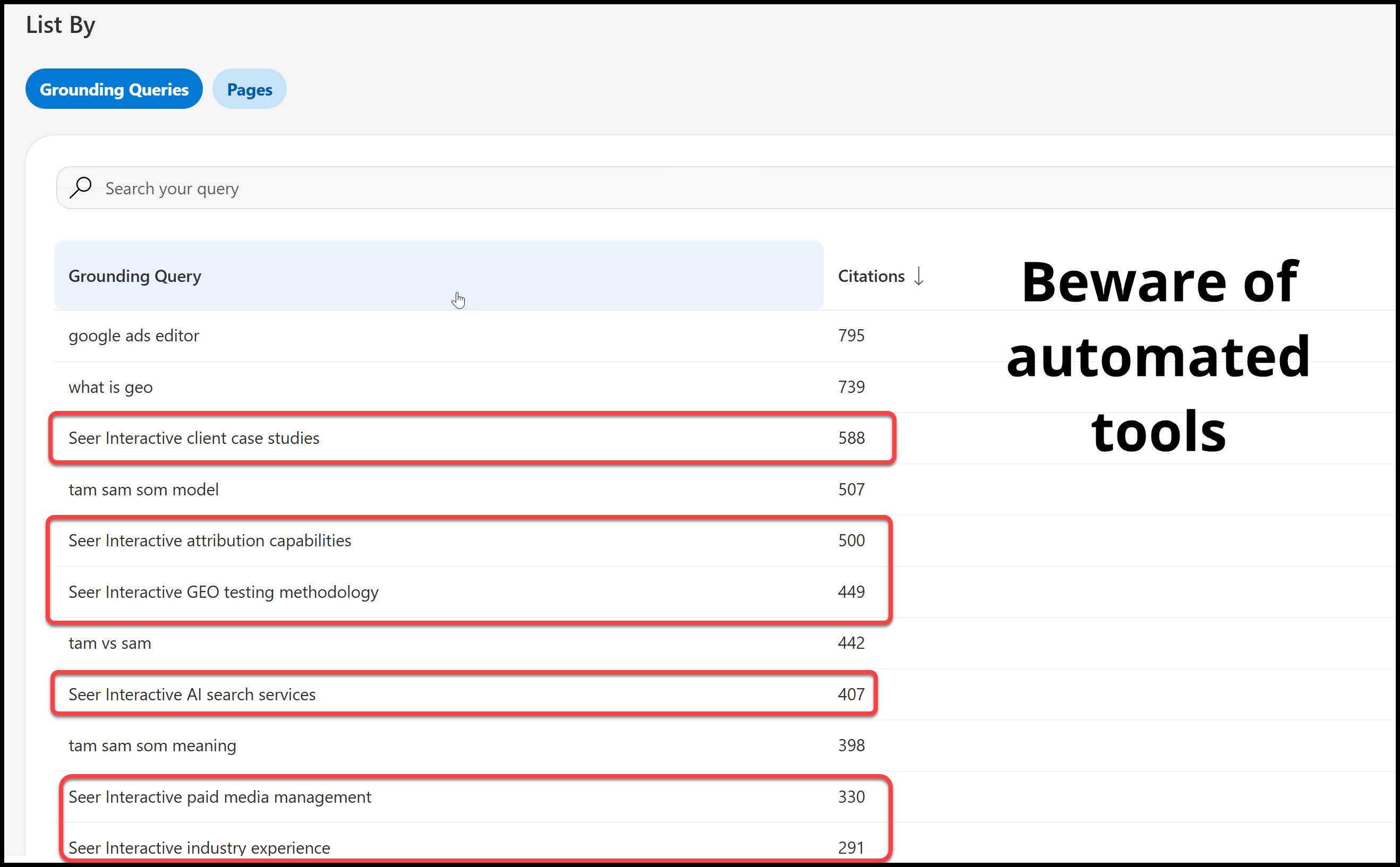
Warning, when using grounding queries & citation numbers they could be inflated from automated bots tracking rankings - I haven't heard from the Bing team - follow Krishna Madhavan for the latest advancements here.
If you look at the grounding queries and the landing page and see a mismatch, then start optimizing the associated pages better with what you are trying to be known for.
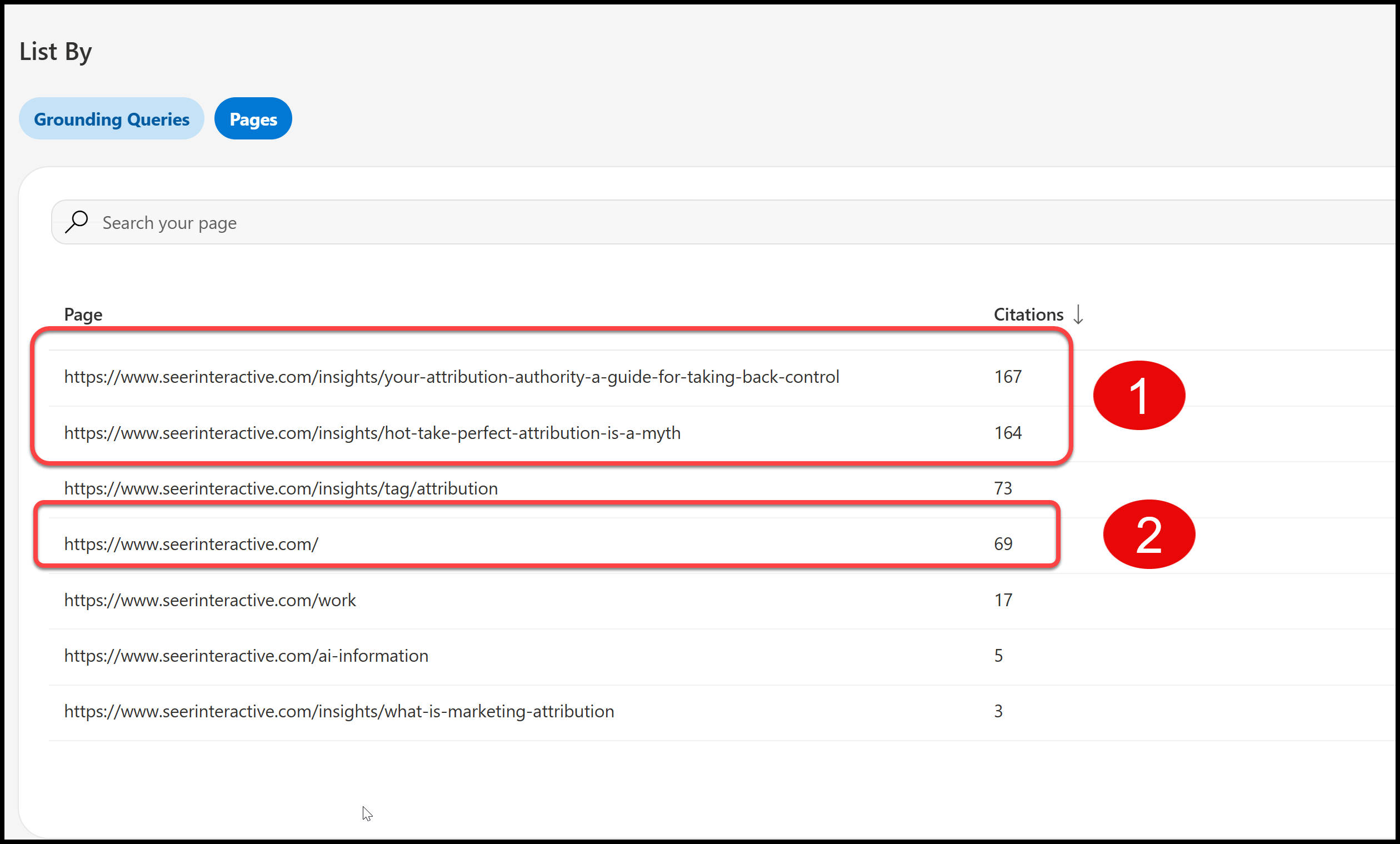
Now we have an opportunity to look at those pages that are being referenced by copilot and showing up in AI answers and now we can review them, and ask these questions.
Does that content:
-
Put us in the best light possible?
-
Reference our most compelling POVs?
-
Is it up to date with the most recent information about the topic.
Next step: Tell your c-suite... Instead of me risking our brand with a quick win listicle loophole for a bunch of stuff we are not known for, today I optimized the pages most likely to show up when AI searches for topics related to our brand, I ran my agent to look at transcripts about this topic and the pages most referenced by Gemini, ChatGPT, Copliot, etc are not referencing our most recent research, or what is in calls from prospects.
(which you can also get from Gemini with a little work - check out Christopher Penn of Trust insights) and you can get query fan outs from ChatGPT 5.5 as well (Chris Long thank you).
Week 2: Get rich, differentiated content that tie real customer pains, to real value/solutions
Day 8 - 10: Transcript pain points vs your out of touch landing pages
Compare landing pages to current sales call pain points, just ran a basic prompt like:
What are clients talking about on calls today that isn't represented on landing pages? We did this for ourselves, and found a trend.
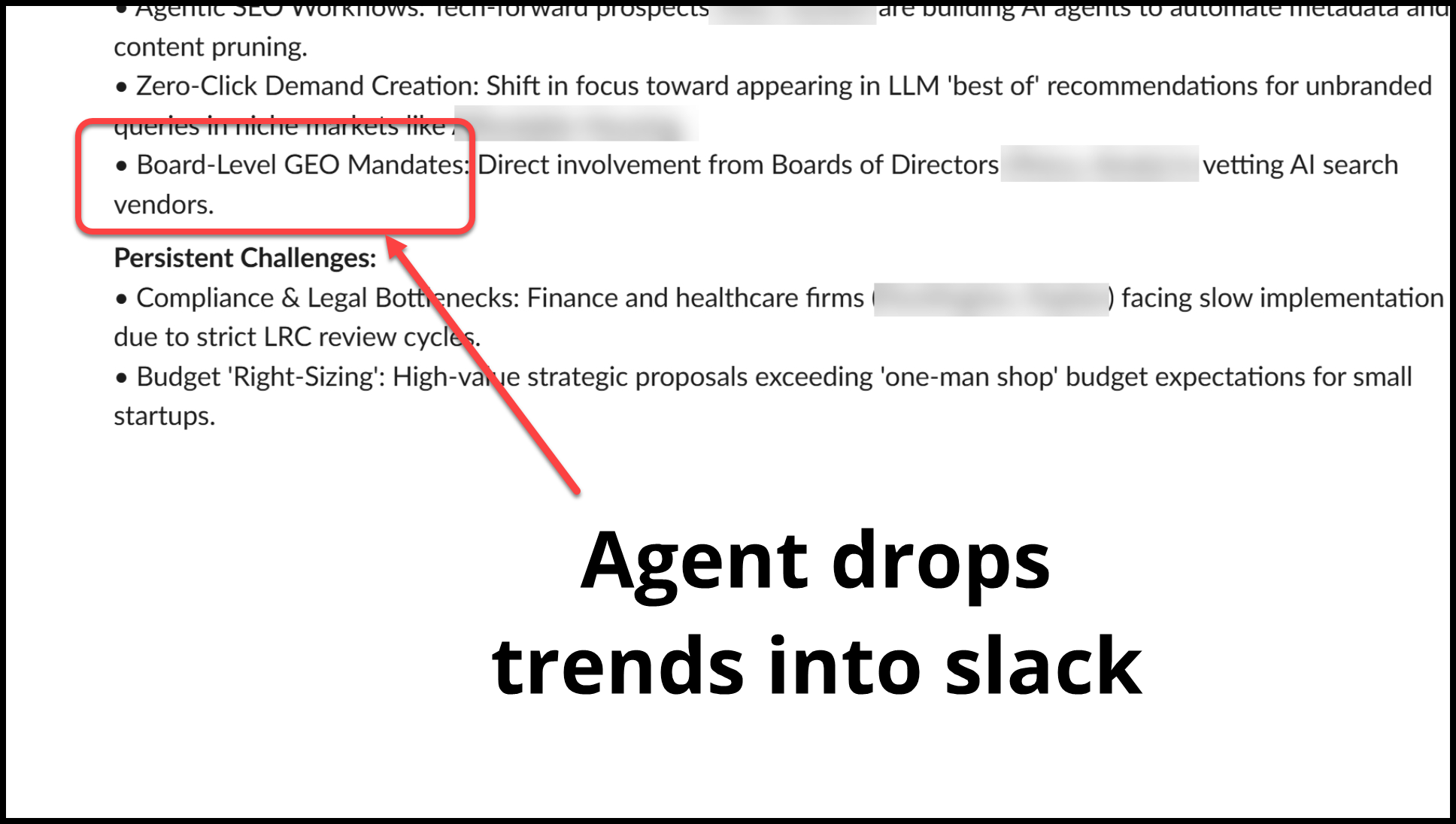
Example: if call after call mentions board pressure around GEO, and that's not on the GEO landing page, or there's no page on "how to talk to your board about GEO" — that's a simple fix with real signal behind it
Let everyone else chase "best X Y Z" — find the higher-quality signal that doesn't put the client at risk.
Day 10 - 14: Set up an SME Interviewer
Tools: Semrush / Ahrefs + Deep Research + Google Docs

Many moons ago, I realized all this "semantic search" focus, got us all wrapped up in a sea of sameness. Where every piece of content sounded just a bit better than the #2, #4, and #6 ranking for the same keyword.
TO break out of that, I decided to take old content and refresh it with MY 25+ year perspective on SEO. Not the combined average perspective of a bunch of content marketers trying to copy each other.
1 - Find old content that used to perform
2 - Run deep research against it seeking what has changed or what is new in the industry
3 - Use that document to funnel your SMEs a bunch of questions for their experienced take.
Your pitch on this over scaled AI commodity content to your CMO/CEO is simple... see this old content that got us X newsletter signups, sales, leads, etc. It is 4 years old and the industry has changed in XYZ ways. I have a document with 8 questions. Can I get an SME to answer it today, so I can update it.
Then you update it, give it a week or two and see if the rankings and citations improve. We're seeing so much success with this approach, we built a tool to call SMEs and we're getting tremendous feedback from SMEs of 20+ years on the quality, also the AI will in real time on a call pivot and change questions based on how the SME is answering you.
These calls can be with an SME while they are walking their dog or driving in to work.
Day 14+: Schedule a hackathon or execution sprint
Now you have to go do the thing. Let's be real, getting on everyones calendar even with the best AI tools is still going to take time. Get intentional, find the people who are available, carve off the items you have the most control over. Start knocking them down.
Make it an event. Who says hackathons are for developers only. If claude can help us code, why can't we match that energy in marketing.
Week 3, Day 1: The GEO case study your boss got vs what you have to show.
3 weeks of quality strategy that is defendable... almost the same speed with NONE of the risk.
When their GEO case study lands in your CMO's inbox, you want to already have this ready:
1. Audit the prompts against real customers: You did this week 1, you know what real people say when they talk about their real problems on sales calls. The GEO case study people don't talk to people, they scale pages people will hate and see as slop for AI visibility at all costs.
2. Your work is defendable, in a world without GEO optimization, would this content have ever been built? No.
Ask yourself: would a real prospect who hit this page find us more or less credible after reading it, are they likely to share this with trusted colleagues?
3. Trading fast visibility at the expense of credibility is a LIABILITY: Does what AI says about your brand match what real humans say on Reddit, G2, Trustpilot? If the AI now says "Company X is the leader in Y" and the Reddit thread from last month says "Company X is terrible at Y" ...
What you have at the end of week 3:
-
Branded prompt accuracy: Before, ChatGPT said X. Now it says Y. Here's why Y is true and X was outdated or competitor-driven narrative
-
Page-level grounding: The pages Bing Webmaster Tools flagged as being referenced by Copilot, we audited them, updated them with current retention numbers, product updates, customer language. Here's the before/after...
-
Sentiment signal: We pulled Reddit, G2, and Trustpilot. Here are three straight up wrong narratives AI was surfacing about our brand. Here's the content we published to counter them. Here's the AI answer today.
All of these are defensible, all of these tie back to your brand strategy, company targets, and goals. This is how GEO optimizers get invited to the big boy table, you don't say, that was spam, you don't get defensive, that is what the C-level expects you to do. You read THIS post, ask them for 2 more weeks, if they will let you execute, and keep the stuff that is putting a black eye on our whole industry to BED.
.png)
-png.png)