
After months of legal drama, app store removals, and creator panic, TikTok is back...for now.
The platform has been granted yet another 90-day operational extension in the U.S., allowing new downloads and full access once again. But the damage to the marketer’s confidence and trust in the platform is there.
The last few months exposed just how fragile the platform's presence really is. The ban derailed influencer campaigns, disrupted media budgets, and sparked a gold rush for phones with TikTok pre-installed, with some listed for up to $25,000.
How Top Creators Are Hedging Their Bets
The Alix Earle Timeline
TikTok’s “It Girl,” Alix Earle is a strong example of how the ban accelerated creators diversifying off of the platform.
- Before the Ban: After going viral in September 2024, Earle did what a successful TikToker would do: launch a podcast (the Hot Mess podcast) and built up brand collabs, like the jean collaboration with FRAME.
- During the Ban: Using FOMO she ran plays to get her audience over to Instagram “or you’ll miss my wedding”. Funny – but also a real sign of the anxiety creators were feeling about the potential to suddenly lose the audience they built.
- After the Ban: Did losing TikTok kill her visibility? No. It skyrocketed: she starred in three Super Bowl commercials, attended high-profile events like the Kentucky Derby, the Cannes Film Festival, and presented at the American Music Awards.

What does this rise from TikTok fame and influencer brand collabs to mainstream momentum suggest? TikTok as a destination may struggle as the smart influencer instead uses virality as a launch pad into other mediums. Testing messages, then taking the heavy hitters and using that to diversify their audience and reach.
The Broader Creator Experience
In truth, this trend started before the ban, but the ban became a serious forcing function and threw fuel on the fire.
While TikTok continues to evolve ban or otherwise, many influencers are frustrated with how inconsistent and unclear its monetization is. This isn’t too different from past creator frustration with Vine. In one video, a creator reflected on how he and fellow Vine stars collectively reached over 3 billion views but made almost no money. Poor monetization can drive creators away regardless of their success.
TikTok’s Creator Rewards program can pay well for top-tier creators, but mid-level influencers often describe it as unreliable and lacking transparency. Does this mean TikTok is failing? No, but it no longer feels like a sure thing so it’s no surprise that creators are exploring more stable platforms.
How the TikTok Ban Changed Marketing
The Algorithm Broke
Many users reported that their algorithm hasn’t been the same since returning to TikTok. This was highlighted in a MSN report, which noted significant differences in user experience post-ban. Because of this, fewer users are engaging, which could impact both organic reach and paid ad performance. Many advertisers have noticed fluctuations in ad spend and difficulties scaling their paid social campaigns again.
Demographics Shifted
With the ban preventing new downloads, certain age and gender demographics were disproportionately affected. This shift impacts brands with niche targeting strategies, such as Shein, a fast fashion giant that appeals to Gen Z women through micro-trends and influencer hauls. While I have yet to find detailed demographic data, I hope TikTok releases which specific groups were affected in the near future.
Politics Influenced Behavior
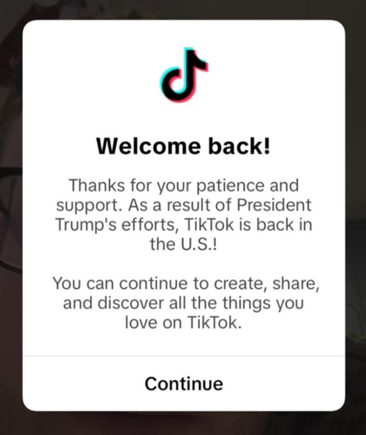
We are also seeing shifts in user behavior due to the political climate and the notification TikTok sent after being reinstated. Toward the end of the shutdown, President Donald Trump issued an executive order preventing immediate enforcement of the ban. The political landscape surrounding TikTok has influenced user and influencer sentiment, with some choosing to leave the platform due to perceived political affiliations.
This ultimately affects the composition of TikTok’s user base and those boycotting the platform, as detailed in this Washington Post article.
Silver Lining? Less Competition.
Not all the effects of the ban are negative. A key benefit for marketers is reduced competition. Since TikTok’s future remains uncertain, some brands have pulled their ad budgets, leaving opportunities for those willing to stay.
According to Rolling Out, TikTok faced a projected 29% decline in global advertising revenue for 2025 due to the U.S. ban. Additionally, TikTok's user base in the United States has experienced fluctuations. Before the ban on January 19, 2025, TikTok had approximately 170 million American users. While TikTok's services have been restored, the exact current number of active U.S. users remains uncertain. TikTok’s Ad Budget Drop might not be a setback but rather a strategic advantage for the savvy and scrappy.
Strategic Recommendations
Monitor: What to track right now so you’re prepared to stay nimble as this evolves
- Platform effectiveness
Is targeting (as measured by CPMs & CTRs) improving? Cost could get better due to shrinking competition, but CTRs could struggle if your target audience starts to significantly shift - Creator response rates & pricing
Are top-tier influences becoming more or less responsive and how are their rates shifting due to the changes - Demographic shifts & audience size
Compare current and future audience demographics and size to your historical data to understand audience impact and trends - Cross platform migration
Track if and where your TikTok audience is moving (Instagram, YouTube, etc.) - Government & political considerations
This one is less of a metric and more of a “need to know”. You’ll want to keep a finger on the pulse as policy shifts, this could signal the need for speedier action or could start to put pressure on other considerations, like brand perception
Tweak: Adjustments you can consider making to get some quick wins and start to get ahead of future changes
- Take advantage of reduced competition
This could mean increasing TikTok ad spend if your performance remains strong or potentially negotiating better rates with influencers - Front Load The Quarter’s Campaigns
Things could change quickly, if you have reliable performance today, you might want to consider your campaign timing for the quarter as what is true today with your audience and conversions may not be true in 45 days - Diversify across multiple platforms
Ideally paired with understanding where your audience is moving – and if that’s unclear, where they’re most active – start to build up presence or influencer relationships on other platforms
Go-do: If TikTok is a part of your digital strategy, you need to have a plan to shift
- Gather influencer information outside of TikTok Creator Studio
If there’s a future shutdown, you don’t want to be recreating the wheel. Start to document and build up your own repository - Build lists from TikTok traffic
Start to run programs that gather your audience data more effectively, like email lists, so you have some ownership of your audience data for future
- Identify platform-agnostic creators
Start to build relationships with influencers who are active across multiple channels where your audience is
- Test budget reallocation scenarios
There may be a time in the next 90 days that, if you’re monitoring the above metrics, you may need to (or want to) shift spend rapidly. Build scenario plans for 30/60/90 days to stay ahead of the game
💡Plan for Platform Fragility:

During the TikTok ban, one thought struck me:

What if an influencer's phone breaks during a campaign and TikTok can't be reinstalled?

This may sound minor, but it’s a real point of failure when platform access is politically or technically volatile. Even with TikTok’s return, this scenario highlights why contracts should include contingency planning. Ask influencers about backup devices, cloud access, and where else they post. What used to be a minor technical hiccup could now derail an entire campaign.
Final Thoughts
TikTok’s extension buys time, but not certainty. By staying adaptable and monitoring these shifts, you can future-proof your strategy while turning that uncertainty into your strategic advantage.
As the situation continues to unfold, the key to success will be flexibility, preparation, and smart investment in emerging digital spaces.
Want to future-proof your social strategy? Let’s chat.

.png)