

This blog was originally published on December 4, 2023 and was updated on July 10, 2026.
Back in the day, a successful client relationship looked like face-to-face interactions and well-timed phone calls. Bonds were formed and deals were made around conference tables or after-work drinks.
Today, the key to successful client relationships is about leveraging technology to enhance your interactions. But while client service teams rushed to adopt AI tools, consumer trust in AI-powered marketing actually declined. Nearly 1 in 3 consumers now trust brands less when they see AI-generated content.
This creates a paradox for client managers: AI capabilities have never been more powerful, yet client wariness has never been higher. Using AI is table stakes, but the question is how to use it in ways that build rather than erode client trust.
Embracing AI: Your Partner in Client Management
Let’s face it: expectations have gotten a lot higher over the last few years. Not just for us as client managers, but for our clients too.
The sheer volume of data available means clients expect insights, strategies, and recommendations tailored to their specific needs and delivered promptly.
On top of that sits the need to continue building and fostering relationships, virtually.
This is where AI steps in to level us up as client managers and partners.
How to Use AI for Deeper Thinking and Strategizing
Using AI at all is no longer a differentiator. Your clients assume you're already doing it, and leading a conversation with "we're using AI to serve you better" doesn't land the way it did a few years ago. In fact, it can actually make you sound behind.
What is still a differentiator is how you use AI. Specifically, whether AI has made your thinking sharper and not just your output faster.
Consider the following two approaches to using AI:
-
Approach 1: Pasting meeting notes into a chatbot and asking for a recap
-
Approach 2: Having a structured system for capturing client context over time, synthesizing it before every touchpoint, and showing up with relevance instead of just responsiveness
AI is genuinely excellent at compressing information, spotting patterns quickly, and drafting things that would otherwise eat up your afternoon.
The conversation with clients today is "here's how our thinking has gotten sharper because of AI, and here's the resulting work." The differentiator is output quality and relationship depth rather than the tools themselves.
[TIP] Layer your human judgment on top of AI insights to provide the greatest value to your clients. AI doesn't know what matters to this client in this moment. But you do, because of the relationship history you carry with you.
Transform Meetings with AI
From preparation to follow-up, AI can help ensure your meetings are more than just calendar notifications that attendees dread.
Meetings are the pivotal points where strategy, vision, and relationships intersect. They hold a lot of potential to solidify partnerships and reinforce trust.
However, ensuring that every meeting is fruitful and engaging is no small feat, especially when we’re hopping from one virtual meeting to the next. This is where AI revolutionizes how we conduct these essential interactions.
Meeting Preparation with AI
A successful meeting often hinges on its preparation.
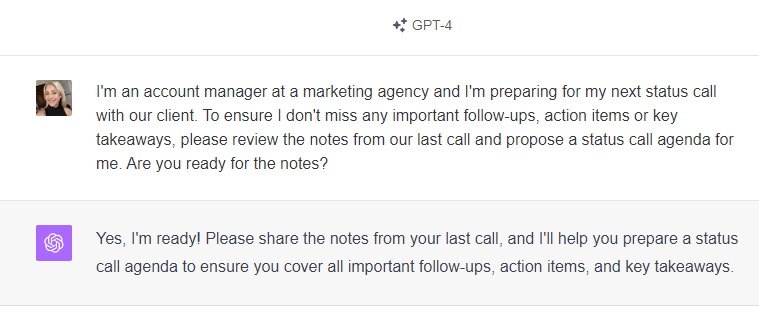
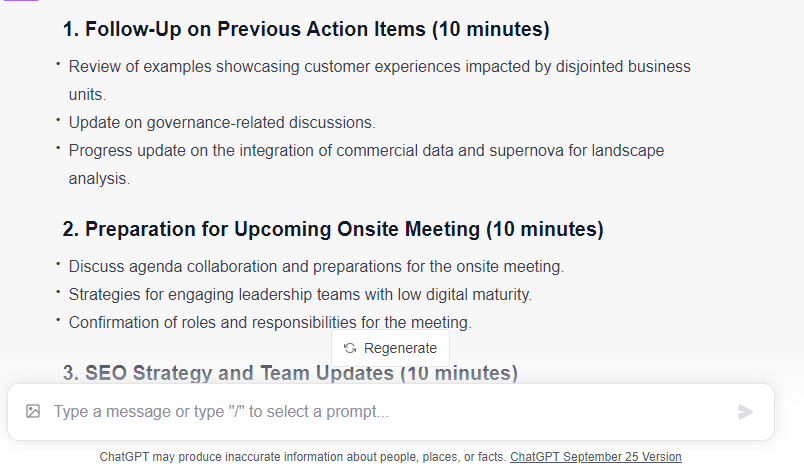
Leveraging AI, you can auto-generate agenda points based on previous interactions, like the notes from internal/external meetings and emails.
AI can quickly review past communication, identifying areas of importance or concern that need to be addressed, which ensures that no critical topics are overlooked.
Meeting Follow-Up with AI
A successful meeting can also be determined by how effectively you follow up.
By now, most account managers have an AI-generated transcript and summary waiting for them the moment a call ends, whether it comes from Zoom's AI Companion, Fireflies, Gemini in Google Meet, or a similar tool. These do a solid job capturing action items and decisions. Where they consistently fall short is context and subtext.
The summary is a starting point, not the finished product. The real value comes from using that transcript as raw material for more considered synthesis. Pull it into a tool like Claude and ask pointed questions:
-
What did the client push back on?
-
What did they seem uncertain about, even if they didn't say it directly?
-
What are the themes across the last few meetings that we should be addressing?
An auto-summary won't answer those questions on its own. You have to ask them, and you have to know what you're looking for. This is where the human layer adds the most value, in two specific ways:
- Interpretation: If a client says "we're not sure about the timeline," the auto-summary captures that as a timeline concern. A good client engagement manager knows whether that means they're nervous about internal capacity, testing whether you can flex, or signaling that the relationship is under some strain. That context doesn't live in the transcript.
- Follow-through framing: AI can draft a follow-up from the action items, but it won't know that this client prefers brevity, or that the person who stayed quiet in the meeting is actually the key decision-maker who needs to be addressed directly. That calibration is still yours to do.
This is also where AI platforms start to earn their keep beyond a single meeting. You can feed it context over time, rather than one transcript in isolation, and start building a richer picture of the account.
[Tip] For teams ready to go further, custom GPTs, Claude Skills, and MCP connectors alongside your existing platforms can automate a chunk of that context-building for you.
Maintaining Client Satisfaction with AI
With AI, you're not just tracking client satisfaction; you're predicting it.
Relationships, business or personal, thrive on consistency and understanding.
However, in today's multifaceted business ecosystem, maintaining a bird's-eye view of every client's satisfaction and engagement level can be difficult. There are now dedicated client health and revenue intelligence tools (Gong, Clari, Catalyst, and others, not to mention Seer's own client health frameworks) to help you monitor the "health" of your client interactions, and even get helpful advice on how to improve.
Proactive Client Satisfaction Monitoring
In mere seconds, AI can analyze various metrics like:
- Communication frequency
- Sentiment
- Overall engagement
This can provide a clear picture of the client's satisfaction levels. Should there be a dip or irregularity, AI can spot those that allow for timely interventions.
This isn't just about problem-solving; it's about problem prevention.
Solving Client Issues with AI
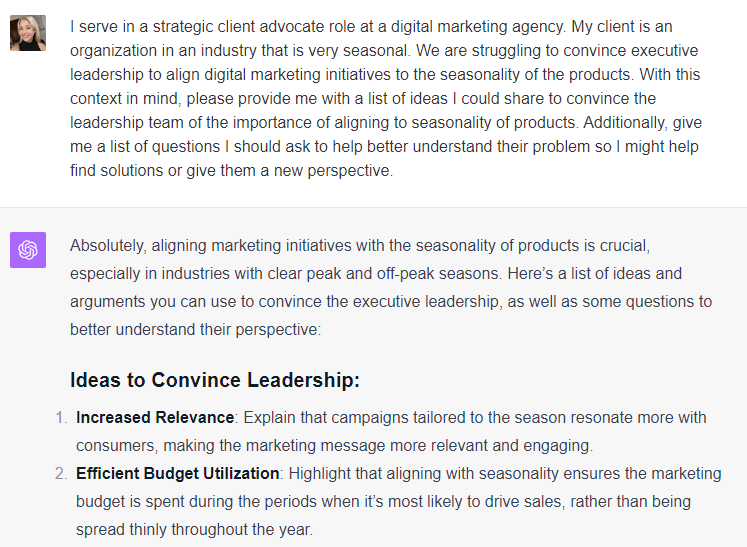
Not sure how to move forward once a client satisfaction issue is identified? Ask your AI tool of choice.
It can give you advice on how you can tackle a particular challenge, whether that be the client’s responsiveness, approaching feedback for a coworker, or even how you can approach a client when you need to extract more direct feedback.
AI will not only give you direction, but it can write you the script.
Know Where the Line Is: AI Governance and Client Data
Every AI-forward agency needs to be having this conversation clearly and often, not just once at onboarding.
With brand-new clients, it's a conversation you want to start as early as possible. With existing clients, it should be ongoing, since a lot of clients who traditionally said no to AI use are now opting in.
This conversation really comes down to three things:
-
What AI tools are in use
-
What data is being passed into them
-
What the client's own policies say
On the tool side, specificity matters. Name the platforms in your stack, so clients can look those up and understand the data-handling policies for themselves. Vague wording like "we use AI" tends to create more distrust. Be clear about if you're using the enterprise version of these tools, which generally doesn't train on your data and keeps what you input secure.
On the data side, there's a meaningful difference between using AI to draft a generic email versus feeding it a client's revenue data or roadmap to generate recommendations. The first is low-stakes. The second requires explicit acknowledgment that you're doing it, and that it falls within whatever data agreements are in place.
On the client policy side, some clients have lax or nonexistent AI policies while others operate within more tightly regulated industries. What tends to create friction is misalignment within the client's own organization: you get a verbal yes from your day-to-day contact, and then legal raises a flag months later. Getting alignment across legal, IT, and business stakeholders upfront saves a lot of pain down the road.
When a client does restrict AI use with their data, it's usually with nuances, like being fine with AI on internal work but not wanting their business context or strategy in the prompt. That's a legitimate ask, and it does mean relying more on manual effort. But it doesn't have to mean worse service, just more time and discipline.
Clearly communicate about what you can do with AI, what you won't do without sign-off, and how you're protecting their information either way.
Be Able to Identify When AI Output Sounds Good But Isn't
Sometimes the riskiest AI mistakes are outputs too detailed to be useful.
Load a full meeting transcript into an AI tool, and it has access to everything. Ask it to draft a follow-up or a summary for leadership, and the result can look comprehensive and well-organized but be too lengthy for recipients.
When fed a lot of context, AI will default to comprehensiveness unless you tell it not to.
The discipline is in the prompting: ask explicitly for the three most important takeaways, or the one headline your stakeholder needs, rather than letting the tool decide what matters. AI is excellent at synthesis. It needs you to define the scope of that synthesis.
The broader risk is that AI can produce output that looks right without being right. The confidence of the prose can outrun the accuracy of the content. Treat every AI output as a first draft that requires real human editorial review, not just a quick skim before you hit send.
Personalize Client Touchpoints with AI
Personal touchpoints (the nuances, gestures, and tailored interactions that make clients feel valued) stand at the heart of building and maintaining trust.
Personalization is more than using your client’s name. It’s about understanding their business, challenges, and personal aspirations.
AI doesn’t replace the human touch; it enhances it.
Integrating AI into this equation offers a nuanced approach to crafting authentic moments that resonate.
From Efficiency to Capability
AI can help unlock capabilities that account managers have always wanted but couldn't act on.
Before AI, an account manager from a relationship background would need to relay data questions to analytics specialists, creating lag time and positioning them as a middleman rather than a strategic partner.
With AI, that same account manager can engage with data questions in real-time during client conversations, building context on the fly.
AI's primary strength lies in its ability to sift through large amounts of data quickly. When aligned with client engagement, the role of AI isn't just about the data, but about the storytelling. AI can piece together conversations, feedback, and interactions, helping to craft that narrative to not only capture business needs, but preferences, values, and aspirations.
You can also use this strength to tailor every communication to resonate with the client's interests and needs. Whether referencing a recent achievement of theirs, acknowledging a shared interest, or even using their preferred tone and language, these subtle customizations can make all the difference to your clients.
Client Innovation & Trend Adaption with AI
Stagnation is a word no business wants to associate with. That’s why staying up to date with industry trends and best practices is paramount, not only for the industry that you work in but also for the industry that your clients are in.
Think of AI as a discerning librarian. The library is the extensive, and often overwhelming, repository of information available online.
Instead of spending hours scouring through mountains of resources, AI sifts through content and provides you with precisely what you need to learn and grow in seconds.
This enables you to be not only an expert in your field but also a well-versed consultant for your clients, understanding their industry’s nuances and providing insights that are contextually rich and strategically valuable. This dual-industry knowledge, powered by intelligent AI, positions you to create deeper, more informed connections with clients, further solidifying your role as a trusted, knowledgeable partner in their business journey.
In essence, you're not just working harder but smarter.
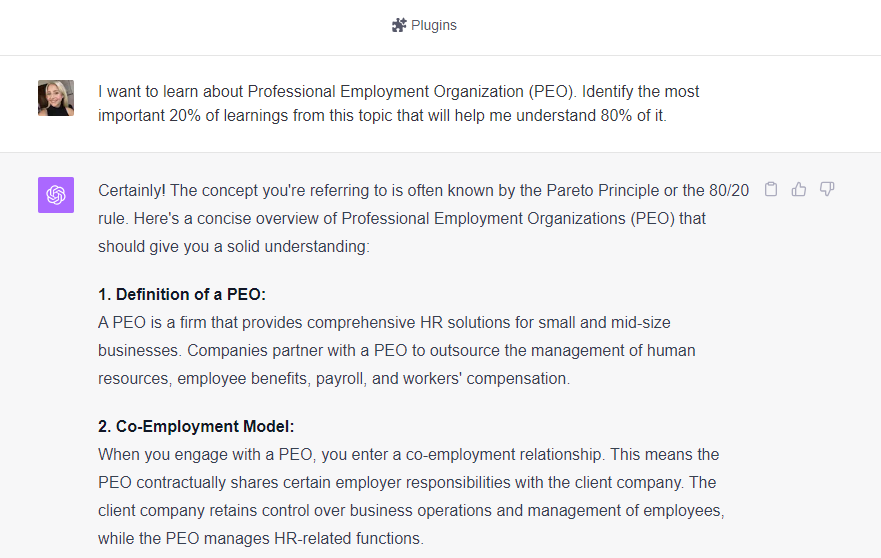
[Tip] My colleague, Thanh Duong, partners with ChatGPT to understand his client’s 10-K’s and how their goals can be supported by the work Seer does for them.
The Future of Client Engagement: Where AI Ends and the Human Role Begins
As AI agents get better at maintaining ongoing client context across sessions, effectively acting as a persistent account intelligence layer, it's worth asking what that means for the account manager role itself.
Client account management has always been a mixed-skill role. Some people come up through SEO or paid media and can go deep on the data when needed. Others come from a relationship-first background: strong on marketing strategy and reading a room, but not necessarily hands-on in the platforms themselves. Historically, that gap showed up in real time: a client asks a pointed question about performance, and the honest answer is "let me take that back to the team."
AI gives you the ability to close that gap in the moment. With the right AI tool connected to the right platforms, an account manager can work through a client's data question live, in the room. It's not about replacing the strategists and practitioners who still get brought in for depth and execution, but about doing more than being the go-between for questions.
The soft skills this role has always run on are going to matter more, not less, as AI gets more capable and more visible. The ability to connect with someone on a human level, read a relationship, and respond to what's actually being said so a client feels seen rather than efficiently processed.
The account managers who do this job best going forward will be the ones who let AI handle the context-building and data synthesis, freeing up their own energy for the part of the relationship AI can support but never replicate.
In leveraging AI's prowess, we're not only reimagining the landscape of client engagement but also reinforcing our commitment to adaptability, innovation, and excellence.
In the evolving narrative of client engagement, where do you see your business? Let’s collaborate!

.png)
.png)